
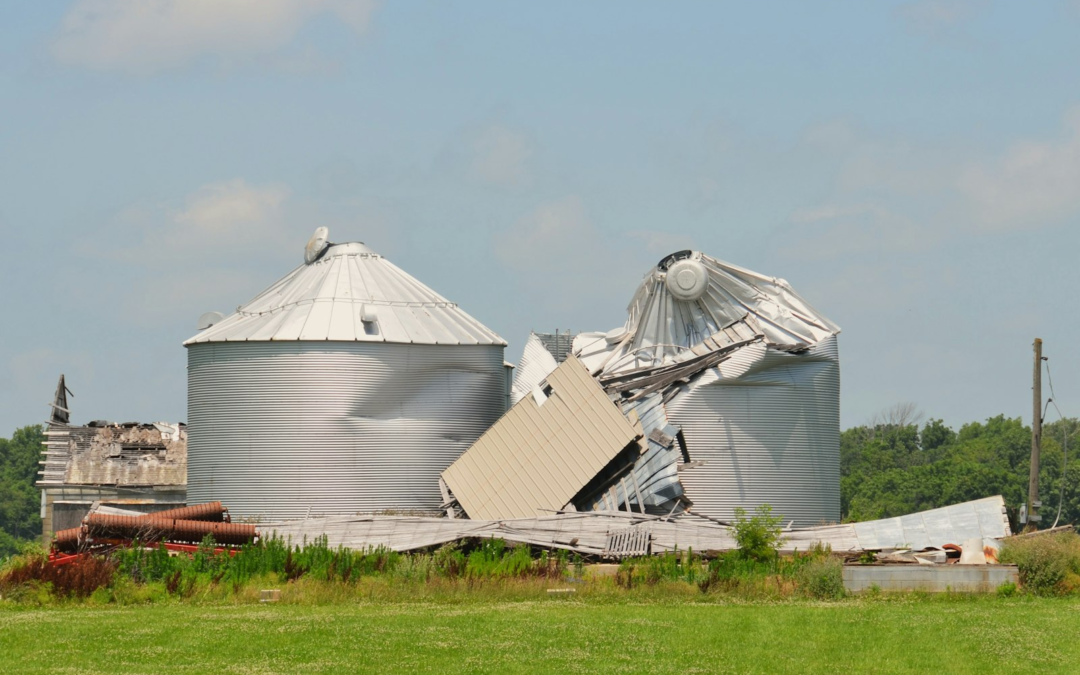
After a storm passes, the first instinct is to clean up. Haul off the branches, sweep up the glass, get a tarp over the hole, call someone to put things back the way they were. That instinct is reasonable, and on a damaged building it can quietly work against the owner. Once debris is moved and repairs begin, the evidence of what actually happened starts to disappear — and the record of the damage is often what an insurer, an adjuster or an attorney relies on months later.
Documenting storm damage well does not take special equipment. It takes a few minutes of deliberate effort at a moment when nobody feels like being deliberate. This article walks through what is worth recording, why it matters later, and which kinds of damage call for a licensed structural engineer rather than a camera.
Safety Comes Before Any Documentation
Nothing below is worth a risk. If a wall is leaning, a roof is sagging, a floor feels soft underfoot, you hear cracking or popping, or you smell gas, leave the building and call 911 or the fire department. The same goes for standing water near electrical panels and for any downed line, which should be treated as live.
Do not climb onto a damaged roof, and do not go into an attic or crawlspace under a damaged area. Photographs from the ground, from a window, or from a neighbor’s property are worth far more than a photograph taken from somewhere unsafe. If part of the structure is unstable, documentation waits until someone qualified has looked at it.
What to Record, and in What Order
The goal is a record that someone who was not there can follow. Three layers do most of the work.
Wide shots that establish context
Start outside and photograph each elevation of the building from far enough back that the whole wall and roofline are in frame. Include the surroundings — the fallen tree, the direction debris travelled, the neighboring structures. These wide shots are what later tie a specific crack to a specific event, and they are the easiest ones to skip in favor of close-ups.
Close-ups of each individual area of damage
Then photograph each damaged area on its own: the separated siding, the lifted shingles, the cracked masonry, the bent gutter, the broken window, the water stain on the ceiling. Take more than feels necessary. Put something in frame for scale when the size of a crack or a gap matters — a tape measure, a coin, a pen laid alongside it.
Interior conditions, including the parts that look minor
Go room by room inside. Photograph water staining, new cracks at the corners of door and window openings, doors and windows that have started to stick or will no longer latch, separations where walls meet ceilings, and any sloping or springiness in a floor. Interior signs are frequently the ones that point to a structural problem rather than a surface one, and they are the easiest to paint over before anyone has recorded them.
Alongside the photographs, write a few things down the same day while they are still accurate:
- The date and roughly the time the weather occurred, and when the damage was first noticed
- What the conditions were — wind, hail, heavy rain, heavy wet snow, flooding
- Which areas were already in poor condition before the storm, described honestly
- Anything that was moved, covered, pumped out or torn out as an emergency measure, with photographs taken before that work if at all possible
- Names and dates for everyone who has looked at the building, including contractors
Keep receipts for emergency measures such as tarping, boarding or water extraction, and keep the damaged materials that get removed if there is anywhere to put them. A box of broken fasteners or a cut section of a damaged member is a far better record than a description of one.
Why the Record Matters Later
Storm damage claims usually turn on two questions: what the condition of the building is now, and whether the storm is what caused it. Both are easier to answer with photographs taken the same week than with memory and a repaired building.
Pre-existing condition is where the record matters most. A crack that was there last year and a crack that opened during a wind event can look identical in a photograph taken after repairs have started. If there are older photographs of the building — listing photos, a previous inspection, even family pictures taken in the yard — they are worth finding and keeping with the new ones. Documenting honestly, including the parts that were already worn, tends to make the rest of the record more credible rather than less.
Our firm offers insurance claim support as part of its forensic engineering work. The principal engineer is not a claims adjuster and does not determine what a policy covers; what an engineer can provide is an independent evaluation of the structure and an opinion on cause, documented in a form that an adjuster, an owner or an attorney can work from. If you are weighing whether to bring in your own engineer rather than relying solely on one sent by an insurer, that question is covered in more detail here.
Wisconsin Conditions That Complicate the Picture
Northeast Wisconsin puts a particular set of loads on buildings, and they interact in ways that make single-event damage harder to read.
Wind coming off Lake Michigan arrives at exposed walls and roof edges with little to slow it down, and lake-effect snow can load one side of a roof far more heavily than the other as it drifts against parapets, mechanical units and changes in roof height. Heavy wet snow followed by a thaw and a hard refreeze drives water into joints that were sound in October. Freeze-thaw cycling then works on that water all winter, widening masonry joints and spalling concrete a little more each year. Underneath, the clay soils common in the region swell and shrink with moisture, and a high spring water table pushes on foundation walls that are already carrying their normal load.
The practical consequence is that a crack discovered after a storm may have three contributing causes, only one of which is the storm. That is not a reason to skip documentation — it is the reason documentation has to be specific about dates and conditions. Roof loading in particular is worth understanding before winter; what to watch for on Wisconsin roofs is covered separately, as is how extreme weather affects buildings more broadly.
Damage That Calls for a Licensed Structural Engineer
Photographs record a condition. They do not tell an owner whether the building is still carrying its loads the way it was designed to. These are the situations where a structural evaluation is the appropriate next step rather than a repair plan:
- Any visible deflection, sagging or leaning — a roof line that has changed, a wall out of plumb, a beam that has dropped
- New cracks in foundation walls, in masonry, or in concrete that are wide, stepped, or running diagonally from openings
- Cracks that are still moving, or that reopen after being patched
- Impact damage where something struck the structure — a tree on a roof, a vehicle into a wall, debris through a wall assembly
- Damage to anything that was carrying load: a column, a post, a bearing wall, a truss, a joist, a header
- Water that has reached structural framing, or has been standing against a foundation
- Damage to an agricultural or industrial building, a mezzanine, or any structure supporting equipment or machinery
- A claim that has been denied or disputed, where an independent engineering opinion is needed
- Any case where a building department, an insurer or an attorney has asked for an engineer’s report
A general contractor can tell an owner how a repair would be carried out. A licensed structural engineer addresses a different question: what the damage has done to the structure, what caused it, and what the repair actually needs to accomplish. On anything load-bearing, the second question should be answered before the first.
What a Structural Evaluation Involves
The principal engineer at Curva Consultants holds Wisconsin PE License No. 47224 and a master’s degree in civil engineering with a structural focus from the University of Wisconsin–Madison. A storm damage evaluation generally involves a site visit to observe and measure the conditions directly, a review of whatever documentation exists — the owner’s photographs, drawings if any survive, prior reports — and an assessment of how the structure is carrying load now compared with how it was intended to.
The written result describes the observed conditions, gives an opinion on cause where the evidence supports one, and sets out what the structure requires. Our firm’s forensic engineering work covers damage from natural disasters including wind, snow, rain and flooding, as well as fire damage, freeze/thaw damage, impact from vehicles and equipment, and overload assessment. You can read more about that work on our forensic engineering page.
Where a damage claim ends up contested, the principal engineer is also available for expert witness work, providing independent, documented engineering opinions. Decisions about how to pursue a claim belong with the owner’s attorney and insurer; the engineering opinion addresses the structure and the cause of the damage.
Agricultural buildings have their own version of this, because long clear spans and light framing respond differently to wind and snow than an enclosed building does. When a Wisconsin farm building needs a structural engineer covers what is worth looking at on a barn, machine shed or grain bin.
A Short Version to Keep Somewhere
If the detail above is more than anyone wants to read with a tarp on the roof, the short version is this. Make sure everyone is safe and stay out of anything that looks unstable. Photograph wide first, then close, then inside. Write down the date, the weather and what was already in poor shape. Photograph before any emergency work and keep the receipts and the removed material. Call a licensed structural engineer before repairs begin on anything that holds the building up.
Structural Engineering in Northeast Wisconsin
Curva Consultants provides structural engineering services for residential, commercial, industrial, agricultural and municipal buildings across Northeast Wisconsin, including forensic investigations and storm damage evaluation. To discuss a damaged building, call 866-455-0155 or use our contact page.
We serve clients throughout the region, including Manitowoc, Downtown Green Bay, Green Bay East, De Pere, Ashwaubenon, Suamico, Howard, Allouez, the Appleton area and the Sheboygan area.