
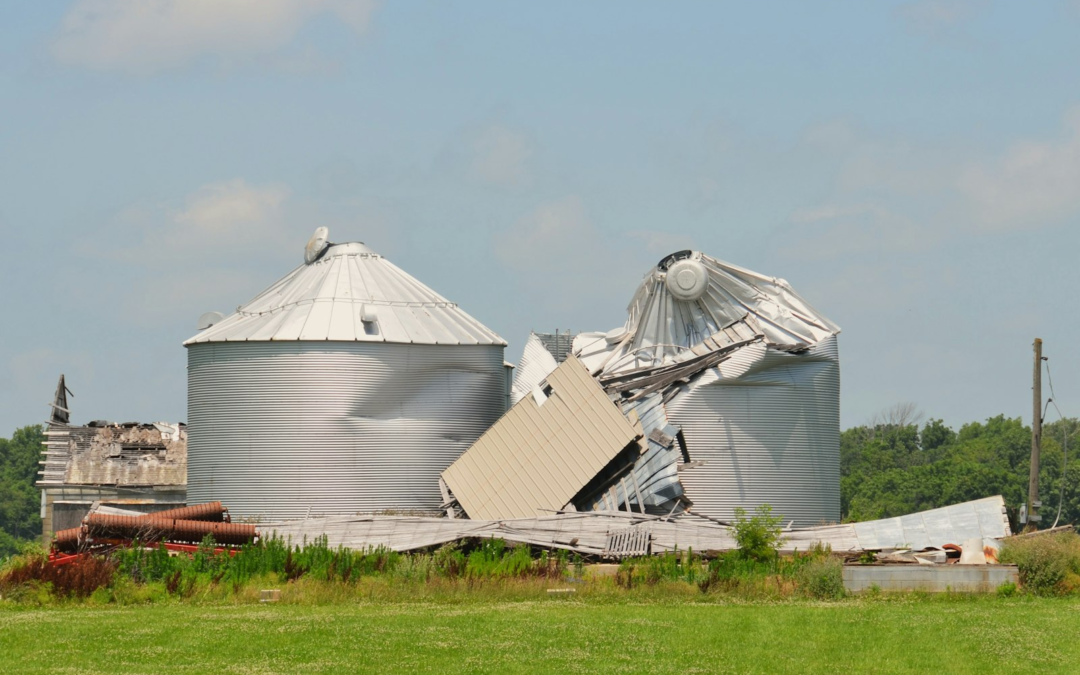
Yes — if structural damage is part of an insurance claim, you can hire your own structural engineer to evaluate and document it. You do not have to wait for an engineer to be assigned to you, and you do not need anyone’s permission to get an independent professional opinion about your own building.
That answer surprises a lot of building owners in Green Bay and Manitowoc. Here is how it works, what an independent engineer actually does in a claim, and when it makes sense to bring one in.
Why hire your own structural engineer?
When a storm, fire, or accident damages a building, the insurance process runs on documentation. The central questions are always the same: what was damaged, what caused it, and what will it take to make the structure safe and sound again.
A structural engineer answers those questions independently. The engineer works for you, examines the structure firsthand, and puts professional conclusions in writing — conclusions backed by a licensed Wisconsin professional engineer’s analysis rather than a quick walkthrough. That report becomes part of your claim file, in terms a carrier can act on.
One important distinction: a structural engineer is not a claims adjuster. The engineer evaluates the damage — its cause, its extent, and what should happen next. The adjuster and the insurance company determine what your policy covers. Curva Consultants does not act as a claims adjuster; what it provides is the independent engineering evaluation that a well-documented claim is built on.
The kinds of damage a structural engineer investigates
Structural damage claims in Northeast Wisconsin tend to come from a familiar list:
- Wind and storm damage — racked framing, roof structure damage, failed connections after high winds.
- Snow overload — sagging or cracked roof members after heavy snowfall.
- Rain and flood damage — saturated or undermined foundations, water-damaged framing.
- Fire damage — assessing which members were compromised by heat and which can stay.
- Freeze-thaw damage — cracking and movement driven by Wisconsin’s winter cycles.
- Impact — a vehicle into a wall, or a forklift or crane strike in a commercial or industrial building.
These are exactly the investigations Curva Consultants’ forensic engineering practice handles: determining what happened, how serious it is, and documenting it properly.
What the engineering report gives your claim
After the site investigation, you receive a written engineering report: what was observed, the engineer’s professional conclusions about the cause and extent of the structural damage, and recommendations for what should happen next. Where the situation calls for it, the analysis is backed by structural calculations and a review of available drawings.
That document does three practical things for a building owner. It establishes an independent professional record of the damage. It separates structural damage from cosmetic issues, so the conversation stays grounded in facts. And it gives your contractor a clear scope of what actually needs structural correction.
To be clear about what it does not do: an engineering report does not decide your claim. Coverage decisions belong to the insurance company under the terms of your policy. What the report does is make sure those decisions are made against a documented, professional account of the damage.
When to bring the engineer in
As early as practical. Damage is easiest to document before repairs begin, and an engineer can also tell you whether any part of the building is unsafe to occupy while the claim proceeds. If temporary protection is needed — shoring, tarping, fencing off an area — the engineer’s assessment helps you do that without disturbing more than necessary. Your policy will have its own requirements about notification and repairs, so check it and keep your carrier informed.
If you are not sure whether what you are seeing is structural at all, start with an inspection — our guide to structural engineer inspections in Green Bay and Manitowoc covers what that involves.
If the claim turns into a dispute
Most claims resolve without conflict. When one does not, the same independent engineering work matters more, not less. The principal engineer at Curva Consultants is available for expert witness work — providing independent, documented engineering opinions when a damage claim is contested.
Serving Green Bay, Manitowoc, and Northeast Wisconsin
Curva Consultants investigates structural damage and supports insurance claims for homes, commercial buildings, and industrial facilities from offices in Green Bay and Manitowoc, serving De Pere, Ashwaubenon, Howard, Suamico, Allouez, the Appleton area, and the Sheboygan area.
If your building has structural damage and a claim is in motion — or about to be — call 866-455-0155 or contact Curva Consultants to talk through the situation.
Frequently asked questions
Do I need my insurance company’s permission to hire my own engineer?
No. You can hire an independent engineer for your own building at any time. Your policy may have requirements about notifying your carrier and about when repairs can begin — check it and keep the carrier informed — but getting an independent professional evaluation of your own property is your call.
Is the engineer’s report binding on the insurance company?
No. The insurance company makes coverage decisions under your policy. The report’s value is that it puts an independent, licensed professional’s account of the damage — cause, extent, and recommended next steps — into the record.
What is the difference between a structural engineer and a claims adjuster?
The engineer evaluates the damage: what happened to the structure, how serious it is, and what it takes to correct it. The adjuster evaluates the claim: what the policy covers and for how much. They answer different questions, and a well-handled claim usually needs both answered well.
Can the same engineer help if the dispute goes further?
Yes. The principal engineer is available for expert witness work when a structural damage claim is contested, building on the same investigation and documentation.