Sep 19, 2025 | Beyond the Blueprint
One Building, Many Uses: A Structural Engineer’s Guide to Multi-Tenant Flexibility
A multi-tenant building that adapts to changing users is a better investment today and tomorrow. From the first sketch, a structural engineer can hardwire flexibility into the bones of the building—through smart column spacing, demising wall strategies, and allowances for future tenant improvements (TIs). If you’re planning a new development or repositioning an existing property, this is when to hire a structural engineer who understands market-driven design.
Why Multi-Tenant Flexibility Pays Off
Flexible buildings lease faster, stay leased longer, and cost less to modify. Markets evolve: retail becomes medical, light industrial becomes creative office, and office becomes lab or R&D. Designing for variability yields benefits:
- Faster reconfigurations with minimal structural work
- Broader pool of prospective tenants
- Reduced downtime between leases
- Lower lifecycle costs and fewer structural surprises
- Higher residual value at sale
Flexibility also mitigates risk. As tenant fit-outs grow in complexity—labs, wellness, food and beverage, maker spaces—the shell must accommodate higher loads, penetrations, and services without expensive retrofits.
Start with the Grid: Column Spacing and Bay Sizes
Your column layout is the building’s DNA. Early decisions here either enable or constrain every future tenant plan.
- Target versatile bay sizes: For office and light industrial, 30–35 ft bays are a sweet spot; for distribution and flexible light manufacturing, 40–50 ft may be ideal. For labs and medical, consider a regular 30 ft module to align with equipment and MEP routing.
- Optimize spans and floor systems: Composite steel with metal deck, post-tensioned concrete, or mass timber can all work. Choose the system that balances span, vibration control, penetrability, and cost.
- Keep bays rectangular and consistent: Regular grids allow demising walls, risers, and corridors to land cleanly anywhere.
- Avoid “orphan bays”: Irregular niches and short bays become layout traps that limit TI options.
A structural engineer can test multiple grid scenarios with quick “test fits” to validate rentable efficiency, daylighting, and typical tenant layouts.
Demising Walls That Move with the Market
Demising walls are lines of flexibility. Design them so they can be placed (and replaced) with minimal structural disruption.
- Plan primary demising lines on column centers or mid-bay where slab reinforcement or post-tensioning avoids conflicts with anchors and penetrations.
- Provide continuous slab edge angles or inserts to support future partitions.
- For seismic regions, detail slip tracks and drift-compatible head-of-wall connections so partitions don’t become unintended shear elements.
- Strategize fire separations: Use rated shaft walls and strategically placed fire barriers that can be extended as demising walls move.
- Provide acoustic decoupling details (resilient channels, sealants) where mixed uses (office next to fitness, retail next to clinic) are possible.
The goal is to allow demising walls to “float” within a bay module without touching the lateral system or complex structure.
Lateral System Strategies that Don’t Box You In
Lateral systems (shear walls, braced frames, moment frames) are essential, but they can block future openings and reduce flexibility.
- Concentrate lateral elements in cores: Elevators, stairs, and restrooms form natural clusters for shear walls and concentrically braced frames.
- Keep primary frames off likely lease lines: Avoid braces on perimeter lines where storefronts, docks, or big openings may shift.
- Use moment frames on activated facades: Moment frames maximize perimeter transparency for retail or showroom uses.
- Detail for future penetrations: Reserve bracing bays and wall zones away from MEP-heavy tenant areas.
Select a lateral system that meets drift and performance needs without pinning you to a single layout forever.
Floor Systems: Load, Vibration, and Penetration Future-Proofing
Tenants change; so do loads. A flexible floor anticipates the heavy and the quiet.
- Design for enhanced superimposed loads: Consider 100 psf for select bays where labs, libraries, or dense storage might land. For mixed-use industrial/office shells, create “heavy bays” with 150–200 psf capacity.
- Control vibration: Office wants 8–12 Hz; labs and fitness may demand stricter criteria. Choose spans and framing depths accordingly. A structural engineer can run preliminary vibration analyses during schematic design.
- Plan penetration corridors: Pre-coordinate “soft zones” for future stair openings, duct chases, and large sleeves to avoid cutting through major framing.
- Use reinforcement maps: Provide as-built slab reinforcement or tendon maps so future TIs can core safely and cost-effectively.
If using mass timber, plan for acoustic and fire assemblies and clarify where tenant penetrations are allowed and how they’re protected.
Services and Vertical Circulation: Plan for Plug-and-Play
Flexible buildings centralize vertical services and allow horizontal distribution to migrate.
- Cluster shafts: Group plumbing, electrical, and exhaust shafts in the core and at select “satellite” positions to serve potential demising lines.
- Reserve future riser locations: Stub in capped sleeves or panelized deck openings for later activation.
- Flexible stairs: Pre-design potential interconnecting stair locations with framing allowances and removable infill panels.
- Roof capacity and access: Overdesign localized roof zones for future RTUs or exhaust fans; provide roof hatches and equipment paths.
These moves reduce TI friction and protect the structure from ad hoc openings.
Acoustics, Fire, and Code Considerations for Changing Uses
Code-driven boundaries change with occupancy. Design for escalation.
- Mixed occupancies: Assume potential mercantile, business, assembly, and clinic uses; pick fire separations that can extend easily.
- Fireproofing and ratings: Use uniform ratings where feasible to avoid patchwork upgrades later. Confirm lab or food service exhaust impacts early.
- Sound isolation: Shell assemblies should support STC/IIC targets appropriate for fitness, medical, or music uses—especially for stacked tenants.
- Egress capacity: Size stairs and exits for likely maximum occupant loads so you don’t trigger expensive core enlargements later.
A structural engineer coordinates closely with the architect and code consultant to maintain a safe, flexible framework.
Shell vs Tenant Improvements: Clear Roles and Smart Allowances
Define what the base building guarantees and where tenants have freedom.
- Structural “no-cut” zones: Clearly mark beams, tendons, and brace bays off-limits to coring or removal.
- Embed flexibility in specs: Include sleeve allowances, added floor load zones, and generic support details for future equipment or partitions.
- Slab depressions: Provide strategic depressions for future wet areas or specialty flooring, then fill flush until needed.
- Anchoring and hanging: Provide coordinated locations and load tables for ceiling-hung systems, demountable partitions, or equipment rails.
Clarity up front minimizes change orders and protects building performance.
Documentation and Digital Tools that Preserve Optionality
Good information is as valuable as good steel.
- BIM with shared coordinates: Maintain a model that locates reinforcing, tendons, embeds, and sleeves for future TIs.
- Digital twin/owner portal: Store structural details, load allowances, and as-built scans to streamline tenant onboarding.
- Laser scans: Capture as-built reality, especially post-tensioning and rebar cover, to reduce coring risk.
When you hire a structural engineer, ask about their modeling standards and long-term deliverables for TIs.
Cost, Risk, and ROI: What Flexibility Really Costs
Flexibility adds targeted cost where it matters and saves later.
- Premiums to expect: 1–3% shell cost for enhanced loads in select bays, removable infill framing at future stairs, reserved shaft openings, and additional roof capacity.
- Savings later: Avoided structural retrofits, fewer schedule delays, lower permitting risk when uses evolve, and stronger leasing leverage.
- Phased investments: Not all flexibility needs to be built Day 1—pre-plan zones and details you can activate when a tenant signs.
A structural engineer can quantify scenarios so owners invest in the right flexibility, not just more structure.
Quick Design Checklist
- Grids and bays
- Regular 30–35 ft bays (office/lab), 40–50 ft (industrial/flex)
- Consistent modules; avoid orphan bays
- Demising walls
- Drift-compatible details, fire/acoustic strategies, anchor-friendly slabs
- Lateral system
- Core-centric shear/braced frames; moment frames at active facades
- Floor performance
- Heavy-load zones, vibration criteria, planned penetration corridors
- Services and penetrations
- Clustered shafts, reserved risers, stair-ready framing, roof capacity
- Code and comfort
- Mixed-use separations, egress sized for future loads, acoustic upgrades
- Documentation
- BIM with reinforcement maps, scan-as-built, owner-accessible data
When to Hire a Structural Engineer
Bring a structural engineer into the conversation at site selection or earliest concept. Early involvement enables:
- Multiple grid and lateral concepts tested against leasing scenarios
- Costed options for heavy-load bays and vibration performance
- TI playbooks that brokers can share with prospects
- Clear shell/TI divisional responsibilities that reduce disputes
If you plan to reposition or expand, hire a structural engineer to assess existing capacity, identify easy-win flexibility upgrades, and create a roadmap for future TIs. The result: one building that can become many.
Two Brief Scenarios
- Office to Medical Clinic: Enhanced corridor floor capacity, pre-planned wet stacks, and vibration-tuned spans convert open office into exam/consult rooms without structural change orders.
- Flex Industrial to R&D Lab: Heavy-load bays, moment-frame perimeter for openings, and reserved roof capacity enable fume hood exhaust and specialty equipment with predictable anchor points.
Design for change, and your building will welcome whatever the market brings next.
Final Takeaway
Flexibility is not an accident—it’s engineered. With the right grid, demising strategy, and TI-ready details, your building can pivot between tenants and uses with speed and confidence. Partner early, plan smart, and let structure be the backbone of adaptability.
Q1: What is multi-tenant flexibility, and why should I hire a structural engineer? A1: Multi-tenant flexibility is designing a shell that adapts to changing uses—office, retail, medical, lab—without major structural rework. A structural engineer plans grids, lateral systems, and allowances for penetrations and loads, reducing downtime and retrofit costs. Hire a structural engineer early to hardwire adaptability and protect long-term asset value.
Q2: What column spacing and bay sizes best support adaptable layouts? A2: Versatile grids unlock flexible plans. Aim for regular 30–35 ft bays for office or labs, and 40–50 ft for industrial or distribution; keep modules rectangular and avoid orphan bays. A structural engineer can compare composite steel, PT concrete, or mass timber, validate vibration targets, and run test fits against leasing scenarios.
Q3: How should demising walls be designed for future tenant changes? A3: Treat demising walls as movable lines. Place primary lease lines on column centers or mid-bay clear of tendons and heavy reinforcement. Use drift-compatible slip tracks, maintain continuous support inserts, and pre-plan fire and acoustic extensions. Keep partitions decoupled from the lateral system so reconfigurations don’t trigger structural changes.
Q4: Which lateral systems preserve flexibility for openings and storefronts? A4: Choose lateral systems that preserve future openings. Concentrate shear walls and braced frames in cores, keep braces off likely storefront or dock lines, and use moment frames on active facades. A structural engineer balances drift, transparency, and cost so tenants can add doors, windows, or bays without structural conflicts.
Q5: How can floors and services be future-proofed for tenant improvements? A5: Future-proof floors and services for tenant improvements. Design “heavy bays” at 100 psf or 150–200 psf where needed, coordinate vibration criteria, and map “soft zones” for penetrations, stairs, and ducts. Reserve risers, stub future sleeves, and add roof capacity. Reinforcement maps help TIs core safely and quickly.
Q6: When should I hire a structural engineer, and what ROI can I expect? A6: Engage a structural engineer at site selection or concept design. Early involvement enables side-by-side grid and lateral options, costed heavy-load zones, and TI playbooks for brokers. Expect 1–3% targeted shell premiums that cut retrofit risk, speed leasing, and raise residual value when uses shift over the building’s life.

Sep 12, 2025 | Beyond the Blueprint
The Hidden Cost of Bad Engineering: How a Structural Engineer Prevents Cracks, Movement, and Tenant Complaints
Cracks zigzagging across fresh paint. Doors that won’t close when the season changes. Vibrations that rattle dishes. Leaks that show up after every rainstorm. These aren’t just cosmetic nuisances—they are the visible symptoms of bad engineering decisions that quietly drain budgets, damage reputations, and erode tenant trust. The smartest way to stop this spiral is simple: involve a structural engineer early and often. When you hire a structural engineer at the right times, you prevent costly surprises, speed approvals, and deliver buildings that perform as promised.
The Hidden Ledger: Where Costs Actually Accumulate
Many projects try to shave costs by cutting design time or downgrading structural details. But the “savings” are often illusions that resurface as bigger bills later. Consider where the money really goes when structural planning is neglected:
- Emergency repairs and rework: Patching cracks, adding steel, or injecting resins after occupancy can cost 3–10x more than designing it right the first time.
- Schedule slippage: Unplanned structural fixes trigger cascading delays across trades and inspections.
- Lost rent and tenant churn: Units taken offline, concession giveaways, or lease breakages quickly dwarf any saved design fees.
- Legal exposure: Claims escalate when issues reappear or spread, especially if safety is questioned.
- Insurance and financing impacts: Carriers and lenders demand reports, intrusive testing, and sometimes premium hikes.
- Reputation damage: Prospective tenants and buyers talk, online reviews endure, and future lease-up slows.
A structural engineer’s job is to anticipate this ledger and design risk out of the project—before it becomes a line item.
Why Buildings Crack and Move
All buildings move. The question is whether that movement is predicted, controlled, and harmless—or unpredictable, accumulating, and damaging. Common culprits include:
- Soil behavior: Expansive clays, variable fill, and differential settlement cause uneven support.
- Water: Poor site drainage and waterproofing accelerate settlement and corrosion.
- Loads and usage: Fitness centers, assembly spaces, and heavy storage were not always part of the initial program.
- Time-dependent effects: Concrete creep and shrinkage, timber moisture changes, and long-term deflection.
- Thermal and environmental forces: Temperature swings, wind drift, and seismic cycles.
A structural engineer models these behaviors, chooses details to accommodate them, and sets performance criteria—so you get tight drywall lines, doors that latch, and floors that feel solid underfoot.
Cracks, Movement, and Tenant Complaints: The Typical Patterns
- The “first-year crack”: Hairline plaster cracks at corners or around openings—often shrinkage or minor differential movement. These are expected but manageable with proper jointing and backing.
- The “stair-step crack”: In masonry, this is a red flag for settlement or uneven support. If it widens over time, it’s a serviceability problem that can become structural.
- Doors that bind and floors that slope: Indicators of cumulative movement, framing deflection, or poor tolerance coordination between structure and finishes.
- Vibrations and footfall bounce: Common in wood and long-span steel floors when vibration criteria weren’t considered for the intended use.
- Ceiling leaks and musty odors: Often “water finds steel” scenarios—hidden corrosion, failed membranes, and detailing shortfalls near penetrations.
- Balcony and façade spalls: Rebar corrosion from trapped moisture or poor cover; a maintenance and safety concern that grows with time.
These symptoms translate quickly into emails, tickets, and frustrated tenants—often after the warranty clock has started ticking.
Real-World Scenarios and What Went Wrong
- The undersized slab: To save on rebar and thickness, a post-tensioned slab was value engineered. Months after occupancy, long-term deflection cracked tile, pulled countertops out of level, and bound sliding doors. Repair involved grinding, re-leveling, and finish replacement while tenants were present—costing multiples of the initial “savings.”
- Missing movement joints: A retail corridor without proper expansion joints buckled tile each summer. The fix required saw-cut joints, replacement of large areas of tile, and night-work premiums.
- Poor balcony detailing: Inadequate drip edges and guard post penetrations allowed water to track into slab edges, leading to spalls and rusting reinforcement. Repairs required access equipment, temporary tenant relocation, and repeated inspections.
- Office-to-residential conversion: The original design didn’t account for new living-room footfall and acoustic expectations. Tenants complained of “trampoline floors” and noise. Retrofitting with additional stiffness and acoustic layers was disruptive and expensive.
Each case traces back to a gap in planning, criteria, or coordination—a gap a structural engineer is trained to close.
How Proper Structural Planning Avoids Problems
When you hire a structural engineer early, they don’t just size beams. They set performance targets, coordinate tolerances, and create a robust structure that plays nicely with architecture and MEP. Key strategies include:
1) Geotechnical and Site Intelligence
- Commission thorough geotechnical investigations (borings, lab tests, groundwater levels).
- Plan for differential settlement using deep foundations, rigid mats, or ground improvement where needed.
- Design with drainage in mind: perimeter drains, capillary breaks, and positive site grading to keep water off the structure.
2) Serviceability Criteria, Not Just Strength
- Deflection limits: Set realistic limits for finishes—tile, gypsum, glass, and facade attachments.
- Vibration criteria: Consider ISO/floor vibration guidelines for offices, labs, gyms, and residential living spaces.
- Drift and racking: Control lateral drift to protect partitions, glazing, and facade seals.
3) Detailing for Durability
- Moisture defense: Waterproofing transitions, balcony edge details, and penetrations designed to shed water.
- Corrosion resistance: Proper cover, coatings, stainless anchorages where appropriate, and isolated dissimilar metals.
- Movement accommodation: Expansion joints, slip tracks at partitions, and soft joints around rigid finishes.
4) Coordination and Constructability
- Early BIM clashes to align structure, MEP, and architectural tolerances.
- Finish-friendly framing: Clear spans or predictable beam lines that minimize awkward soffits and chase carving.
- Tolerance stacking plans: Clear guidance on shim spaces, camber, and acceptable field deviations.
5) Construction-Phase Quality Assurance
- Submittal review: Mix designs, rebar detailing, post-installed anchor systems, and shoring plans.
- Field observations: Verify rebar placement, cover, anchor installation, and structural alignments before it’s too late.
- Temporary works: Overlooking shoring and sequencing can crack concrete and overstress members.
6) Peer Review and Risk Workshops
- Independent checks on critical elements and long-span systems.
- Scenario mapping for creep, shrinkage, and staged loading on slabs.
7) Lifecycle Planning
- Access for inspections, designed drip paths, and replaceable components where exposure is inevitable.
- Material choices and galvanic isolation for coastal or de-icing environments.
Early Warning Signs: Act Before It Snowballs
If you already own or manage a property, watch for:
- Cracks wider than 1/8 inch, growing over weeks or months
- New water stains, efflorescence, or recurring leaks at the same locations
- Doors and windows suddenly binding across multiple units
- Noticeable bounce, creaks, or tenant complaints about vibration
- Balcony or facade spalls, rust staining, or hollow-sounding concrete
- Sloping floors or gaps that appear at baseboards and ceiling lines
These indicate it’s time to hire a structural engineer for an assessment. Early intervention is cheaper, less disruptive, and reduces risk.
When to Hire a Structural Engineer
- Pre-acquisition due diligence: Identify structural risks before purchase; estimate remediation costs.
- Concept and schematic design: Align program with structural grids, spans, and serviceability criteria.
- Value engineering reviews: Protect performance while trimming cost; avoid false savings.
- Change of use or load increases: Adding a fitness center, storage, or rooftop amenities demands recalculation.
- Post-event or recurring issues: After seismic/wind events, flooding, or repeated tenant complaints.
- Insurance and lending requirements: Third-party assessments, repair scopes, and certifications.
Deliverables typically include calculations, drawings, reports, repair details, and prioritized action plans you can take to contractors, lenders, and insurers.
Selecting the Right Structural Engineer
- Relevant experience: Building type, local codes, soil conditions, and known regional risks.
- Forensic mindset: Ability to diagnose root causes, not just treat symptoms.
- Communication: Clear explanations for owners, tenants, and contractors.
- Coordination culture: Proven record collaborating with architects, MEP, and contractors.
- Quality systems: Peer review, checklists, and site observation protocols.
Fees for a capable structural engineer are a fraction of the costs they prevent. You’re buying risk reduction, smoother delivery, and happier tenants.
The ROI: Why Good Engineering Pays for Itself
- Rework vs. design: A 30,000designrefinementthatavertsa250,000 post-occupancy fix is a strong return.
- Tenant retention: Avoiding churn and concessions can add six figures of annual NOI in multifamily or office assets.
- Lease-up velocity: Delivering a building that “just works” shortens vacancy periods and boosts reputation.
- Lower lifecycle costs: Durable, maintainable details reduce the drumbeat of repairs that drain reserves.
Think of a structural engineer as a performance guarantee. They don’t eliminate all risk; they make it predictable, manageable, and budgetable.
If Problems Already Exist: Smart Retrofit Pathways
A qualified structural engineer will triage issues, stabilize what’s urgent, and phase the rest:
- Monitoring: Crack gauges, deflection targets, and vibration measurements to distinguish active from historic movement.
- Moisture control first: Fix sources (drainage, membranes, flashings) before structural repairs.
- Localized repairs: Epoxy injection for structural cracks, sealant for non-structural, patch repairs for spalls with corrosion mitigation.
- Strengthening: Carbon fiber wraps, steel or FRP plates, jacketing, or added supports where capacity is short.
- Movement accommodation: Introduce expansion joints or slip details if none exist.
- Vibration control: Increase stiffness, add damping, or modify usage/occupancy where necessary.
- Communication plan: Keep tenants informed with clear timelines and safety assurances to preserve trust.
A Preventive Checklist for Owners and Developers
- Before design:
- Commission geotech with borings and groundwater data.
- Decide vibration, deflection, and drift criteria aligned to intended use.
- Establish tolerance and movement strategies early.
- During design:
- Coordinate structure with MEP/architectural layouts in BIM.
- Detail moisture defenses at all transitions and penetrations.
- Plan expansion and slip joints for predictable movement.
- Conduct peer review for long spans, transfers, or unusual loads.
- During construction:
- Review submittals for anchors, rebar, and mix designs.
- Observe critical pours, rebar placement, and penetrations.
- Verify waterproofing sequencing and terminations.
- Before handover:
- Walk with a structural engineer to confirm performance items.
- Provide O&M guidance for inspections, sealant lifecycles, and drainage upkeep.
- After occupancy:
- Track complaints and inspect recurring locations.
- Act on early warning signs to avoid larger failures.
The Bottom Line
Bad engineering hides in the gaps—between the geotech report and the foundation, between the beam and the tile, between the drawing and what got built. Those gaps become cracks, movement, leaks, and tenant complaints that are far more expensive than the upfront work it takes to prevent them. If you want buildings that age gracefully and cash flows that stay on course, hire a structural engineer who treats serviceability and durability as seriously as strength. Do it early. Do it again when the scope changes. And do it whenever the building tells you something isn’t right.
Your tenants will feel the difference underfoot. Your balance sheet will, too.
Q1: What are the hidden costs of bad engineering in buildings? A1: Bad engineering triggers expensive rework, schedule delays, lost rent, tenant churn, legal exposure, and insurance issues. Visible cracks and movement are symptoms of deeper design gaps. Engaging a structural engineer early prevents these compounding costs by setting clear performance criteria, coordinating details, and anticipating risks before they hit budgets.
Q2: Why do buildings crack and move over time? A2: Buildings respond to soil conditions, water, changing loads, concrete creep and shrinkage, timber moisture, temperature swings, wind, and seismic forces. Without planning for serviceability, these factors cause cracks and misalignment. A structural engineer models movement, designs joints and tolerances, and specifies details that control drift, deflection, and vibration.
Q3: How does a structural engineer prevent tenant complaints about cracks and vibration? A3: A structural engineer sets deflection and vibration criteria, plans expansion and slip joints, and details waterproofing and corrosion protection. They coordinate structure with finishes and MEP, review submittals, and observe critical construction steps. This proactive approach delivers flat floors, aligned doors, quiet spaces, and durable envelopes that reduce complaints.
Q4: What warning signs mean I should hire a structural engineer now? A4: Watch for widening cracks over 1/8 inch, recurring leaks or efflorescence, doors and windows binding across units, bouncy floors, spalled balconies, rust staining, and noticeable slopes. These indicate active movement or moisture pathways. Hire a structural engineer early to diagnose root causes, stabilize issues, and phase cost-effective repairs.
Q5: When in a project should I hire a structural engineer? A5: Hire a structural engineer during due diligence, concept and schematic design, value engineering reviews, and any change of use or load increase. Re-engage after wind, seismic, or flood events, and when insurers or lenders require assessments. Early involvement aligns grids, serviceability targets, and details—preventing downstream rework.
Q6: What’s the ROI of hiring a structural engineer compared to post-occupancy fixes? A6: Smart design refinements might cost tens of thousands but can avoid six-figure repairs after occupancy. Prevented delays, tenant retention, faster lease-up, and lower lifecycle costs compound returns. By reducing uncertainty and rework, a structural engineer turns potential hidden costs into predictable, budgeted performance outcomes.
Q7: How do I choose the right structural engineer for my building? A7: Prioritize relevant building-type experience, local code and soil familiarity, and a forensic mindset for root-cause diagnosis. Look for clear communication, strong coordination with architects and MEP, peer review practices, and field observation protocols. These traits ensure durable details and fewer surprises from design through operations.

Jul 16, 2025 | Fundamentals & Explanations:
From Blueprint to Build: What Sets Great Structural Engineers Apart
Structural engineering is often associated with intricate calculations, complex models, and a mastery of mathematics and physics. But the true value of a structural engineer goes far beyond technical expertise. In today’s world, where demands on safety, sustainability, and innovation are higher than ever, the most successful engineers distinguish themselves not just by what they know, but by how they lead, communicate, and foresee challenges. If you are looking to hire a structural engineer or want to understand what makes the great ones stand out, this article will guide you through the intangible qualities that set exceptional professionals apart.
The Evolving Role of Structural Engineers
The role of a structural engineer has evolved dramatically over the past few decades. Once seen primarily as number-crunchers, analyzing beams and columns, modern engineers are now crucial contributors to the entire construction process. They aren’t just passive recipients of architectural visions—they are proactive partners from the very first sketch.
Today, clients and project teams expect structural engineers to:
- Interpret and develop design concepts
- Collaborate with architects, contractors, and clients
- Ensure regulatory compliance and prioritize safety
- Innovate with materials and construction techniques
- Lead multidisciplinary teams through complex projects
This broader scope demands much more than technical acumen. Let’s explore the key qualities that transform good structural engineers into great ones.
Leadership: Guiding Projects and People
At the heart of every successful project is effective leadership. Great structural engineers don’t work in isolation—they guide and inspire teams, make critical decisions, and take responsibility for outcomes. Leadership in engineering goes beyond managing schedules; it’s about fostering trust, driving progress, and nurturing professional growth.
1. Vision and Decision-Making
A great structural engineer sees the bigger picture. Rather than focusing solely on the next calculation, they anticipate how every structural decision impacts the overall project. They make choices that balance safety, efficiency, and aesthetics, all while keeping costs in check.
- Setting project direction. Strong leaders ensure that the team’s work aligns with the client’s vision and broader project goals.
- Handling uncertainty. In construction, unexpected issues are inevitable. Great engineers remain calm under pressure, weigh options quickly, and make informed decisions even in ambiguous situations.
2. Mentorship and Team Building
The ability to train and inspire younger engineers is a hallmark of true leadership. Great structural engineers share their knowledge willingly, fostering an environment where team members feel supported and challenged.
- Delegating with trust. Instead of micromanaging, top engineers delegate tasks that help junior staff grow while maintaining accountability for the overall result.
- Celebrating contributions. Recognizing and rewarding team achievements encourages collaboration and innovation.
Communication: The Bridge Between Vision and Reality
Engineering is a language of its own, filled with formulas, drawings, and codes. But the most effective structural engineers are also fluent in the language of people. Communication skills are critical at every stage of the project lifecycle.
1. Translating Technical Language
Not every stakeholder speaks “engineer.” Great structural engineers break down complicated concepts, so architects, contractors, and clients understand the implications of design decisions.
- Clear documentation. Concise, easy-to-read reports and drawings reduce misunderstandings, helping projects run smoothly.
- Active listening. By truly hearing the concerns and aspirations of others, engineers ensure they deliver what’s needed—not just what’s specified.
2. Negotiation and Conflict Resolution
Construction projects are busy, high-stakes environments with competing interests. When disagreements arise—over budget, schedule, or design—a skilled structural engineer negotiates win-win solutions.
- Balancing priorities. Great engineers find compromise without sacrificing structural integrity or safety.
- Maintaining professionalism. Calm, respectful communication defuses tension and keeps projects moving forward.
Foresight: Predicting and Preventing Problems
The ability to anticipate challenges before they occur distinguishes great engineers from merely competent ones. Foresight isn’t about having a crystal ball—it’s about combining experience, attention to detail, and a proactive mindset to identify and address risks early.
1. Risk Management
Whether it’s a change in building codes, unexpected ground conditions, or supply chain disruptions, risks can threaten project success. The best structural engineers incorporate risk management into every phase.
- Scenario planning. Evaluating “what-if” scenarios helps prepare the team for possible obstacles.
- Resilient design. Great engineers specify systems and materials that adapt to change and withstand unforeseen events.
2. Holistic Project Understanding
Exceptional engineers connect dots others might miss. They consider how their decisions interact with mechanical systems, environmental constraints, and long-term maintenance.
- Sustainability. Top engineers consider the environmental lifecycle of materials and design for future adaptability.
- Integration with other disciplines. By seeing how their work fits into the larger project ecosystem, they prevent costly rework or coordination issues down the road.
The Value of Professional Integrity
Perhaps the most important—and sometimes overlooked—quality of a great structural engineer is integrity. Clients, contractors, and communities rely on their judgement to ensure safety and compliance.
- Ethical standards. Great engineers practice transparency, disclose risks, and avoid cutting corners, even under pressure.
- Commitment to learning. The best stay current with codes, technology, and best practices, always striving to grow.
When Should You Hire a Structural Engineer?
If you’re planning a construction or renovation project, it’s vital to know when to hire a structural engineer. Their expertise is not limited to high-rise towers; engineers play a key role in many situations, including:
- New homes and building extensions
- Structural modifications (removing walls, adding floors)
- Addressing foundation or settlement issues
- Evaluating the safety of aging buildings
- Designing sustainable, energy-efficient structures
Bringing a structural engineer on board early not only avoids costly mistakes but also adds value through innovative, tailored solutions.
How to Identify Great Structural Engineers
When searching to hire a structural engineer, look past the resume and certifications. While credentials are necessary, the following qualities are what truly set the best apart:
1. Diverse Portfolio and References
Look for projects similar to yours, and ask for client references. A proven track record demonstrates both technical skill and reliability.
2. Collaborative Attitude
Does the engineer ask thoughtful questions? Do they communicate openly with architects and listen to your needs? A collaborative approach signals a commitment to partnership.
3. Problem-Solving Mindset
Great engineers are creative thinkers. Whether it’s finding a cost-effective solution or overcoming an unexpected challenge, adaptability is paramount.
4. Reputation and Professional Affiliations
Affiliations with professional organizations and recognition by peers indicate commitment to high standards and ongoing development.
The Future of Structural Engineering: Embracing New Challenges
The profession continues to evolve as new materials, digital tools, and societal demands reshape the built environment. Sustainability, resilience, and inclusivity are now fundamental to success. Great structural engineers are at the forefront of adopting:
- Building Information Modeling (BIM) and advanced simulation tools
- Innovative materials such as mass timber and carbon-neutral concrete
- Adaptive reuse and modular construction techniques
- Community engagement and design for social good
Conclusion: Beyond the Calculations
While technical ability is essential, the greatest value a structural engineer provides goes well beyond calculations and codes. Leadership, clear communication, and an eye for the future are the traits that define the profession’s most respected members.
If you’re looking to hire a structural engineer who will deliver not just safe structures but also a smoother, more successful construction journey, focus on these qualities. Ask how they approach teamwork, problem-solving, and risk management. Choose a partner who will bring vision and integrity from blueprint to build.
Q1: What qualities set a great structural engineer apart from others? A1: A great structural engineer stands out through leadership, communication, and foresight. Beyond technical calculations, they guide teams, collaborate effectively, anticipate challenges, and ensure the project’s success from blueprint to build.
Q2: Why is communication important for a structural engineer? A2: Communication is crucial for a structural engineer because it helps bridge the technical aspects of engineering with client needs, project goals, and team collaboration. Strong communicators prevent misunderstandings and facilitate smoother project execution.
Q3: When should you hire a structural engineer for your project? A3: You should hire a structural engineer early in any construction or renovation project. Their expertise ensures building safety, compliance, and innovative solutions, particularly for new construction, structural changes, or addressing building issues.
Q4: How do leadership and foresight benefit structural engineering projects? A4: Leadership ensures teams work efficiently toward shared goals while foresight helps anticipate and mitigate risks. These traits enable structural engineers to deliver safe, resilient, and successful projects while adapting to evolving challenges.
Q5: What should you look for when choosing to hire a structural engineer? A5: Look for a structural engineer with strong leadership, a collaborative approach, a proven track record, and the ability to communicate complex ideas clearly. These qualities contribute significantly to project quality and smooth execution.
Q6: How do structural engineers add value beyond calculations and compliance? A6: Structural engineers add value by integrating sustainability, cost-effectiveness, and long-term resilience into projects. Their broad vision and proactive problem-solving ensure efficient designs and safeguard investments over time.
Apr 8, 2025 | Fundamentals & Explanations:
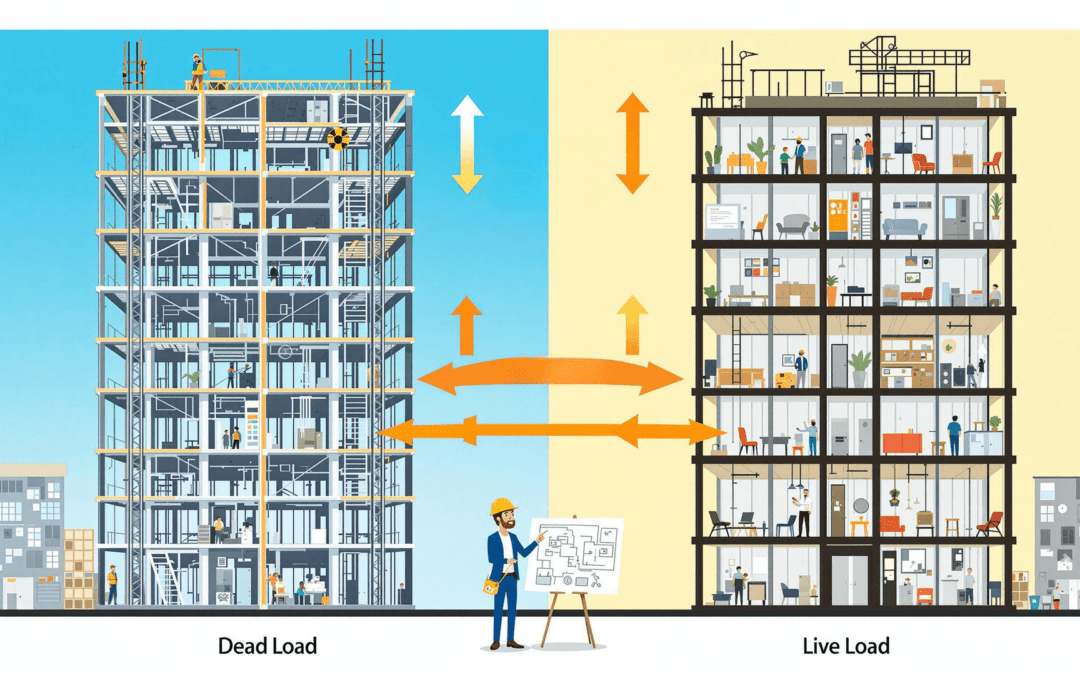
Loads on Structures Explained: Dead Load vs. Live Load
Structural engineering is a critical field that ensures the safety and integrity of buildings. Central to this discipline are the concepts of dead loads and live loads, which are essential for anyone looking to hire a structural engineer. Understanding these loads is crucial in designing stable and efficient structures.
What Are Loads in Structural Engineering?
In the context of structural engineering, loads refer to forces or other actions that lead to deformations, stresses, and displacements in a structure. They are essential considerations during the design process to ensure that structures can withstand various forces over time. Loads are generally categorized into two main types: dead loads and live loads.
Understanding Dead Loads
Dead loads are the permanent or static forces acting on a structure. They primarily consist of the weight of the construction materials themselves. The importance of dead loads lies in their constancy, as they do not change over time, making them predictable for structural analysis.
Components of Dead Loads
- Construction Materials: The weight of floors, walls, roofs, and other structural components.
- Fixed Fixtures: Includes immovable parts such as plumbing, electrical installations, and built-in cabinets.
- Permanent Additions: These might include elements like flooring finishes or permanently installed furniture.
The accurate calculation of dead loads is vital because it directly influences the structural integrity and design efficiency. When you hire a structural engineer, ensuring they provide precise dead load calculations can help optimize material use and overall cost.
Understanding Live Loads
Unlike dead loads, live loads are transient and variable forces acting on a structure. They account for the movable items within a building and any temporary forces it may encounter.
Components of Live Loads
- Occupant Weight: The weight of people and animals using the space.
- Furniture and Equipment: Movable items like desks, chairs, machinery, or any non-permanent fixture.
- Environmental Factors: Includes snow, wind, and seismic activities, which can affect a building at various times.
Importance of Live Loads
The unpredictable nature of live loads requires careful consideration to ensure safety under varying conditions. By hiring a structural engineer, you benefit from expert evaluations of potential live loads, ensuring that your structure can accommodate these changes without compromising safety.
Differences Between Dead Load and Live Load
- Permanency: Dead loads are constant, whereas live loads vary over time.
- Calculation: Dead loads are easier to calculate due to their constancy, while live loads require estimations and may need adjustments based on usage.
- Impact on Design: Both loads impact material selection and structural design, but live loads demand more flexibility to accommodate changes.
Why Accurate Load Calculations Matter
Accurate load calculations are crucial for a structure’s longevity, safety, and efficiency. A professional structural engineer can provide these calculations, offering a blueprint that enhances the building’s response to both expected and unexpected forces. Ensuring precise load assessments can prevent structural failures and reduce repair and maintenance costs over time.
How to Choose a Structural Engineer
When deciding to hire a structural engineer, consider the following factors to ensure they can efficiently handle load calculations:
- Experience and Expertise: Ensure they have a proven track record with similar projects.
- Credentials and Licensing: Verify their qualifications and professional licensing.
- Communication Skills: Effective communication is essential to ensure your needs are met and understood.
- References and Reviews: Look for reviews or ask for references to gauge their competence and reliability.
Conclusion
Understanding the difference between dead loads and live loads is fundamental for the safe and efficient design of any structure. As you consider your next building project, hiring a knowledgeable structural engineer who can accurately assess these loads is essential. Their expertise will ensure your structure stands the test of time, while safeguarding the people and assets it supports.
Q1: What are loads in structural engineering? A1: In structural engineering, loads are forces or actions causing stress and displacement in structures. They are crucial for designing stable buildings and come in two main types: dead loads, which are static, and live loads, which are variable.
Q2: What is a dead load? A2: A dead load refers to permanent forces acting on a structure, mainly due to construction materials like beams, walls, and roofs. Since they are constant, they are predictable and crucial for the structural design.
Q3: What is a live load? A3: A live load consists of variable forces on a structure, such as occupants, furniture, and environmental factors like snow and wind. These loads are crucial for design and require careful consideration due to their unpredictable nature.
Q4: How do dead loads and live loads differ? A4: Dead loads are static and constant, whereas live loads are dynamic and change over time. Both affect material selection and design, but live loads demand more flexibility in design to accommodate changes.
Q5: Why are accurate load calculations important? A5: Accurate load calculations are vital for a building’s safety and longevity. They ensure structures withstand forces without failure. Hiring a structural engineer ensures precise load assessments, reducing potential risks and costs.
Q6: How can one hire the right structural engineer? A6: To hire a structural engineer, check for experience, credentials, communication skills, and references. A qualified engineer ensures that your building’s load calculations are precise and reliable.
Apr 8, 2025 | Fundamentals & Explanations:
When constructing a building, understanding its structural elements is crucial for ensuring safety, durability, and functionality. Whether you’re planning to hire a structural engineer or simply curious about the mechanics behind architecture, recognizing these elements helps in appreciating the complex process of building design.
The Role of a Structural Engineer
A structural engineer is pivotal in the construction process. They are responsible for designing, assessing, and supervising the critical components of a structure. By assessing factors like weight, strength, and materials, they ensure that everything is well-supported, safe, and sustainable. When you hire a structural engineer, you bring in expertise that helps in mitigating risks and optimizing the building’s performance.
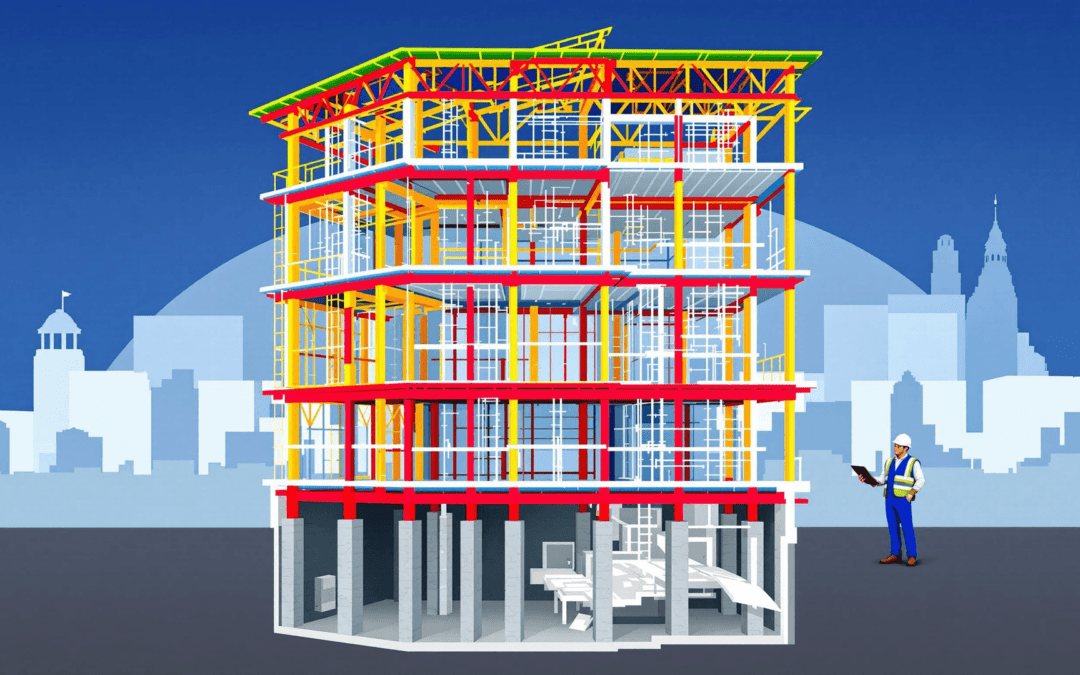
Essential Structural Elements
- Foundation
- Purpose: The foundation supports the entire building, distributing weight evenly and preventing settlement issues.
- Types: Includes shallow foundations (like footings) and deep foundations (such as piles).
- Beams and Columns
- Beams: Horizontal elements that carry loads across gaps, supporting floors, roofs, and walls.
- Columns: Vertical elements that transfer loads to the foundation. They are critical for maintaining the building’s stability.
- Walls
- Function: Provide enclosure and support. Load-bearing walls play a structural role, supporting beams and the roof.
- Materials: Can be made from materials like bricks, concrete, or wood.
- Floors and Roofs
- Floors: Must bear loads and impacts; typically made from concrete, wood, or steel.
- Roofs: Protect from weather and contribute to thermal and acoustic insulation. Design varies from flat to sloped, depending on climate and aesthetics.
- Trusses and Frames
- Trusses: Triangular units used to support roofs and bridges, distributing loads efficiently.
- Frames: Serve as the skeleton of the building, often made of steel or timber.
Importance of Material Selection
Choosing the right materials is vital for function, durability, and cost. Common materials include:
- Concrete: Known for its strength and versatility.
- Steel: Offers high tensile strength and flexibility.
- Wood: Provides aesthetic appeal and insulation properties.
Why Hire a Structural Engineer?
Hiring a structural engineer ensures that all of these elements are properly designed and integrated into the overall construction plan. They bring significant benefits:
- Expertise in Design and Analysis: They analyze the forces acting on a structure, ensuring it meets local building codes and standards.
- Cost Efficiency: By optimizing materials and designs, they help reduce expenses without compromising safety.
- Risk Management: They anticipate potential issues and offer solutions, minimizing the risk of structural failure.
Conclusion
In the world of construction, understanding the basics of key structural elements is essential. From the foundation to the roof, each component works together to create buildings that are safe, functional, and enduring. Whether you’re a builder, architect, or future homeowner, appreciating these elements underscores the importance of hiring a structural engineer, whose expertise is invaluable in transforming architectural visions into reality.
Q1: What are the key structural elements in buildings? A1: Key structural elements include the foundation, beams, columns, walls, floors, roofs, and trusses. Each plays a critical role in supporting and stabilizing the building.
Q2: Why is a foundation important in building construction? A2: The foundation provides support, distributes weight evenly, and prevents settlement issues. It’s crucial for the building’s overall stability and safety.
Q3: What is the role of a structural engineer in construction? A3: A structural engineer designs, assesses, and oversees the building’s structural components. Their expertise ensures that structures are safe, durable, and compliant with building codes.
Q4: How do beams and columns function in a building? A4: Beams are horizontal elements that support loads across gaps, while columns are vertical and transfer loads to the foundation. Together, they maintain the building’s structure.
Q5: Why should you hire a structural engineer? A5: Hiring a structural engineer brings expertise in design, risk management, and cost efficiency, ensuring safety and minimizing the risk of structural failure.

Apr 8, 2025 | Fundamentals & Explanations:
What is a Structural Engineer?
Structural engineering is a specialized field of civil engineering focused on designing and analyzing structures that support or resist loads. Structural engineers ensure that buildings, bridges, and other structures are safe, stable, and sustainable. Let’s dive deeper into what these professionals do and understand why you might consider hiring a structural engineer for your next project.
The Role of a Structural Engineer
Designing Safe Structures
One of the primary responsibilities of structural engineers is designing structures that can withstand various forces and stresses. This includes considerations for gravity, wind, earthquakes, and the weight of the structure itself. Their designs ensure the safety and durability of buildings, ensuring compliance with local and national regulations.
Analyzing Structural Integrity
Structural engineers use advanced software tools and methods to analyze the integrity of structures. They assess materials such as steel, concrete, wood, and other composites to determine their suitability for specific projects. This step is crucial for preventing failures that could lead to catastrophic results.
Consulting and Collaboration
Structural engineers often work closely with architects, contractors, and other stakeholders. Their expertise is vital in modifying architectural plans to improve structural soundness without compromising design aesthetics. Early involvement can significantly reduce the risk of costly errors.
Inspecting and Evaluating Existing Structures
Apart from designing new constructions, structural engineers evaluate existing structures. Whether it’s an old bridge or a historic building, they inspect to identify any potential issues, offering solutions for reinforcement or renovation.
Why Hire a Structural Engineer?
Expertise in Complex Projects
For any project involving complex designs or large structures, hiring a structural engineer is crucial. Their specialized knowledge ensures that the proposed structure is both functional and secure, minimizing risks associated with construction.
Cost-Effectiveness
While it might seem like an added expense, hiring a structural engineer can save money in the long run. Their input can optimize material usage, prevent construction delays, and avert potential legal issues related to building codes.
Safety Compliance
Structural engineers are up-to-date on the latest building codes and safety regulations. Their involvement guarantees that your project complies with all necessary standards, protecting you from legal liabilities.
Problem-Solving Skills
Structural engineers are trained problem solvers. Whether dealing with geographical challenges or unique architectural demands, they provide innovative solutions tailored to each situation.
When to Hire a Structural Engineer
Building a New Home or Addition
If you’re planning to build a new home or add an extension, a structural engineer can ensure that your plans are feasible and safe. They’ll work alongside architects to translate your vision into a reality that adheres to engineering principles.
Renovating or Repairing a Building
For renovations involving structural changes, such as removing load-bearing walls, it’s essential to consult a structural engineer. They’ll provide valuable insights and calculations needed to execute these changes safely.
Assessing Property Damage
In the event of property damage from natural disasters or other unforeseen incidents, structural engineers assess the extent of damage and recommend the necessary repairs to restore integrity.
Investing in Real Estate
Potential property investors can benefit from a structural evaluation before purchasing. An engineer can identify hidden flaws or issues that might affect the property’s value and safety.
Ensuring Long-Term Performance
Whether for a private home or a commercial building, structural engineers ensure long-term performance through their meticulous analysis and strategic planning.
Conclusion
Structural engineers play an essential role in the construction and maintenance of safe, efficient, and sustainable structures. Their expertise not only contributes to the safety and longevity of buildings but also offers practical solutions for complex engineering challenges. Whether you’re embarking on a new construction project or maintaining older structures, hiring a skilled structural engineer is an invaluable investment in safeguarding your assets and ensuring success.