
Jul 16, 2025 | Fundamentals & Explanations:
From Blueprint to Build: What Sets Great Structural Engineers Apart
Structural engineering is often associated with intricate calculations, complex models, and a mastery of mathematics and physics. But the true value of a structural engineer goes far beyond technical expertise. In today’s world, where demands on safety, sustainability, and innovation are higher than ever, the most successful engineers distinguish themselves not just by what they know, but by how they lead, communicate, and foresee challenges. If you are looking to hire a structural engineer or want to understand what makes the great ones stand out, this article will guide you through the intangible qualities that set exceptional professionals apart.
The Evolving Role of Structural Engineers
The role of a structural engineer has evolved dramatically over the past few decades. Once seen primarily as number-crunchers, analyzing beams and columns, modern engineers are now crucial contributors to the entire construction process. They aren’t just passive recipients of architectural visions—they are proactive partners from the very first sketch.
Today, clients and project teams expect structural engineers to:
- Interpret and develop design concepts
- Collaborate with architects, contractors, and clients
- Ensure regulatory compliance and prioritize safety
- Innovate with materials and construction techniques
- Lead multidisciplinary teams through complex projects
This broader scope demands much more than technical acumen. Let’s explore the key qualities that transform good structural engineers into great ones.
Leadership: Guiding Projects and People
At the heart of every successful project is effective leadership. Great structural engineers don’t work in isolation—they guide and inspire teams, make critical decisions, and take responsibility for outcomes. Leadership in engineering goes beyond managing schedules; it’s about fostering trust, driving progress, and nurturing professional growth.
1. Vision and Decision-Making
A great structural engineer sees the bigger picture. Rather than focusing solely on the next calculation, they anticipate how every structural decision impacts the overall project. They make choices that balance safety, efficiency, and aesthetics, all while keeping costs in check.
- Setting project direction. Strong leaders ensure that the team’s work aligns with the client’s vision and broader project goals.
- Handling uncertainty. In construction, unexpected issues are inevitable. Great engineers remain calm under pressure, weigh options quickly, and make informed decisions even in ambiguous situations.
2. Mentorship and Team Building
The ability to train and inspire younger engineers is a hallmark of true leadership. Great structural engineers share their knowledge willingly, fostering an environment where team members feel supported and challenged.
- Delegating with trust. Instead of micromanaging, top engineers delegate tasks that help junior staff grow while maintaining accountability for the overall result.
- Celebrating contributions. Recognizing and rewarding team achievements encourages collaboration and innovation.
Communication: The Bridge Between Vision and Reality
Engineering is a language of its own, filled with formulas, drawings, and codes. But the most effective structural engineers are also fluent in the language of people. Communication skills are critical at every stage of the project lifecycle.
1. Translating Technical Language
Not every stakeholder speaks “engineer.” Great structural engineers break down complicated concepts, so architects, contractors, and clients understand the implications of design decisions.
- Clear documentation. Concise, easy-to-read reports and drawings reduce misunderstandings, helping projects run smoothly.
- Active listening. By truly hearing the concerns and aspirations of others, engineers ensure they deliver what’s needed—not just what’s specified.
2. Negotiation and Conflict Resolution
Construction projects are busy, high-stakes environments with competing interests. When disagreements arise—over budget, schedule, or design—a skilled structural engineer negotiates win-win solutions.
- Balancing priorities. Great engineers find compromise without sacrificing structural integrity or safety.
- Maintaining professionalism. Calm, respectful communication defuses tension and keeps projects moving forward.
Foresight: Predicting and Preventing Problems
The ability to anticipate challenges before they occur distinguishes great engineers from merely competent ones. Foresight isn’t about having a crystal ball—it’s about combining experience, attention to detail, and a proactive mindset to identify and address risks early.
1. Risk Management
Whether it’s a change in building codes, unexpected ground conditions, or supply chain disruptions, risks can threaten project success. The best structural engineers incorporate risk management into every phase.
- Scenario planning. Evaluating “what-if” scenarios helps prepare the team for possible obstacles.
- Resilient design. Great engineers specify systems and materials that adapt to change and withstand unforeseen events.
2. Holistic Project Understanding
Exceptional engineers connect dots others might miss. They consider how their decisions interact with mechanical systems, environmental constraints, and long-term maintenance.
- Sustainability. Top engineers consider the environmental lifecycle of materials and design for future adaptability.
- Integration with other disciplines. By seeing how their work fits into the larger project ecosystem, they prevent costly rework or coordination issues down the road.
The Value of Professional Integrity
Perhaps the most important—and sometimes overlooked—quality of a great structural engineer is integrity. Clients, contractors, and communities rely on their judgement to ensure safety and compliance.
- Ethical standards. Great engineers practice transparency, disclose risks, and avoid cutting corners, even under pressure.
- Commitment to learning. The best stay current with codes, technology, and best practices, always striving to grow.
When Should You Hire a Structural Engineer?
If you’re planning a construction or renovation project, it’s vital to know when to hire a structural engineer. Their expertise is not limited to high-rise towers; engineers play a key role in many situations, including:
- New homes and building extensions
- Structural modifications (removing walls, adding floors)
- Addressing foundation or settlement issues
- Evaluating the safety of aging buildings
- Designing sustainable, energy-efficient structures
Bringing a structural engineer on board early not only avoids costly mistakes but also adds value through innovative, tailored solutions.
How to Identify Great Structural Engineers
When searching to hire a structural engineer, look past the resume and certifications. While credentials are necessary, the following qualities are what truly set the best apart:
1. Diverse Portfolio and References
Look for projects similar to yours, and ask for client references. A proven track record demonstrates both technical skill and reliability.
2. Collaborative Attitude
Does the engineer ask thoughtful questions? Do they communicate openly with architects and listen to your needs? A collaborative approach signals a commitment to partnership.
3. Problem-Solving Mindset
Great engineers are creative thinkers. Whether it’s finding a cost-effective solution or overcoming an unexpected challenge, adaptability is paramount.
4. Reputation and Professional Affiliations
Affiliations with professional organizations and recognition by peers indicate commitment to high standards and ongoing development.
The Future of Structural Engineering: Embracing New Challenges
The profession continues to evolve as new materials, digital tools, and societal demands reshape the built environment. Sustainability, resilience, and inclusivity are now fundamental to success. Great structural engineers are at the forefront of adopting:
- Building Information Modeling (BIM) and advanced simulation tools
- Innovative materials such as mass timber and carbon-neutral concrete
- Adaptive reuse and modular construction techniques
- Community engagement and design for social good
Conclusion: Beyond the Calculations
While technical ability is essential, the greatest value a structural engineer provides goes well beyond calculations and codes. Leadership, clear communication, and an eye for the future are the traits that define the profession’s most respected members.
If you’re looking to hire a structural engineer who will deliver not just safe structures but also a smoother, more successful construction journey, focus on these qualities. Ask how they approach teamwork, problem-solving, and risk management. Choose a partner who will bring vision and integrity from blueprint to build.
Q1: What qualities set a great structural engineer apart from others? A1: A great structural engineer stands out through leadership, communication, and foresight. Beyond technical calculations, they guide teams, collaborate effectively, anticipate challenges, and ensure the project’s success from blueprint to build.
Q2: Why is communication important for a structural engineer? A2: Communication is crucial for a structural engineer because it helps bridge the technical aspects of engineering with client needs, project goals, and team collaboration. Strong communicators prevent misunderstandings and facilitate smoother project execution.
Q3: When should you hire a structural engineer for your project? A3: You should hire a structural engineer early in any construction or renovation project. Their expertise ensures building safety, compliance, and innovative solutions, particularly for new construction, structural changes, or addressing building issues.
Q4: How do leadership and foresight benefit structural engineering projects? A4: Leadership ensures teams work efficiently toward shared goals while foresight helps anticipate and mitigate risks. These traits enable structural engineers to deliver safe, resilient, and successful projects while adapting to evolving challenges.
Q5: What should you look for when choosing to hire a structural engineer? A5: Look for a structural engineer with strong leadership, a collaborative approach, a proven track record, and the ability to communicate complex ideas clearly. These qualities contribute significantly to project quality and smooth execution.
Q6: How do structural engineers add value beyond calculations and compliance? A6: Structural engineers add value by integrating sustainability, cost-effectiveness, and long-term resilience into projects. Their broad vision and proactive problem-solving ensure efficient designs and safeguard investments over time.
Apr 8, 2025 | Fundamentals & Explanations:
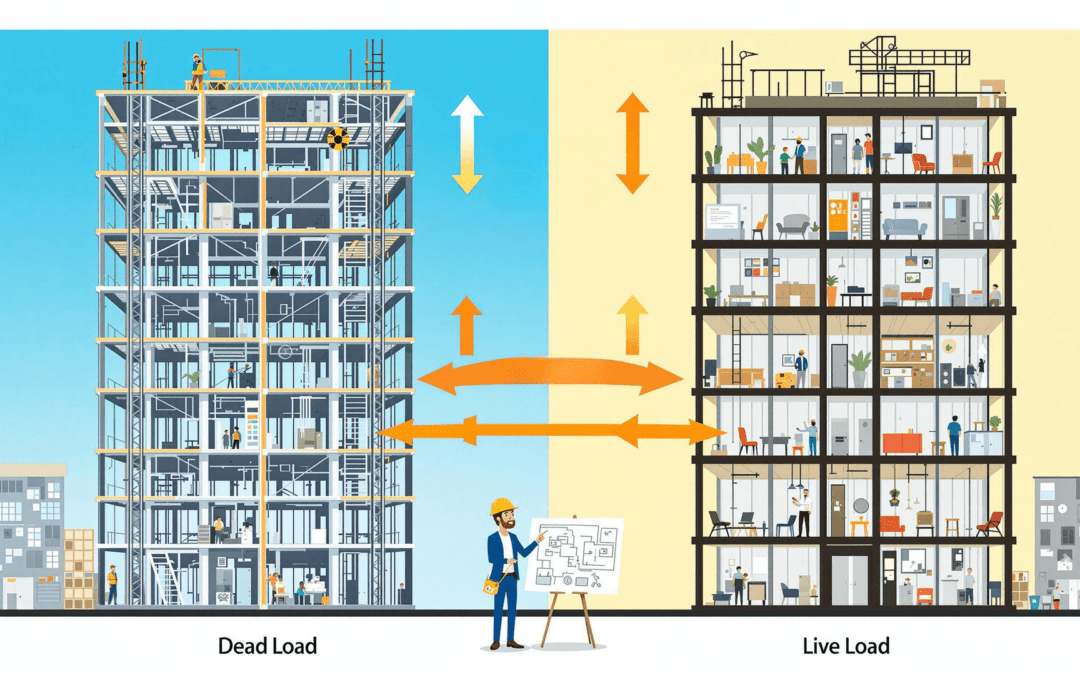
Loads on Structures Explained: Dead Load vs. Live Load
Structural engineering is a critical field that ensures the safety and integrity of buildings. Central to this discipline are the concepts of dead loads and live loads, which are essential for anyone looking to hire a structural engineer. Understanding these loads is crucial in designing stable and efficient structures.
What Are Loads in Structural Engineering?
In the context of structural engineering, loads refer to forces or other actions that lead to deformations, stresses, and displacements in a structure. They are essential considerations during the design process to ensure that structures can withstand various forces over time. Loads are generally categorized into two main types: dead loads and live loads.
Understanding Dead Loads
Dead loads are the permanent or static forces acting on a structure. They primarily consist of the weight of the construction materials themselves. The importance of dead loads lies in their constancy, as they do not change over time, making them predictable for structural analysis.
Components of Dead Loads
- Construction Materials: The weight of floors, walls, roofs, and other structural components.
- Fixed Fixtures: Includes immovable parts such as plumbing, electrical installations, and built-in cabinets.
- Permanent Additions: These might include elements like flooring finishes or permanently installed furniture.
The accurate calculation of dead loads is vital because it directly influences the structural integrity and design efficiency. When you hire a structural engineer, ensuring they provide precise dead load calculations can help optimize material use and overall cost.
Understanding Live Loads
Unlike dead loads, live loads are transient and variable forces acting on a structure. They account for the movable items within a building and any temporary forces it may encounter.
Components of Live Loads
- Occupant Weight: The weight of people and animals using the space.
- Furniture and Equipment: Movable items like desks, chairs, machinery, or any non-permanent fixture.
- Environmental Factors: Includes snow, wind, and seismic activities, which can affect a building at various times.
Importance of Live Loads
The unpredictable nature of live loads requires careful consideration to ensure safety under varying conditions. By hiring a structural engineer, you benefit from expert evaluations of potential live loads, ensuring that your structure can accommodate these changes without compromising safety.
Differences Between Dead Load and Live Load
- Permanency: Dead loads are constant, whereas live loads vary over time.
- Calculation: Dead loads are easier to calculate due to their constancy, while live loads require estimations and may need adjustments based on usage.
- Impact on Design: Both loads impact material selection and structural design, but live loads demand more flexibility to accommodate changes.
Why Accurate Load Calculations Matter
Accurate load calculations are crucial for a structure’s longevity, safety, and efficiency. A professional structural engineer can provide these calculations, offering a blueprint that enhances the building’s response to both expected and unexpected forces. Ensuring precise load assessments can prevent structural failures and reduce repair and maintenance costs over time.
How to Choose a Structural Engineer
When deciding to hire a structural engineer, consider the following factors to ensure they can efficiently handle load calculations:
- Experience and Expertise: Ensure they have a proven track record with similar projects.
- Credentials and Licensing: Verify their qualifications and professional licensing.
- Communication Skills: Effective communication is essential to ensure your needs are met and understood.
- References and Reviews: Look for reviews or ask for references to gauge their competence and reliability.
Conclusion
Understanding the difference between dead loads and live loads is fundamental for the safe and efficient design of any structure. As you consider your next building project, hiring a knowledgeable structural engineer who can accurately assess these loads is essential. Their expertise will ensure your structure stands the test of time, while safeguarding the people and assets it supports.
Q1: What are loads in structural engineering? A1: In structural engineering, loads are forces or actions causing stress and displacement in structures. They are crucial for designing stable buildings and come in two main types: dead loads, which are static, and live loads, which are variable.
Q2: What is a dead load? A2: A dead load refers to permanent forces acting on a structure, mainly due to construction materials like beams, walls, and roofs. Since they are constant, they are predictable and crucial for the structural design.
Q3: What is a live load? A3: A live load consists of variable forces on a structure, such as occupants, furniture, and environmental factors like snow and wind. These loads are crucial for design and require careful consideration due to their unpredictable nature.
Q4: How do dead loads and live loads differ? A4: Dead loads are static and constant, whereas live loads are dynamic and change over time. Both affect material selection and design, but live loads demand more flexibility in design to accommodate changes.
Q5: Why are accurate load calculations important? A5: Accurate load calculations are vital for a building’s safety and longevity. They ensure structures withstand forces without failure. Hiring a structural engineer ensures precise load assessments, reducing potential risks and costs.
Q6: How can one hire the right structural engineer? A6: To hire a structural engineer, check for experience, credentials, communication skills, and references. A qualified engineer ensures that your building’s load calculations are precise and reliable.
Apr 8, 2025 | Fundamentals & Explanations:
When constructing a building, understanding its structural elements is crucial for ensuring safety, durability, and functionality. Whether you’re planning to hire a structural engineer or simply curious about the mechanics behind architecture, recognizing these elements helps in appreciating the complex process of building design.
The Role of a Structural Engineer
A structural engineer is pivotal in the construction process. They are responsible for designing, assessing, and supervising the critical components of a structure. By assessing factors like weight, strength, and materials, they ensure that everything is well-supported, safe, and sustainable. When you hire a structural engineer, you bring in expertise that helps in mitigating risks and optimizing the building’s performance.
Essential Structural Elements
- Foundation
- Purpose: The foundation supports the entire building, distributing weight evenly and preventing settlement issues.
- Types: Includes shallow foundations (like footings) and deep foundations (such as piles).
- Beams and Columns
- Beams: Horizontal elements that carry loads across gaps, supporting floors, roofs, and walls.
- Columns: Vertical elements that transfer loads to the foundation. They are critical for maintaining the building’s stability.
- Walls
- Function: Provide enclosure and support. Load-bearing walls play a structural role, supporting beams and the roof.
- Materials: Can be made from materials like bricks, concrete, or wood.
- Floors and Roofs
- Floors: Must bear loads and impacts; typically made from concrete, wood, or steel.
- Roofs: Protect from weather and contribute to thermal and acoustic insulation. Design varies from flat to sloped, depending on climate and aesthetics.
- Trusses and Frames
- Trusses: Triangular units used to support roofs and bridges, distributing loads efficiently.
- Frames: Serve as the skeleton of the building, often made of steel or timber.
Importance of Material Selection
Choosing the right materials is vital for function, durability, and cost. Common materials include:
- Concrete: Known for its strength and versatility.
- Steel: Offers high tensile strength and flexibility.
- Wood: Provides aesthetic appeal and insulation properties.
Why Hire a Structural Engineer?
Hiring a structural engineer ensures that all of these elements are properly designed and integrated into the overall construction plan. They bring significant benefits:
- Expertise in Design and Analysis: They analyze the forces acting on a structure, ensuring it meets local building codes and standards.
- Cost Efficiency: By optimizing materials and designs, they help reduce expenses without compromising safety.
- Risk Management: They anticipate potential issues and offer solutions, minimizing the risk of structural failure.
Conclusion
In the world of construction, understanding the basics of key structural elements is essential. From the foundation to the roof, each component works together to create buildings that are safe, functional, and enduring. Whether you’re a builder, architect, or future homeowner, appreciating these elements underscores the importance of hiring a structural engineer, whose expertise is invaluable in transforming architectural visions into reality.
Q1: What are the key structural elements in buildings? A1: Key structural elements include the foundation, beams, columns, walls, floors, roofs, and trusses. Each plays a critical role in supporting and stabilizing the building.
Q2: Why is a foundation important in building construction? A2: The foundation provides support, distributes weight evenly, and prevents settlement issues. It’s crucial for the building’s overall stability and safety.
Q3: What is the role of a structural engineer in construction? A3: A structural engineer designs, assesses, and oversees the building’s structural components. Their expertise ensures that structures are safe, durable, and compliant with building codes.
Q4: How do beams and columns function in a building? A4: Beams are horizontal elements that support loads across gaps, while columns are vertical and transfer loads to the foundation. Together, they maintain the building’s structure.
Q5: Why should you hire a structural engineer? A5: Hiring a structural engineer brings expertise in design, risk management, and cost efficiency, ensuring safety and minimizing the risk of structural failure.
Apr 8, 2025 | Fundamentals & Explanations:
What is a Structural Engineer?
Structural engineering is a specialized field of civil engineering focused on designing and analyzing structures that support or resist loads. Structural engineers ensure that buildings, bridges, and other structures are safe, stable, and sustainable. Let’s dive deeper into what these professionals do and understand why you might consider hiring a structural engineer for your next project.
The Role of a Structural Engineer
Designing Safe Structures
One of the primary responsibilities of structural engineers is designing structures that can withstand various forces and stresses. This includes considerations for gravity, wind, earthquakes, and the weight of the structure itself. Their designs ensure the safety and durability of buildings, ensuring compliance with local and national regulations.
Analyzing Structural Integrity
Structural engineers use advanced software tools and methods to analyze the integrity of structures. They assess materials such as steel, concrete, wood, and other composites to determine their suitability for specific projects. This step is crucial for preventing failures that could lead to catastrophic results.
Consulting and Collaboration
Structural engineers often work closely with architects, contractors, and other stakeholders. Their expertise is vital in modifying architectural plans to improve structural soundness without compromising design aesthetics. Early involvement can significantly reduce the risk of costly errors.
Inspecting and Evaluating Existing Structures
Apart from designing new constructions, structural engineers evaluate existing structures. Whether it’s an old bridge or a historic building, they inspect to identify any potential issues, offering solutions for reinforcement or renovation.
Why Hire a Structural Engineer?
Expertise in Complex Projects
For any project involving complex designs or large structures, hiring a structural engineer is crucial. Their specialized knowledge ensures that the proposed structure is both functional and secure, minimizing risks associated with construction.
Cost-Effectiveness
While it might seem like an added expense, hiring a structural engineer can save money in the long run. Their input can optimize material usage, prevent construction delays, and avert potential legal issues related to building codes.
Safety Compliance
Structural engineers are up-to-date on the latest building codes and safety regulations. Their involvement guarantees that your project complies with all necessary standards, protecting you from legal liabilities.
Problem-Solving Skills
Structural engineers are trained problem solvers. Whether dealing with geographical challenges or unique architectural demands, they provide innovative solutions tailored to each situation.
When to Hire a Structural Engineer
Building a New Home or Addition
If you’re planning to build a new home or add an extension, a structural engineer can ensure that your plans are feasible and safe. They’ll work alongside architects to translate your vision into a reality that adheres to engineering principles.
Renovating or Repairing a Building
For renovations involving structural changes, such as removing load-bearing walls, it’s essential to consult a structural engineer. They’ll provide valuable insights and calculations needed to execute these changes safely.
Assessing Property Damage
In the event of property damage from natural disasters or other unforeseen incidents, structural engineers assess the extent of damage and recommend the necessary repairs to restore integrity.
Investing in Real Estate
Potential property investors can benefit from a structural evaluation before purchasing. An engineer can identify hidden flaws or issues that might affect the property’s value and safety.
Ensuring Long-Term Performance
Whether for a private home or a commercial building, structural engineers ensure long-term performance through their meticulous analysis and strategic planning.
Conclusion
Structural engineers play an essential role in the construction and maintenance of safe, efficient, and sustainable structures. Their expertise not only contributes to the safety and longevity of buildings but also offers practical solutions for complex engineering challenges. Whether you’re embarking on a new construction project or maintaining older structures, hiring a skilled structural engineer is an invaluable investment in safeguarding your assets and ensuring success.