
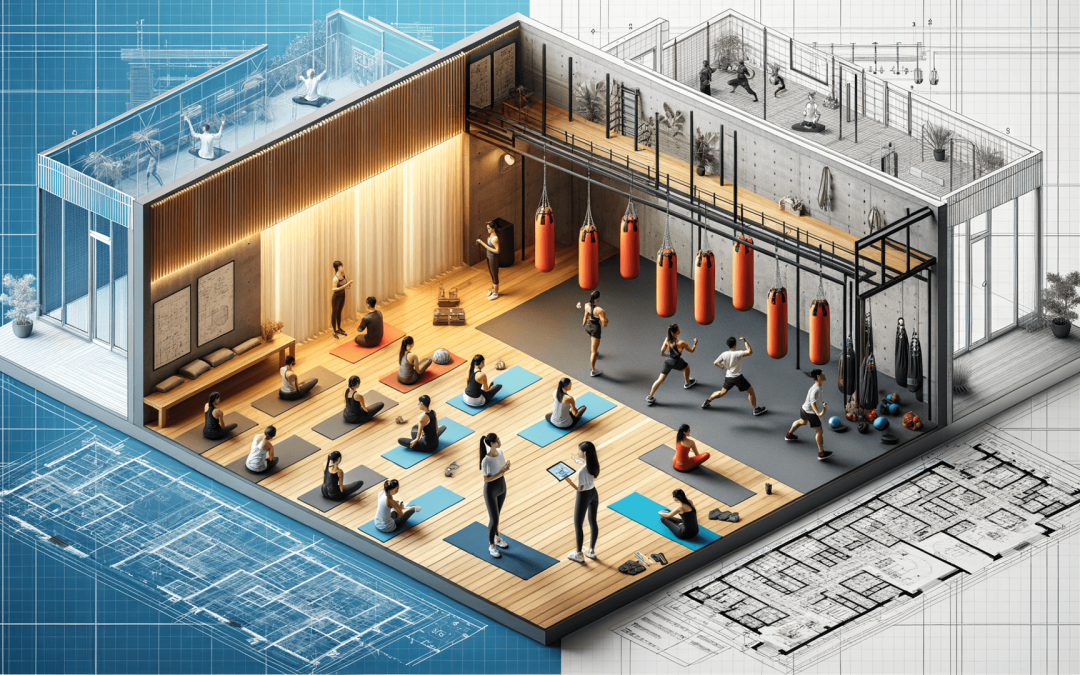
From Yoga to Boxing: How a Structural Engineer Adapts Designs for Boutique Fitness Tenants
Boutique fitness tenants—from serene yoga studios to high-impact boxing gyms—change how buildings need to perform. The moment you plan a conversion or build-out, a structural engineer becomes essential to anticipate loads, vibration, anchorage, and code implications that go far beyond a typical retail or office tenant improvement. This guide explains what’s different, what to check early, and how to design safe, quiet, neighbor-friendly spaces that protect your investment.
Why Boutique Fitness Changes the Structural Playbook
Fitness uses are unusually demanding. They concentrate people, equipment, and movement in ways that test floors, roofs, and walls. Key differences include:
- Higher and more varied live loads than offices or standard retail
- Dynamic and impact loads from synchronized movement or dropped weights
- Structure-borne noise and vibration that travel through slabs and framing
- Specialized anchorage for rigs, heavy bags, and overhead systems
- Penetrations for MEP systems that can cut through structural elements
- Potential changes of occupancy and code category that affect design loads
These factors rarely resolve with finishes alone. Flooring, rubber mats, and acoustic panels help—but they cannot replace load path design, proper anchorage, or vibration control at the structural level.
Prelease Due Diligence: Know Your Structure Before You Sign
Before committing to a space:
- Verify floor and roof capacities. A structural engineer can review as-builts, perform a quick check or a detailed analysis, and recommend reinforcement if needed.
- Scan slabs. Ground-penetrating radar (GPR) locates rebar, tendons, conduits, and post-tension cables before coring or anchoring.
- Identify vibration sensitivity. Mixed-use buildings over retail or under residences demand stricter vibration and noise control.
- Check clear height and layout. Rigs, rings, or cycling tiers need vertical clearance and unobstructed load paths.
- Confirm rooftop allowances. Large mechanical units, dunnage frames, and curb openings require roof-specific checks.
- Plan penetrations early. Coordinate MEP routing to avoid beams, girders, or major slab tendons.
Early insight lets you size the business program to the building—before costly redesigns.
Yoga and Pilates: Quiet Loads, Quiet Floors
While yoga and Pilates impose relatively modest static loads, they are sensitive to vibration and noise:
- Vibration criteria. Complaints arise from footfall and nearby equipment; stiffening or strategic isolation may be required in wood-framed or long-span floors.
- Sprung or resilient floors. A properly detailed subfloor can improve comfort and reduce structure-borne sound to neighbors below.
- Humidity and temperature control. If humidification is needed (e.g., hot yoga), coordinate added equipment weight and roof support.
- Penetrations and lighting. Suspend aerial yoga or lighting only from verified framing; use rated anchors and provide blocking or steel where needed.
The takeaway: comfort and quiet come from structural planning, not just finishes.
Spin Studios: Rhythmic Loads, Sound, and Vibration
Spin combines synchronized pedaling with amplified sound:
- Rhythmic live loads. Repetitive movement can amplify floor vibration; engineers may prescribe stiffening or tuned floor systems.
- Equipment anchorage. Some bikes are freestanding; others require anchors. Coordinate anchor types with slab thickness and reinforcement.
- Floating floors. A layered system (top finish, mass layer, resilient isolators) significantly reduces low-frequency sound transmission.
- Wall upgrades. Double-stud or resilient channels help with airborne noise, but structure-borne vibration must be addressed at the slab and framing.
In mixed-use buildings, spin studios often drive the strongest vibration mitigation requirements.
HIIT and CrossFit: Impact, Rigging, and Clearance
High-intensity training introduces some of the most challenging loads:
- Dropped weights. Impact loads can exceed static ratings; rubber mats alone won’t protect a lightly reinforced slab. Solutions include localized thickened slabs, embedded reinforcement, or engineered platforms on isolation pads.
- Rigs and pull-up frames. Wall- or ceiling-mounted rigs require dedicated steel or reinforced walls, with design for combined vertical, lateral, and impact forces.
- Turf sled lanes. Concentrated rolling loads and repeated impacts call for slab checks and subfloor design.
- Open spans and clear height. Removing partitions can affect lateral systems; engineers may add transfer beams, moment frames, or braces to maintain stability.
If your program includes Olympic lifting, plan structural upgrades from day one.
Boxing and Martial Arts: Dynamic Anchors and Rings
Boxing and martial arts mix point loads and dynamic cyclic forces:
- Heavy bag anchorage. Each bag can apply significant cyclic tension and shear at its anchor, especially when multiple bags swing in phase. Engineers often design steel support frames that distribute loads to major beams and columns, avoiding overstressing a single joist or wood member.
- Speed bags and wall gear. Provide blocking or steel plates; verify wall type and load path.
- Rings and platforms. Elevated rings add concentrated loads and vibration. Design the support framing and isolation so impacts don’t travel to adjacent tenants.
- Mat areas. Thicker matting reduces impact but does not reduce structural load—check the slab beneath.
Properly engineered anchors prevent fatigue failures and nuisance noise.
Shared Concerns Across All Studios: Acoustics, Vibration, and Neighbors
No matter the modality, the biggest post-occupancy complaints often involve noise and vibration:
- Structure-borne noise. Sound travels through framing more efficiently than air. Solve it at the source with isolation pads, floating floors, and resilient mounts.
- Flanking paths. Vibration can bypass room treatments through columns, walls, or continuous slabs. Engineers detail breaks or isolation joints to block flanking.
- Mechanical equipment. Large fans or rooftop condensers need inertia bases and spring isolators—and roof structure sized for both gravity and vibration control.
- Testing and commissioning. Accelerometers and test classes help verify performance before opening.
Integrate acoustical and structural strategies; neither discipline can solve it alone.
Retrofits in Existing Shells: Open Plans Without Compromise
Retail-to-fitness conversions often remove walls, raise ceilings, or carve mezzanines:
- Demolition impacts. Some walls are load-bearing or provide lateral resistance; don’t remove them without alternates in place.
- Transfer and support. Where columns or walls land within studio space, engineers can use transfer beams or frames to open the plan.
- Penetrations and sleeves. Coordinate core drilling with structural drawings and perform GPR scans to avoid damaging reinforcement or utilities.
- Mezzanines and storage. New mezzanines require load checks, lateral bracing, and stair/guard design; storage loads may exceed gym floor loads.
Avoid surprises with a sequence plan: shore, modify, then remove.
Roof and Mechanical Strategy: Dunnage, Curbs, and Anchors
Fitness tenants often need more HVAC capacity:
- Dunnage frames. Steel platforms spread equipment loads to beams and columns, reducing roof deck punch-through risk.
- Roof penetrations. Use framed openings; avoid cutting primary members. Provide curbs that maintain waterproofing and insulation continuity.
- Wind and seismic anchorage. Rooftop equipment must be anchored for code-level lateral forces; coordinate with the structural engineer for anchors and connections.
Roof work can drive both cost and schedule—plan it early.
Permitting, Special Inspections, and Liability
Fitness build-outs frequently trigger:
- Change of occupancy or use classification, affecting design loads and code pathways
- Special inspections for post-installed anchors, structural welding, or high-strength bolting
- Engineering letters and calculations for permit and landlord approval
- Submittal reviews for rig systems, anchors, and isolation components
Documented calculations and inspections protect owners, contractors, and neighbors.
When to Hire a Structural Engineer and What to Expect
Engage your engineer at concept, ideally before lease execution. You’ll get:
- Feasibility study: Floor/roof capacity, clear heights, anticipated upgrades
- Schematic load paths: Where rigs, bags, platforms, and equipment can go
- Vibration strategy: Floor stiffening, floating systems, and isolation details
- Coordination: Penetration layouts, rooftop dunnage, and MEP support
- Cost clarity: Early structural scopes that inform your budget
If you’re unsure where to start, hire a structural engineer for a quick due diligence review—it’s a low-cost step that can prevent expensive rework.
Quick Checklist for Owners and Landlords
- Obtain as-builts and prior structural reports
- Commission GPR slab scans before core drilling or anchoring
- Map heavy equipment, rigs, bags, and impact zones to major framing
- Define acoustic and vibration performance targets with your team
- Confirm roof loads and plan dunnage for new mechanical units
- Schedule special inspections for anchors and structural work
- Coordinate isolation details across structure, walls, and MEP
Conclusion: Build Boutique Fitness on a Solid Structural Foundation
Boutique studios succeed when the structure supports both the brand experience and the building’s long-term health. Whether your program is yoga, spin, HIIT, or boxing, the smartest investment is early, targeted engineering to manage loads, anchors, vibration, and acoustics. Aligning design and structure from the start keeps neighbors happy, permits smooth, and classes running without compromise—exactly why it pays to hire a structural engineer before you sign, design, or demo.
Q1: Why do boutique fitness tenants need different structural design? A1: Boutique fitness concentrates people, equipment, and motion, creating higher live loads, dynamic impacts, and structure-borne vibration than typical retail or office. Specialized anchorage, MEP penetrations, and potential occupancy changes compound risk. A structural engineer evaluates load paths, stiffness, and connections to control noise, protect neighbors, and keep permits, liability, and performance on track.
Q2: What should I check before leasing space for yoga, boxing, or HIIT? A2: Before you sign a lease, verify floor and roof capacities, scan slabs with GPR, assess vibration sensitivity in mixed-use buildings, confirm clear heights, and plan penetrations and rooftop units. Hire a structural engineer for a quick feasibility review; early analysis prevents costly redesigns and aligns your program—yoga, boxing, or HIIT—with the building’s realities.
Q3: How should yoga and Pilates studios be engineered structurally? A3: Yoga and Pilates need quiet, comfortable floors more than heavy load capacity. A structural engineer specifies sprung or resilient floor systems, targets vibration criteria, and designs isolation details in wood or long-span structures. If hot yoga adds humidification, they check roof support for new equipment and engineer safe anchorage for lights or aerial apparatus.
Q4: How do spin studios affect vibration and acoustics in buildings? A4: Spin studios create rhythmic, synchronized loading and powerful low-frequency sound. Engineers may stiffen floors, tune systems, and design floating floors to reduce structure-borne vibration. Bike anchorage must match slab thickness and reinforcement. Wall upgrades help airborne noise, but the slab and framing isolation is essential, especially under residences or above quiet retail.
Q5: What structural upgrades do HIIT or CrossFit spaces require? A5: HIIT and CrossFit demand impact-ready structure. Dropped weights can exceed static ratings; solutions include localized slab thickening, added reinforcement, or engineered platforms on isolation pads. Rigs need dedicated steel or reinforced walls for vertical, lateral, and impact forces. Opening plans may require transfer beams or frames to maintain the building’s lateral stability.
Q6: How should heavy boxing bags and rings be safely mounted? A6: Boxing introduces cyclic, concentrated loads. Heavy bags should hang from engineered steel frames that distribute forces to primary members, not single joists. Rings and platforms require designed supports and vibration isolation. Mats reduce comfort issues but not structural demand—hire a structural engineer to prevent fatigue failures, noise complaints, and unsafe anchors.
Q7: When should I hire a structural engineer for a fitness build-out? A7: Engage your engineer at concept. A structural engineer provides feasibility studies, schematic load paths for rigs and equipment, vibration strategies, rooftop dunnage and penetration coordination, and cost clarity. Expect calculations, anchor schedules, and special inspections supporting permits and landlord approvals. When in doubt, hire a structural engineer early to safeguard budget and schedule.