
Nov 3, 2025 | Beyond the Blueprint
From Yoga to Boxing: How a Structural Engineer Adapts Designs for Boutique Fitness Tenants
Boutique fitness tenants—from serene yoga studios to high-impact boxing gyms—change how buildings need to perform. The moment you plan a conversion or build-out, a structural engineer becomes essential to anticipate loads, vibration, anchorage, and code implications that go far beyond a typical retail or office tenant improvement. This guide explains what’s different, what to check early, and how to design safe, quiet, neighbor-friendly spaces that protect your investment.
Why Boutique Fitness Changes the Structural Playbook
Fitness uses are unusually demanding. They concentrate people, equipment, and movement in ways that test floors, roofs, and walls. Key differences include:
- Higher and more varied live loads than offices or standard retail
- Dynamic and impact loads from synchronized movement or dropped weights
- Structure-borne noise and vibration that travel through slabs and framing
- Specialized anchorage for rigs, heavy bags, and overhead systems
- Penetrations for MEP systems that can cut through structural elements
- Potential changes of occupancy and code category that affect design loads
These factors rarely resolve with finishes alone. Flooring, rubber mats, and acoustic panels help—but they cannot replace load path design, proper anchorage, or vibration control at the structural level.
Prelease Due Diligence: Know Your Structure Before You Sign
Before committing to a space:
- Verify floor and roof capacities. A structural engineer can review as-builts, perform a quick check or a detailed analysis, and recommend reinforcement if needed.
- Scan slabs. Ground-penetrating radar (GPR) locates rebar, tendons, conduits, and post-tension cables before coring or anchoring.
- Identify vibration sensitivity. Mixed-use buildings over retail or under residences demand stricter vibration and noise control.
- Check clear height and layout. Rigs, rings, or cycling tiers need vertical clearance and unobstructed load paths.
- Confirm rooftop allowances. Large mechanical units, dunnage frames, and curb openings require roof-specific checks.
- Plan penetrations early. Coordinate MEP routing to avoid beams, girders, or major slab tendons.
Early insight lets you size the business program to the building—before costly redesigns.
Yoga and Pilates: Quiet Loads, Quiet Floors
While yoga and Pilates impose relatively modest static loads, they are sensitive to vibration and noise:
- Vibration criteria. Complaints arise from footfall and nearby equipment; stiffening or strategic isolation may be required in wood-framed or long-span floors.
- Sprung or resilient floors. A properly detailed subfloor can improve comfort and reduce structure-borne sound to neighbors below.
- Humidity and temperature control. If humidification is needed (e.g., hot yoga), coordinate added equipment weight and roof support.
- Penetrations and lighting. Suspend aerial yoga or lighting only from verified framing; use rated anchors and provide blocking or steel where needed.
The takeaway: comfort and quiet come from structural planning, not just finishes.
Spin Studios: Rhythmic Loads, Sound, and Vibration
Spin combines synchronized pedaling with amplified sound:
- Rhythmic live loads. Repetitive movement can amplify floor vibration; engineers may prescribe stiffening or tuned floor systems.
- Equipment anchorage. Some bikes are freestanding; others require anchors. Coordinate anchor types with slab thickness and reinforcement.
- Floating floors. A layered system (top finish, mass layer, resilient isolators) significantly reduces low-frequency sound transmission.
- Wall upgrades. Double-stud or resilient channels help with airborne noise, but structure-borne vibration must be addressed at the slab and framing.
In mixed-use buildings, spin studios often drive the strongest vibration mitigation requirements.
HIIT and CrossFit: Impact, Rigging, and Clearance
High-intensity training introduces some of the most challenging loads:
- Dropped weights. Impact loads can exceed static ratings; rubber mats alone won’t protect a lightly reinforced slab. Solutions include localized thickened slabs, embedded reinforcement, or engineered platforms on isolation pads.
- Rigs and pull-up frames. Wall- or ceiling-mounted rigs require dedicated steel or reinforced walls, with design for combined vertical, lateral, and impact forces.
- Turf sled lanes. Concentrated rolling loads and repeated impacts call for slab checks and subfloor design.
- Open spans and clear height. Removing partitions can affect lateral systems; engineers may add transfer beams, moment frames, or braces to maintain stability.
If your program includes Olympic lifting, plan structural upgrades from day one.
Boxing and Martial Arts: Dynamic Anchors and Rings
Boxing and martial arts mix point loads and dynamic cyclic forces:
- Heavy bag anchorage. Each bag can apply significant cyclic tension and shear at its anchor, especially when multiple bags swing in phase. Engineers often design steel support frames that distribute loads to major beams and columns, avoiding overstressing a single joist or wood member.
- Speed bags and wall gear. Provide blocking or steel plates; verify wall type and load path.
- Rings and platforms. Elevated rings add concentrated loads and vibration. Design the support framing and isolation so impacts don’t travel to adjacent tenants.
- Mat areas. Thicker matting reduces impact but does not reduce structural load—check the slab beneath.
Properly engineered anchors prevent fatigue failures and nuisance noise.
Shared Concerns Across All Studios: Acoustics, Vibration, and Neighbors
No matter the modality, the biggest post-occupancy complaints often involve noise and vibration:
- Structure-borne noise. Sound travels through framing more efficiently than air. Solve it at the source with isolation pads, floating floors, and resilient mounts.
- Flanking paths. Vibration can bypass room treatments through columns, walls, or continuous slabs. Engineers detail breaks or isolation joints to block flanking.
- Mechanical equipment. Large fans or rooftop condensers need inertia bases and spring isolators—and roof structure sized for both gravity and vibration control.
- Testing and commissioning. Accelerometers and test classes help verify performance before opening.
Integrate acoustical and structural strategies; neither discipline can solve it alone.
Retrofits in Existing Shells: Open Plans Without Compromise
Retail-to-fitness conversions often remove walls, raise ceilings, or carve mezzanines:
- Demolition impacts. Some walls are load-bearing or provide lateral resistance; don’t remove them without alternates in place.
- Transfer and support. Where columns or walls land within studio space, engineers can use transfer beams or frames to open the plan.
- Penetrations and sleeves. Coordinate core drilling with structural drawings and perform GPR scans to avoid damaging reinforcement or utilities.
- Mezzanines and storage. New mezzanines require load checks, lateral bracing, and stair/guard design; storage loads may exceed gym floor loads.
Avoid surprises with a sequence plan: shore, modify, then remove.
Roof and Mechanical Strategy: Dunnage, Curbs, and Anchors
Fitness tenants often need more HVAC capacity:
- Dunnage frames. Steel platforms spread equipment loads to beams and columns, reducing roof deck punch-through risk.
- Roof penetrations. Use framed openings; avoid cutting primary members. Provide curbs that maintain waterproofing and insulation continuity.
- Wind and seismic anchorage. Rooftop equipment must be anchored for code-level lateral forces; coordinate with the structural engineer for anchors and connections.
Roof work can drive both cost and schedule—plan it early.
Permitting, Special Inspections, and Liability
Fitness build-outs frequently trigger:
- Change of occupancy or use classification, affecting design loads and code pathways
- Special inspections for post-installed anchors, structural welding, or high-strength bolting
- Engineering letters and calculations for permit and landlord approval
- Submittal reviews for rig systems, anchors, and isolation components
Documented calculations and inspections protect owners, contractors, and neighbors.
When to Hire a Structural Engineer and What to Expect
Engage your engineer at concept, ideally before lease execution. You’ll get:
- Feasibility study: Floor/roof capacity, clear heights, anticipated upgrades
- Schematic load paths: Where rigs, bags, platforms, and equipment can go
- Vibration strategy: Floor stiffening, floating systems, and isolation details
- Coordination: Penetration layouts, rooftop dunnage, and MEP support
- Cost clarity: Early structural scopes that inform your budget
If you’re unsure where to start, hire a structural engineer for a quick due diligence review—it’s a low-cost step that can prevent expensive rework.
Quick Checklist for Owners and Landlords
- Obtain as-builts and prior structural reports
- Commission GPR slab scans before core drilling or anchoring
- Map heavy equipment, rigs, bags, and impact zones to major framing
- Define acoustic and vibration performance targets with your team
- Confirm roof loads and plan dunnage for new mechanical units
- Schedule special inspections for anchors and structural work
- Coordinate isolation details across structure, walls, and MEP
Conclusion: Build Boutique Fitness on a Solid Structural Foundation
Boutique studios succeed when the structure supports both the brand experience and the building’s long-term health. Whether your program is yoga, spin, HIIT, or boxing, the smartest investment is early, targeted engineering to manage loads, anchors, vibration, and acoustics. Aligning design and structure from the start keeps neighbors happy, permits smooth, and classes running without compromise—exactly why it pays to hire a structural engineer before you sign, design, or demo.
Q1: Why do boutique fitness tenants need different structural design? A1: Boutique fitness concentrates people, equipment, and motion, creating higher live loads, dynamic impacts, and structure-borne vibration than typical retail or office. Specialized anchorage, MEP penetrations, and potential occupancy changes compound risk. A structural engineer evaluates load paths, stiffness, and connections to control noise, protect neighbors, and keep permits, liability, and performance on track.
Q2: What should I check before leasing space for yoga, boxing, or HIIT? A2: Before you sign a lease, verify floor and roof capacities, scan slabs with GPR, assess vibration sensitivity in mixed-use buildings, confirm clear heights, and plan penetrations and rooftop units. Hire a structural engineer for a quick feasibility review; early analysis prevents costly redesigns and aligns your program—yoga, boxing, or HIIT—with the building’s realities.
Q3: How should yoga and Pilates studios be engineered structurally? A3: Yoga and Pilates need quiet, comfortable floors more than heavy load capacity. A structural engineer specifies sprung or resilient floor systems, targets vibration criteria, and designs isolation details in wood or long-span structures. If hot yoga adds humidification, they check roof support for new equipment and engineer safe anchorage for lights or aerial apparatus.
Q4: How do spin studios affect vibration and acoustics in buildings? A4: Spin studios create rhythmic, synchronized loading and powerful low-frequency sound. Engineers may stiffen floors, tune systems, and design floating floors to reduce structure-borne vibration. Bike anchorage must match slab thickness and reinforcement. Wall upgrades help airborne noise, but the slab and framing isolation is essential, especially under residences or above quiet retail.
Q5: What structural upgrades do HIIT or CrossFit spaces require? A5: HIIT and CrossFit demand impact-ready structure. Dropped weights can exceed static ratings; solutions include localized slab thickening, added reinforcement, or engineered platforms on isolation pads. Rigs need dedicated steel or reinforced walls for vertical, lateral, and impact forces. Opening plans may require transfer beams or frames to maintain the building’s lateral stability.
Q6: How should heavy boxing bags and rings be safely mounted? A6: Boxing introduces cyclic, concentrated loads. Heavy bags should hang from engineered steel frames that distribute forces to primary members, not single joists. Rings and platforms require designed supports and vibration isolation. Mats reduce comfort issues but not structural demand—hire a structural engineer to prevent fatigue failures, noise complaints, and unsafe anchors.
Q7: When should I hire a structural engineer for a fitness build-out? A7: Engage your engineer at concept. A structural engineer provides feasibility studies, schematic load paths for rigs and equipment, vibration strategies, rooftop dunnage and penetration coordination, and cost clarity. Expect calculations, anchor schedules, and special inspections supporting permits and landlord approvals. When in doubt, hire a structural engineer early to safeguard budget and schedule.

Oct 27, 2025 | Beyond the Blueprint
Offices Reimagined: Why a Structural Engineer Is Essential for Flexible Workspaces
The modern office is in flux, and flexible workspaces are now a strategic advantage. Whether you’re planning a new headquarters or reimagining an existing floor plate, a structural engineer is central to making adaptability safe, efficient, and cost-effective. From raised floors and movable partitions to column-free layouts, the structural system sets the limits for how easily a space can evolve with your teams and technology. Below, we explore the core structural decisions that future-proof offices—and when to hire a structural engineer to guide them.
The Business Case for Flexibility
Work patterns change faster than leases. An office that can morph without major disruption reduces churn costs, downtime, and waste. Flexibility pays off when:
- Teams reorganize and need different adjacencies
- Technology upgrades demand new cabling routes or power layouts
- Tenants shift headcount, requiring denser or more open plans
- Meeting rooms, focus areas, and collaboration zones need rebalancing
The right structural blueprint supports these shifts without invasive demolition. Three strategies—raised floors, movable partitions, and column-free layouts—form the foundation.
Raised Floors: Hidden Infrastructure, Visible Agility
Raised access floors (RAF) create a serviceable plenum for power, data, and sometimes underfloor air distribution (UFAD). They allow plug-and-play reconfigurations with minimal dust, noise, or downtime.
Key structural considerations:
- Loads and stiffness: Standard office floor panels handle typical walking loads, but not concentrated loads from safes, library stacks, heavy filing, large printers, or server racks. A structural engineer will verify panel ratings, pedestal capacity, and overall floor stiffness to prevent bounce, rattles, or panel damage under rolling loads. Heavy items should bypass the raised floor and bear directly on the structural slab via localized supports.
- Floor height and accessibility: Common RAF heights range from 4 to 18 inches. Taller voids increase service capacity but affect floor-to-floor heights, thresholds, and ADA transitions. Ramps and edge detailing must be planned at elevators, stairs, and core interfaces.
- Fire and life safety: Firestopping around penetrations, compliant perimeter detailing, and alignment with the building’s fire strategy are essential. If the plenum carries air (UFAD), materials must meet stringent fire/smoke standards.
- Acoustics and sealing: Airtight underfloor compartments improve HVAC performance. Acoustic performance depends on panel seals, gaskets, and treatment around penetrations to reduce crosstalk.
- Partition interface: Most demountable partitions should not sit directly on panels unless the raised floor system is engineered for that use. A structural engineer can design bearing strips or localized stiffening to carry partition loads to the slab, avoiding panel cracking or settlement.
- Electrostatic and grounding: When sensitive equipment is present, grounding and anti-static finishes may be needed—best integrated early to avoid rework.
Why it matters: Raised floors enable rapid churn and technology upgrades. They are most effective when the structural system anticipates high point loads, integrates cleanly at cores, and accounts for vibration and deflection that influence panel and seal performance.
Movable Partitions: Change Walls Without Changing the Structure
Demountable and operable partitions enable fast reconfiguration of rooms and zones. Their success depends on how they connect to the slab and structure above.
Design and engineering essentials:
- Deflection compatibility: Floor slabs deflect under live load. Partitions need slip or deflection tracks at the head so ceilings won’t crack and doors won’t bind. A structural engineer will set expected live-load deflections (e.g., L/360 or better) so wall details accommodate movement.
- Lateral stability: Even “light” partitions must resist push/pull and door slams. Tall or heavy glazed walls need discreet braces or moment frames. For operable walls, overhead track point loads can be significant and require direct attachment to beams or inserts, not just to the ceiling grid.
- Drift and seismic: In moderate-to-high seismic regions, inter-story drift can damage partitions. Engineers size head-of-wall joints and connection details so walls move with the structure without losing integrity or fire rating.
- Fire and acoustics: Rated demountable walls must align with slab-edge firestopping and MEP penetrations. Achieving targeted STC ratings relies on substrate stiffness, sealant continuity, and proper head/foot details—another reason to involve the structural engineer early.
- Door headers and hardware: Large glass doors or operable partitions concentrate loads at specific points. These often need structural backing or integrated steel angles within ceilings.
Why it matters: Movable partitions save time and money only if the supporting structure anticipates their loads, movement, and performance requirements. Early coordination avoids costly rework and protects acoustic and fire strategies.
Column-Free Layouts: Space That Works Harder
Columns create obstacles to visibility, circulation, and reconfiguration. Column-free layouts maximize planning freedom and daylight penetration, making them ideal for agile work environments and large collaboration zones.
Strategies for longer spans:
- Steel framing with composite slabs: Wide-flange beams, composite metal deck, and girders are a proven path to 30–45 ft spans. Cellular or castellated beams can thread services through web openings, lowering overall depth.
- Post-tensioned (PT) concrete flat slabs: PT systems achieve long, column-free spans with shallow structural depth and clean soffits, great for ceiling flexibility and aesthetics. Drop panels or banded tendons fine-tune performance.
- Trusses and transfer beams: Where columns must be removed or relocated (common in retrofits), transfer elements redistribute loads. These require careful analysis of load paths, deflection, and vibration.
Performance criteria to watch:
- Vibration comfort: Open-plan offices with exposed floors can amplify footfall vibration. Engineers check human comfort using established guidelines and tune designs via increased stiffness, mass, or damping.
- Floor depth vs. MEP: Longer spans can increase structural depth. Coordinating beam depth with duct routes avoids “tunnel” ceilings. Early 3D coordination yields a flatter, more flexible soffit.
- Penetrations and future-proofing: Plan sleeves and soft zones for future penetrations without compromising structural integrity. Reserve corridors for services to limit cutting in critical regions.
Why it matters: The right long-span strategy creates truly open, adaptable floor plates and supports flexible seating, large meeting rooms, and events—without the visual clutter and planning constraints of closely spaced columns.
New Build vs. Retrofit: Different Paths to Flexibility
- New construction: You can choose the structural grid, long-span system, and cores to match your flexibility goals from day one. Opt for regular, repeatable grids (e.g., 30–35 ft) that balance span, vibration, and depth, with strategic oversized bays for collaboration areas.
- Adaptive reuse: Many existing buildings can be transformed with selective strengthening—steel haunches, carbon fiber reinforcement, localized thickening, or added framing. When removing columns or cutting new openings for stairs or atria, hire a structural engineer to analyze load paths, design transfers, and verify that deflections and vibrations stay within comfort thresholds.
Integrated Coordination: The Flexibility Multiplier
True flexibility comes from coordinated systems:
- Structural + MEP: Use cellular beams or coordinated openings to thread services and maintain ceiling height. Align heavy equipment zones over stronger framing.
- Structural + Architecture: Define clear “no-cut” zones, head-of-wall deflection limits, and standard details for demountable partitions and operable walls.
- Structural + Fire/Life Safety: Maintain alignment of fire ratings and smoke control when walls move. Ensure raised floor plenum firestopping is detail-repeatable.
Early, frequent coordination reduces conflicts, preserves ceiling height, and accelerates future changes.
Cost, Carbon, and Schedule
- First cost vs. lifecycle: Raised floors and long-span structures can cost more upfront but reduce churn costs dramatically. Demountable walls offer reuse potential and faster reconfigurations.
- Embodied carbon: Long-life, loose-fit structures minimize waste over time. Column-free spans reduce rework; demountable partitions are reusable; retrofits that retain cores and framing cut carbon significantly.
- Schedule resilience: Standardized connection details for partitions, predefined routes in raised floors, and well-planned penetrations permit rapid changes without major shutdowns.
When to Hire a Structural Engineer
Engage a structural engineer at concept design if you plan:
- Column-free zones over 30–35 ft spans or removal of existing columns
- Raised floor systems bearing partitions, heavy equipment, or UFAD
- Operable partitions with heavy overhead tracks or large glass assemblies
- New penetrations for stairs, atria, or shafts in existing slabs or beams
- Acoustic-sensitive spaces over lively floors (e.g., open office over labs or fitness)
- Seismic upgrades or drift-sensitive glazing and partitions
Early involvement ensures that the skeleton of your building aligns with how you’ll actually use it—now and in the future.
A Practical Checklist for Flexible Workplaces
- Define flexibility goals: What must move—desks, rooms, or entire zones?
- Choose a span strategy: Target a grid that balances cost, vibration, and MEP routing.
- Plan the plenum: Decide if raised floors will carry data, power, and/or air; set height and access standards.
- Standardize wall details: Use deflection tracks, rated head/foot details, and standard connections for demountable partitions.
- Reserve heavy zones: Map locations for safes, libraries, file banks, or server enclosures with direct structural support.
- Protect performance: Coordinate acoustics, vibration, and fire/life safety at all interfaces.
- Document future-ready details: No-cut zones, sleeve locations, and track supports for operable walls.
The Bottom Line
Flexible offices don’t happen by accident; they’re engineered. A structural engineer designs the bones of your building to anticipate change—backing operable walls where you need them, stiffening floors for comfort, clearing spans for openness, and channeling services to keep ceilings uncluttered. If your goal is a workspace that adapts as fast as your business, hire a structural engineer early and build flexibility into the structure itself. The result is a durable, future-ready office that’s easier to plan, cheaper to modify, and better to work in.

Oct 20, 2025 | Beyond the Blueprint
Open Spaces, Heavy Loads: Structural Solutions for Retail Floorplans
Retail thrives on openness—clear sightlines, flexible layouts, and uninterrupted circulation. But when heavy shelving, display systems, and dense back-of-house storage enter the picture, that openness can clash with structural realities. A structural engineer can reconcile these needs, designing floors and frames that safely carry high loads without cluttering the plan with columns. Whether you’re planning a new build or converting an existing space, here’s how to maximize openness while supporting heavy fixtures—and when to hire a structural engineer to guide the process.
The Weight Behind the Aisles: Understanding Retail Loads
Before you optimize the structure, you need to quantify what it must carry.
- Typical design live loads:
- Sales areas: often 75–100 psf (pounds per square foot), depending on code and use.
- Storerooms/light warehouse: 125–250 psf.
- Heavy racking or dense collectible displays: 250 psf and higher.
- Point loads:
- Gondola shelving, refrigerated cases, safes, and stacked merchandise can impose concentrated loads through small base plates or feet.
- Dynamic and service loads:
- Rolling loads from pallet jacks, stock carts, and occasional scissor lifts.
- Vibration from foot traffic affects customer comfort and product stability (especially glassware, electronics, or merchandise stacked high).
Getting these numbers right early allows your structural engineer to size members, select systems, and plan column grids that keep the floor open.
The Open-Plan Toolkit: Structural Systems That Carry More With Less
The right structure can stretch column spacing, create long-span zones, and tame point loads without overbuilding.
Long-Span Steel Framing
- Wide-flange beams with composite metal deck deliver efficient spans (30–45+ feet) and shallow floor depths.
- Castellated or cellular beams extend spans and provide openings for MEP routing to keep ceilings visually clean.
- Moment frames or braced frames at perimeter/existing walls preserve interior openness.
Post-Tensioned Concrete Slabs
- Post-tensioned (PT) flat slabs or banded PT beams offer long spans with minimal slab thickness, controlling deflection and punching shear under heavy shelves.
- Useful for multi-level retail or mixed-use infill where vibration and fire rating requirements are high.
Mass Timber With Hybrid Solutions
- CLT or glulam creates warm aesthetics with moderate spans; hybrid steel girders or concrete toppings can boost stiffness and manage vibration.
- Good for brand-forward environments when sustainability is a priority.
Transfer Girders and Clear Zones
- Strategic transfer beams/girders can create large column-free retail zones beneath structured parking or residential floors above.
- Place deep members along circulation edges, demising walls, or feature ceilings to minimize visual impact.
Floors That Hold Up: Slabs and Finishes for Heavy Fixtures
Heavy fixtures don’t just need strong framing; they need robust floor surfaces that resist cracking, settlement, and anchor pull-out.
- Slab-on-grade:
- For ground-level retail, a thickened slab-on-grade (6–8 inches or more with reinforcement) supports heavy shelving and refrigeration lines.
- Use saw-cut joint layouts aligned with aisles to reduce random cracking. Consider steel fibers for toughness and reduced jointing.
- Coordinate vapor barriers, insulation, and moisture mitigation for resilient flooring and refrigeration performance.
- Elevated floors:
- Use composite metal deck with concrete topping sized for both distributed and point loads.
- Plan for sleeve locations, post-installed anchors, and edge distances; avoid post-install drilling near PT tendons or congested reinforcement.
- Finishes:
- Polish concrete or high-durability coatings where rolling loads are frequent.
- Confirm friction and flatness tolerances for autonomous robots, high-bay pick equipment, or tall fixtures.
Columns Without Clutter: Grids That Balance Flexibility and Cost
Retail planners typically prefer wide grids—think 30×30 feet or larger. Achieving that economically requires smart trade-offs:
- Shift columns into low-traffic zones: behind checkout pods, within fitting room clusters, or along perimeter display runs.
- Align grids with typical bay widths of shelving and racking to reduce awkward gaps and improve planogram flexibility.
- Use deeper beams at select bays (feature ceilings or soffits) to enable larger open zones elsewhere.
- Consider mixed grids: long spans in the front-of-house, tighter grids where heavy back-of-house racking is concentrated.
Point Loads, Load Paths, and Punching Shear
Heavy fixtures act like small “foundations” on your floor:
- Distribute loads with continuous base rails or plates under shelves to reduce bearing pressure and limit slab distress.
- For PT or flat slab systems, check punching shear at columns and under densely loaded fixture clusters; add drop panels or shear reinforcement if needed.
- Specify anchor types matched to substrate and loads; for seismic zones, ensure engineered bracing and anchorage for tall or wheeled fixtures.
Vibration and Serviceability: Quiet Floors Sell Better
Even when strength checks pass, comfort criteria matter:
- Vibrations from footfalls or carts can rattle glassware and unsettle shoppers.
- Design for higher stiffness (lower deflection and frequency limits) in front-of-house areas. Consider thicker slabs, closer beam spacing, or composite action.
- Specify dynamic performance targets (e.g., minimum natural frequencies or acceleration limits) in the basis of design.
Lateral Systems That Preserve Openness
Long spans can reduce gravity columns, but lateral stability still counts:
- Perimeter braced frames: concentrate braces in corners, stair cores, or back-of-house to keep shopfronts free.
- Special moment frames: slim down bracing in premium storefront zones.
- Shear walls: hide within service blocks, elevators, or demising walls between tenants.
- Rely on the roof or floor diaphragm to drag lateral loads to the bracing, keeping the sales floor uncluttered.
Retrofitting Existing Spaces: What to Check Before You Move Fixtures In
Conversions are common—from big-box to specialty retail, office-to-retail, or historic shells. Before re-layout:
- Verify existing floor ratings from as-builts or load testing; many older office floors were not intended for 125–250 psf retail loads.
- Scan for PT tendons and rebar before coring for anchors or drains.
- Assess deflection history and floor levelness; plan for remediation or compounds where precise fixture alignment is needed.
- Upgrade lateral systems if storefronts are widened or interior shear walls are removed.
- Confirm fire ratings, MEP capacity, and slab moisture conditions for new floor finishes and refrigeration.
Coordination: Where Structure Meets Store Design
Seamless retail experiences come from early, integrated decisions:
- Fixture planning: Provide your structural engineer with fixture schedules, shelf heights, base plate sizes, and anticipated reconfiguration frequency.
- MEP routing: Coordinate beam penetrations and openings early; cellular beams or slab sleeves can maintain open ceilings.
- Refrigeration and rooftop units: Concentrated loads require curbs and load paths down to columns or lines of support; plan locations to avoid random deck reinforcement conflicts.
- Seismic and wind: Tall shelves may require bracing to structure; plan hidden anchors or top restraints that don’t disrupt sightlines.
Cost and Schedule: Spend Where It Matters
Pursue openness strategically:
- Prioritize long spans in customer-facing zones; accept tighter grids in storage to save tonnage and depth.
- Choose a system your local trades install efficiently—steel, PT concrete, or hybrid—based on market availability and lead times.
- Consider future flexibility: investing in slightly stronger slabs and strategic embeds now reduces costs of remerchandising later.
- Prequalify anchor systems and specify acceptable equivalents to avoid late procurement surprises.
Code, Safety, and Specialty Design
- Follow applicable building codes for live loads, egress, and fire protection; verify local amendments.
- Specialty items (pallet racks, mezzanines, guardrails, seismic bracing) often require delegated engineering—coordinate submittals and shop drawings early.
- In high seismic zones, ensure anchorage of shelves, signage, and equipment meets seismic requirements and protects egress paths.
When to Hire a Structural Engineer
Bring a structural engineer in as soon as you begin space planning—well before fixture procurement. You should hire a structural engineer if:
- You’re targeting column-free spans over 30–40 feet.
- Heavy displays, safes, or refrigeration create concentrated loads.
- You’re converting an office, historic, or unknown-rated floor to retail use.
- New openings, mezzanines, or major storefront changes are planned.
- You’re in a high seismic/wind zone or adding rooftop equipment.
- Vibration performance is critical (glassware, high-end displays, or premium customer experience).
Early engagement minimizes redesigns, provides accurate steel/concrete quantities, and streamlines permit approvals.
Quick Checklist: Information Your Engineer Will Need
- Proposed floor plan with fixture layouts and aisle widths.
- Fixture weights, base dimensions, and expected reconfiguration frequency.
- Live load categories for sales floor, stockroom, and specialty areas.
- Anticipated rolling loads (pallet jacks, carts, occasional lifts).
- Roof and equipment loads (RTUs, signage, solar, battery systems).
- Seismic/wind design parameters and performance expectations (vibration, deflection).
- Existing drawings, prior tenant loads, and any slab scans or core tests.
The Bottom Line
You don’t have to choose between dramatic, open retail spaces and heavy-duty merchandising. With the right structural system, thoughtful load planning, and early coordination, you can achieve wide spans, clean ceilings, and safe support for robust fixtures. Engage a structural engineer early, design for both strength and serviceability, and you’ll deliver a retail floor that looks light, feels open, and carries its weight—literally
Q1: How can I maximize open retail space while supporting heavy shelving? A1: Start by quantifying live loads and point loads from gondolas and equipment. Use long-span framing, distribute loads with base rails, and coordinate MEP penetrations early. A structural engineer optimizes beam depth, slab design, and anchorage so you keep wide sightlines without compromising safety or flexibility.
Q2: What structural systems enable long spans without many interior columns? A2: Long-span steel with composite deck, castellated/cellular beams, post-tensioned flat slabs, and hybrid mass timber-steel systems reduce columns while controlling deflection. Transfer girders create clear zones beneath upper levels. A structural engineer assesses cost, vibration, fire rating, and schedule to select the best system for your store.
Q3: How should floors be designed for heavy display systems and rolling loads? A3: Ground floors may use 6–8-inch reinforced slab-on-grade with strategic joints and moisture control. Elevated floors benefit from composite deck and concrete toppings sized for point loads, proper anchors, and protected PT tendons. Consult a structural engineer to verify bearing pressures, anchorage, and sleeve locations for safe performance.
Q4: How do I control vibration and deflection in open retail spaces? A4: Increase stiffness with thicker slabs, composite action, closer beam spacing, or PT to meet comfort targets. Set dynamic criteria for natural frequency and acceleration, especially near glassware or tall displays. A structural engineer balances span, depth, and cost so floors feel solid and merchandise stays stable.
Q5: Which lateral systems preserve openness in a retail floorplan? A5: Concentrate lateral resistance at the perimeter or back-of-house using braced frames, moment frames, and shear walls concealed within cores or service blocks. Rely on a strong diaphragm to drag forces to these elements. A structural engineer locates braces to protect storefronts and wide aisles from obstructions.
Q6: What should I check before retrofitting an existing building for retail loads? A6: Verify floor load ratings, scan for PT tendons and rebar, and assess deflection history and levelness. Review lateral capacity if removing walls or widening storefronts. Confirm fire ratings and slab moisture for finishes. Hire a structural engineer to evaluate point loads, anchors, and necessary reinforcements.
Q7: When should I hire a structural engineer for a retail project? A7: Hire a structural engineer when seeking spans over 30–40 feet, adding heavy displays or refrigeration, converting offices or historic shells, modifying storefronts, installing rooftop units, or targeting premium vibration performance. Early engagement reduces redesigns, improves cost certainty, speeds permits, and protects long-term flexibility.
Oct 13, 2025 | Beyond the Blueprint
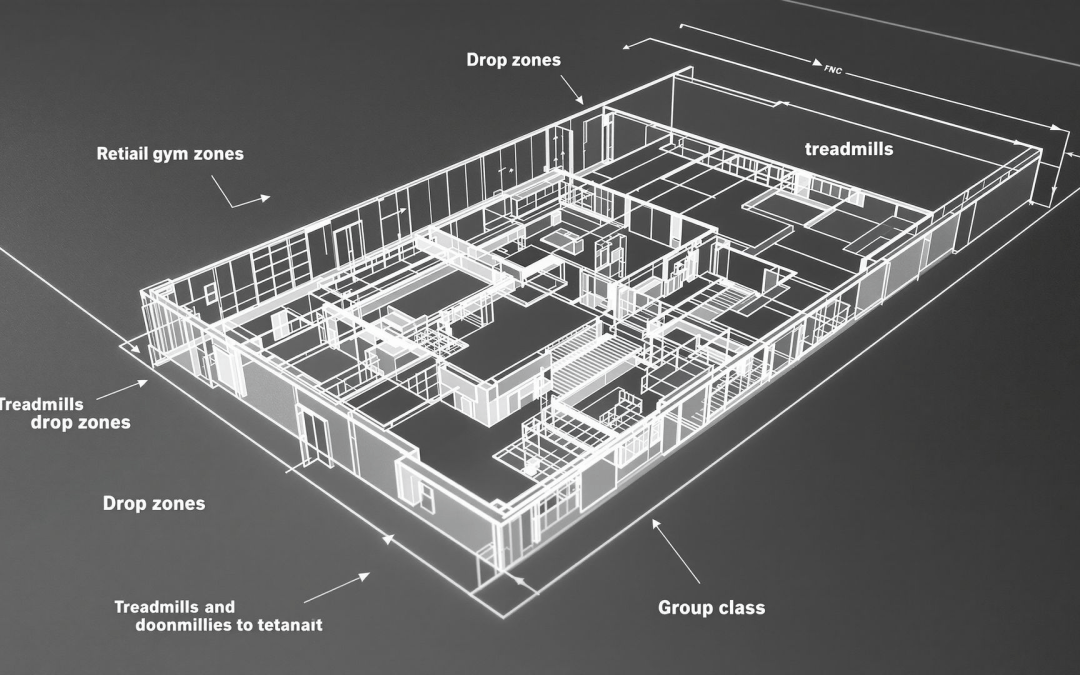
Designing for Dynamic Loads: A Structural Engineer’s Guide to Fitness Facilities
Gyms are not typical tenant build-outs. They impose dynamic, repetitive, and impact-heavy loads that demand a deliberate structural strategy. If you’re planning a new club or retrofitting an upper-floor studio, partnering early with a structural engineer is essential to address high vibration areas, floor reinforcement, and ceiling clearance. Here’s how to design for safety, comfort, and longevity—and when to hire a structural engineer to guide your decisions.
What Makes Gyms Structurally Different?
Fitness facilities introduce unique load cases compared to offices or retail:
- Dynamic loads: Rhythmic footfall from classes, sprint intervals on treadmills, and cyclical machine loads induce accelerations that affect comfort and equipment performance.
- Impact loads: Dropped barbells and medicine balls create short-duration, high-magnitude forces that can excite floor vibration and travel as structure-borne noise.
- Concentrated loads: Racks, weight trees, and large cardio equipment impose localized bearing demands on slabs and framing.
- Higher live loads: Many jurisdictions require higher live loads for “gymnasiums” or “assembly” than for offices. Verify applicable live load requirements and occupancy with your local authority.
The goal is not just meeting strength requirements; it’s achieving serviceability—controlling deflection and vibration for a stable, quiet experience.
High-Vibration Zones: Identify and Treat
Not all square footage sees the same demand. A thoughtful layout reduces risk before any reinforcement is considered.
Common hotspots
- Free-weight zones and Olympic lifting platforms (barbell drops, rack re-racks)
- Group fitness rooms (synchronized jumping, HIIT)
- Cardio decks (treadmill banks, stair climbers, rowers)
- Turf lanes (sled pushes, plyometrics)
- Functional training rigs (kipping pull-ups, ring work, ropes)
Assessment and performance criteria
A structural engineer will:
- Review as-built drawings to determine floor framing, spans, and stiffness.
- Conduct site surveys: slab thickness, deck rib direction, joist spacing, and existing supports.
- Perform analytical modeling and/or field vibration testing (using accelerometers) to quantify frequency, damping, and RMS accelerations.
- Compare results with human comfort and fitness-use criteria from recognized guidance (for example, floor vibration design guides and occupant comfort standards).
Mitigation hierarchy
- Plan location wisely: Place impact-heavy activities on-grade or over the stiffest framing bays. Avoid long-span or flexible areas for lifting and group classes.
- Stiffen the structure: Increase floor frequency to shift away from excitation ranges common in footfall and equipment use.
- Isolate sources: Use floating floors, resilient mounts, and isolation blocks under equipment.
- Operational controls: Limit drop heights, use technique mats, distribute loads across platforms, and set rules for class sizes or synchronized jumps on upper levels.
Combinations are common—isolated platforms over a stiffened bay, for example.
Floor Systems and Reinforcement Strategies
Every structural system behaves differently under dynamic loads. Understanding what you have is the first step to reinforcing it effectively.
Typical existing conditions and considerations
- Concrete slab on grade: Best for impacts; minimal vibration concerns. Focus on localized bearing and surface protection.
- Concrete slab on metal deck (composite): Good strength but can be lively on long spans. Pay attention to deck rib direction and concentrated loads.
- Post-tensioned (PT) slabs: Strong and efficient yet sensitive to drilling/coring. Always scan and follow strict anchoring protocols.
- Steel-framed floors with concrete topping: Potentially flexible; often need added stiffness or isolation measures for gyms.
- Timber/wood joist floors: Light and vibration-prone; generally poor candidates for heavy-impact zones on upper floors.
Reinforcement and upgrade options
- Localized stiffening
- Add beams or sister members under critical bays to shorten spans.
- Install steel channel “strongbacks” under joists to distribute loads and raise frequency.
- Introduce jack posts or columns to reduce unsupported lengths (coordinate with egress and architectural constraints).
- Surface and load distribution
- Thickened, high-density rubber over structural plywood or composite sheathing.
- Isolated lifting platforms with layered assemblies (mass + resilient layer + finish).
- Steel or thick plywood bearing plates beneath racks to spread puncture loads.
- Structural overlays and bonding
- Thin concrete topping (where weight and headroom permit) to add mass and stiffness.
- Fiber-reinforced polymer (FRP) strengthening on beams or slab soffits (engineer-of-record design required).
- Floating floors and isolation
- Resilient pads or spring-isolated subfloors tuned to avoid resonance with activity frequencies.
- Sprung floors for studios to balance energy return and occupant comfort.
Note: Standard rubber tiles alone rarely solve structure-borne vibration from heavy drops. They are best used as part of a layered assembly with mass and resilient isolation.
Concentrated loads and anchorage
- Verify strut locations and load paths for heavy equipment frames and storage trees.
- Provide bearing plates or sleepers to distribute concentrated loads over deck ribs and joists correctly.
- For anchors, scan slabs (GPR) to avoid PT tendons, conduits, and rebar. Use engineered adhesive or mechanical anchors with proper edge distances and embedment. Obtain approvals before drilling.
Ceiling Clearance and Overhead Loads
Ceilings in gyms are more than an aesthetic decision—clearances and structure above influence training options and safety.
Plan clearances for activities and MEP
- Functional rigs and pull-up bars: Often work best with 10–12 feet of clear height for headroom and dynamic motion.
- Rings and climbing ropes: Typically benefit from 14–18 feet; manage swing paths and fall zones.
- Bouldering or specialty areas: May require greater heights—coordinate early with your architect and structural engineer.
- Large fans (HVLS), ductwork, lighting grids, speakers, and acoustic baffles all compete for space. Use coordination models to avoid conflicts and ensure clean air paths over high-exertion areas.
Always confirm local fire/life safety requirements. Maintain required clearance to sprinkler deflectors and protect heads from inadvertent strikes. Coordinate with the authority having jurisdiction to ensure compliance.
Overhead anchorage and dynamic effects
- Overhead loads (TRX anchors, rings, punch bags) create dynamic tension and potential shock loads that exceed static body weight. Design anchors and supporting structure accordingly.
- Use dedicated steel members or embed plates rather than relying on drywall ceilings or light-gauge framing.
- Provide lateral bracing to limit sway. Verify that additional bracing does not compromise mechanical or sprinkler coverage.
Managing Noise and Structure-Borne Sound
Vibration and noise are linked. What you feel underfoot often becomes what neighbors hear through walls and ceilings.
- Increase separation: Position impact zones away from party walls, residential stacks, and sensitive tenants (studios, clinics).
- Control flanking: Detail slab edges, penetrations, and wall/floor intersections to reduce indirect transmission paths.
- Build-in mass and decoupling: Heavier floor assemblies with resilient layers perform better against low-frequency thumps. Use resilient ceiling hangers below noisy zones where needed.
- Commission acoustic tests: For mixed-use buildings, work with acoustical consultants to set and verify targets (e.g., impact insulation and airborne sound performance).
A structural engineer and acoustician working together can save costly retrofits by aligning stiffness, mass, and isolation strategies from the outset.
Pre-Lease and Pre-Construction Checklist
Before you sign or start:
- Obtain structural drawings, live load ratings, and any past reinforcement records.
- Verify floor system type, spans, slab thickness, and deck direction.
- Identify high-vibration areas in your program and test-fit those on the stiffest bays.
- Commission preliminary vibration assessments or field tests if locating impacts above grade.
- Scan for PT tendons, rebar, and services before any coring or anchoring.
- Confirm ceiling clear heights against your program (rigs, ropes, fans, lighting, acoustics).
- Coordinate with MEP and fire protection early—sprinkler coverage and ductwork can limit usable height.
- Budget for reinforcement and isolation assemblies; set realistic expectations with landlords and neighbors.
- Plan operational policies: drop zones, class sizes, and equipment specs to complement structural solutions.
When to Hire a Structural Engineer
Engage a structural engineer at concept stage if any of the following apply:
- You are placing free weights, platforms, or group exercise areas above grade.
- The building uses long-span steel, light wood framing, or slender composite slabs.
- You anticipate overhead equipment, heavy racks, or unique training zones (e.g., sled lanes, bouldering, rings).
- There are sensitive neighbors (residential, hospitality, studios) adjacent or below.
- You need to confirm or increase live load ratings, or you’re changing occupancy type.
Early involvement helps you value-engineer the layout, minimize reinforcement, and avoid delays. If in doubt, hire a structural engineer to review conditions and propose a pragmatic, buildable path.
Practical Design Tips for Gym Owners and Developers
- Put the noisiest activities on grade, if possible.
- Use isolated lifting platforms and distribute racks to avoid clustering impacts.
- Stiffen first, then isolate—the combination yields better control of low-frequency thumps.
- Design for maintenance: ensure access to isolation components, anchors, and equipment bases.
- Document operating rules (drop heights, mat requirements) and include them in tenant agreements.
- Pilot test a small zone: instrument, adjust assemblies, and scale the winning solution.
Conclusion
Fitness facilities live and die by member experience—and nothing undermines that faster than bouncy floors, rattling lights, or noise complaints. With the right planning, modeling, and targeted reinforcement, you can deliver stable, quiet spaces even on challenging upper-floor sites. The key is to align your program with the building’s capacity, design for dynamic loads, and incorporate isolation where it matters most. When in doubt, hire a structural engineer early to de-risk the project and keep your schedule, budget, and member comfort on track.
Q1: Why do fitness facilities need a structural engineer for dynamic loads? A1: Gyms impose dynamic, impact, and concentrated loads beyond typical offices. Rhythmic footfall, dropped weights, and heavy equipment excite floor vibration and create comfort and noise issues. A structural engineer evaluates strength and serviceability—frequency, deflection, damping—so layouts, reinforcement, and isolation meet code and comfort. Engage early to avoid costly retrofits.
Q2: What are high-vibration areas in gyms and how can a structural engineer mitigate them? A2: High‑vibration zones include free‑weights, Olympic platforms, group fitness rooms, treadmill banks, and turf lanes. A structural engineer maps framing, tests vibration, and compares results to comfort criteria. Mitigations include placing impacts on grade, stiffening critical bays, isolated platforms, tuned floating floors, and operational controls like limiting drop heights or synchronized jumping.
Q3: What floor reinforcement strategies work for gyms above grade? A3: Above‑grade gyms often need added stiffness and load distribution. Options include adding beams or strongbacks to shorten spans, jack posts or columns, composite or concrete toppings for mass, FRP strengthening, and bearing plates under racks. Use layered platforms (mass plus resilient isolation). Always hire a structural engineer to design anchors and upgrades.
Q4: How should ceiling clearance and overhead anchors be designed in gyms? A4: Plan clear heights for rigs, rings, and fans—typically 10–18 feet depending on activity—while preserving sprinkler clearance and airflow. Overhead anchors see dynamic shock loads; use dedicated steel or embed plates, proper bracing, and engineered fasteners, not light-gauge framing. Coordinate routes for ducts and lighting. Hire a structural engineer to validate capacities.
Q5: How can gyms manage noise and structure-borne vibration for neighbors? A5: Structure‑borne sound travels through floors and walls. Reduce complaints by separating impact zones from sensitive tenants, adding mass with resilient layers, isolating ceilings, and detailing edges to prevent flanking paths. Pair acoustic targets with structural stiffness and isolation strategies. An acoustician and structural engineer together deliver predictable, testable results.
Q6: When should I hire a structural engineer for a gym build-out? A6: Hire a structural engineer at concept if placing free weights or classes above grade, using long spans or wood framing, modifying PT slabs, adding overhead rigs, or adjacent to residences or hospitality. Also engage one when changing occupancy or verifying live load ratings. Early review de‑risks schedules, budgets, and comfort.
Q7: What should I check before leasing or building a gym space? A7: Before leasing or construction, obtain structural drawings and live‑load ratings, confirm slab type and spans, scan for PT tendons and utilities, and test-fit high‑impact zones on the stiffest bays. Validate ceiling clearances against your program and MEP. Budget for reinforcement and isolation, and document operating rules to complement engineering solutions.

Oct 6, 2025 | Beyond the Blueprint
Beams, Fryers, and Fire Codes: Why Every Restaurant Needs a Structural Engineer
Opening a restaurant is equal parts vision and rigor. Fryers, hoods, ductwork, grease traps, refrigeration, and high-traffic dining spaces all impose unusual demands on a building’s frame. A structural engineer turns that complexity into a safe, code-compliant, and buildable design—one that works with fire protection, HVAC, plumbing, and electrical systems rather than against them. If you’re planning a new build or a tenant improvement in an existing space, here’s how structural planning around hoods, grease traps, kitchen vibration, and MEP integration saves money, time, and headaches—and why you should hire a structural engineer early.
The Restaurant Load Case: More Than Just Tables and Chairs
Restaurants are not office fit-outs with tile floors. The structure must accommodate:
- Higher live loads in storage areas, coolers, and freezers
- Heavy, vibration-prone kitchen equipment
- Concentrated loads from rooftop fans, make-up air units, and Grease Exhaust fans
- Large penetrations for grease ducts, plumbing stacks, and exhaust shafts
- Frequent washdown and wet areas (which affect durability and deflection criteria)
A change of occupancy (for example, office to restaurant) often triggers stricter code compliance. That can mean verifying existing framing against current building codes and standards such as the International Building Code (IBC) and ASCE 7 for loads, as well as ensuring that fire-resistance-rated assemblies remain intact after new penetrations.
Hoods, Ducts, and Fire Codes: Structurally Right-Sizing the Hot Zone
Type I grease hoods are the heart of a hot kitchen—and a structural puzzle if you don’t plan early. NFPA 96 governs grease duct construction, clearance, and fire protection, but it’s the structure that must hold everything safely and without vibration.
Key structural considerations:
- Hood hanging points: Grease hoods can weigh hundreds of pounds before fire suppression piping, lights, and accessories. Plan structural attachment points (joists, beams, or supplemental strut frames) to avoid overloading ceiling finishes or light-gauge framing.
- Duct routing and openings: A grease duct wants the straightest, steepest path to the roof. Each turn adds weight, friction, and cleaning complexity. The structural engineer sizes and frames floor and roof openings, preserves required fire-resistance ratings with fireproofed shaft construction or listed fire wrap, and reinforces interrupted joists and beams around openings.
- Fire-resistance continuity: Any penetration through rated assemblies demands detailing that maintains the rating. That can include framed shaft walls, fire-rated doors for access panels, and UL-listed firestopping systems.
- Rooftop curbs and fans: Grease exhaust fans, make-up air units, and pollution control units add major loads to roofs. The structural engineer designs curb reinforcing, load distribution rails, and vibration isolation, ensuring the deck and framing can take the weight and wind uplift without leaks or ponding.
- Coordination with sprinkler and fuel gas: Overhead conflicts are common. Early coordination limits field rework by making sure duct clearances, pipe pitches, and structural supports coexist.
Result: a quieter, cleaner, safer exhaust system that meets NFPA 96 and building code requirements—and avoids expensive framing retrofits after duct paths are locked in.
Grease Traps and Interceptors: Slabs, Buoyancy, and Corrosion
Grease management is both a plumbing and structural issue. Whether your jurisdiction prefers indoor gravity grease interceptors, hydromechanical traps, or outdoor concrete interceptors, the structure must support the installation and long-term performance.
What to plan:
- Under-slab interceptors: Excavations may undermine existing foundations if not planned. The structural engineer checks soil capacity, designs slab thickening or edge beams, and details reinforcement around large cutouts. Where groundwater is high, buoyancy can lift a buried interceptor; anchorage or ballast may be required.
- Suspended or in-floor traps: Ceiling-mounted units in basements or parking levels impose concentrated loads on beams and slabs. Custom frames or hanger systems may be needed, with anchors designed for concrete or steel per manufacturer data and code requirements.
- Traffic-rated lids and floor loads: If an interceptor sits in a drive lane or delivery area, lids must carry vehicle loads. The structural design ensures surrounding framing, vault walls, and slabs are compatible with those loads.
- Corrosion and leakage: Grease is aggressive. Detailing for corrosion-resistant supports, protective coatings, and proper waterproofing at penetrations prevents deterioration of concrete and embedded steel.
- Trench drains and slopes: Kitchens need reliable drainage. Slight slab slopes to trench drains must be coordinated with thresholds and equipment leveling. The structural engineer details slab pours and joint locations to minimize cracking and trip hazards.
Thoughtful planning around grease management protects the structure, reduces maintenance, and keeps odors and leakage out of public spaces.
Kitchen Vibration: Keeping the Rattle Down
Commercial kitchens are loud by nature, but structural vibration is optional. Mixers, grinders, compressors, and rooftop units can excite floor systems, turning a busy kitchen into a rattling, fatiguing environment.
How to control vibration:
- Equipment data first: The structural engineer needs operating speeds (RPM), equipment mass, and mounting details to evaluate resonance risk.
- Stiffness where it matters: Increasing floor stiffness under critical equipment—via joist doubling, short-span framing, or supplemental beams—raises natural frequency above excitation.
- Isolation mounts: Properly selected isolators and inertia pads for mixers, compressors, and fans reduce transmitted vibration. Structural support frames must be detailed to accept isolators and prevent short-circuiting through rigid connections.
- Dynamic analysis for long spans: Long-span floors common in retail shells can be lively. If the kitchen sits over occupied space, consider a dynamic evaluation and tailored stiffening.
Result: a kitchen that feels solid, extends equipment life, and minimizes disturbance to neighbors and diners.
MEP Integration: Making Systems and Structure Work Together
Mechanical, electrical, and plumbing systems are dense in restaurants. The project wins or loses in coordination.
Best practices:
- Early hanger load accounting: Thousands of pounds of ductwork, piping, cable tray, and kitchen hoods hang from the structure. The structural engineer confirms allowable hanger loads by bay and directs where to concentrate or distribute loads to avoid over-stressing deck or joists.
- Penetration planning: Identify all major shafts, chases, and floor openings during design. Pre-frame around openings, maintain fire ratings, and avoid Swiss-cheesing beams with field-cored holes.
- Seismic and wind restraint: In many regions, nonstructural components must be braced per ASCE 7. Coordinate seismic restraints for ducts, pipes, cable trays, and equipment with the structural engineer to ensure anchor design and bracing geometry match the base structure.
- Rooftop unit integration: RTUs need curbs, wind uplift checks, and roof diaphragm coordination. Concentrating multiple units on a single bay may require local reinforcement or load-spreading rails.
- Utility penetrations and sleeves: Gas, water, and electrical penetrations should align with framing. Pre-placed sleeves prevent field coring through rebar or post-tension tendons.
- BIM and clash detection: A quick 3D coordination pass can prevent last-minute duct reroutes that force structural modifications.
When structure and MEP are designed as a whole, the field install is faster, cleaner, and safer.
Retrofits and Tenant Improvements: Navigating the Unknowns
Many restaurants inhabit existing shells or historic buildings. Hidden conditions are reality—plan for them.
- Investigate early: Combine record drawings, selective probes, and non-destructive scanning (GPR for slabs, ferroscan for rebar, borescopes in shafts).
- Load verification: Confirm member sizes, decking type, and connection details. Many older roofs weren’t designed for today’s mechanical loads or large grease ducts.
- Strengthening options: Where needed, add beams, sister joists, steel channels, or carbon fiber reinforcement. Design curb frames that redistribute loads without overloading fragile members.
- Fireproofing and rating repairs: Cutting, welding, or adding supports can damage fireproofing. The structural engineer details repairs to restore ratings and corrosion protection.
- Phased construction: Maintain egress and fire separations during the build. Temporary shoring may be needed when cutting openings for ducts and stairs.
These steps reduce change orders and keep schedules intact.
Codes, Permits, and Inspections: Getting to Yes
Restaurant projects are heavily inspected for life safety. A structural engineer helps you clear the permitting and inspection path.
- Stamped drawings and calculations: Many jurisdictions require sealed structural documents for openings, rooftop units, and support frames.
- UL assemblies and firestopping: Specify listed systems for rated penetrations and verify compatibility with ducts, pipes, and cables.
- Special inspections: Anchors, welds, sprayed fire-resistive materials, and structural concrete may trigger special inspection. Plan the testing and hold points in advance.
- Closeout documentation: Provide as-builts for penetrations, supports, and any changes made during construction.
Proactive compliance avoids costly stop-work orders and rework.
When to Hire a Structural Engineer
Engage a structural engineer as soon as these milestones appear:
- Site or shell selection: Verify roof and floor capacities before signing a lease.
- Concept design: Lay out hoods, duct paths, shafts, and equipment zones early.
- Equipment selection: Confirm weights and operating characteristics for heavy or vibrating gear.
- Grease interceptor planning: Decide indoor vs. outdoor, slab thickening, or suspended supports.
- RTU and fan selection: Size curbs, check wind/seismic loads, and plan roof penetrations.
- Permit set: Provide sealed structural drawings for openings, supports, and reinforcements.
- Construction: Address unforeseen conditions quickly with engineered details.
If you’re unsure where to start, hire a structural engineer to perform a feasibility review before you commit to an existing space or finalize your equipment list.
Quick Checklist for Owners and Architects
- Do we know the roof and floor load capacities, including areas for storage and coolers?
- Have we sketched the grease duct route and reserved a straight shaft?
- Are hood hang points coordinated with structure and fire suppression?
- Are RTU and fan locations balanced across roof framing with curbs designed?
- Where will the grease interceptor go, and how are slab modifications handled?
- Have we accounted for hanger loads, seismic bracing, and anchors for MEP?
- Are penetrations and fire-rated assemblies detailed with listed systems?
- Have we planned vibration isolation for mixers, compressors, and fans?
- Do the permit drawings include stamped structural details for supports and openings?
The Bottom Line
In restaurants, structure is the quiet partner that makes everything else function—air moves safely, floors feel solid, drains fall the right way, and fire ratings stay intact. Early coordination keeps the kitchen efficient and the dining room comfortable. Whether you are building new or transforming a retail shell, hire a structural engineer to align beams, fryers, and fire codes into one integrated, code-compliant design.
Q1: Why does a restaurant need a structural engineer? A1: Restaurants impose heavier, concentrated, and vibrating loads than typical interiors. A structural engineer verifies roof and floor capacities, frames openings for grease ducts and shafts, preserves fire ratings, and designs supports for hoods and rooftop units. Early coordination prevents costly rework, improves safety, and streamlines permitting and inspections.
Q2: How should hoods and grease ducts be planned to meet fire codes? A2: Per NFPA 96, plan Type I hood hang points on structure, not ceilings, and give grease ducts the straightest rise to roof. The structural engineer frames floor and roof openings, reinforces interrupted joists, designs curb supports and vibration isolation, and details listed firestopping to maintain fire-resistance continuity throughout the exhaust path.
Q3: What should owners know about grease traps and slab support? A3: Grease interceptors affect structure. Under-slab units may require slab thickening, edge beams, and buoyancy anchorage; suspended traps impose concentrated loads needing engineered hangers. A structural engineer coordinates trench drains and slab slopes, specifies traffic-rated lids where vehicles cross, and details corrosion protection and waterproofing to prevent leaks that damage concrete and rebar.
Q4: How can a structural engineer reduce kitchen vibration and noise? A4: Kitchen mixers, compressors, and long-span floors can resonate. Hire a structural engineer to review equipment mass and RPM, increase floor stiffness near sensitive zones, and design isolation frames with appropriate mounts and inertia pads. Targeted dynamic analysis helps avoid rattling, protects equipment, and limits disturbance to diners and tenants below.
Q5: How does MEP integration impact restaurant structure? A5: Dense MEP systems add significant hanger and seismic loads. A structural engineer confirms allowable hanger loads by bay, pre-frames major penetrations and shafts, and coordinates seismic bracing and anchors per ASCE 7. For rooftop units, they design curbs, load-spreading rails, and uplift checks, preventing overstressed joists and field reroutes.
Q6: When should I hire a structural engineer for a restaurant build-out or retrofit? A6: Engage early. Hire a structural engineer during site selection to verify roof and floor capacity, at concept to map hood and duct routes, and during equipment and grease interceptor selection. They’ll deliver sealed support details for openings and rooftop units, and respond quickly to unforeseen conditions during construction and permitting.

Sep 26, 2025 | Beyond the Blueprint
High-Performance Foundations: Soil, Site, and Slab Considerations with a Structural Engineer
From concept through construction, a high-performance commercial foundation starts with the ground beneath it. Soil behavior, site conditions, and slab selection all interact to determine performance, cost, and risk. Early involvement from a structural engineer—working alongside a geotechnical engineer—helps align foundation decisions with building loads, schedule, and long-term resilience. If you’re planning a new facility or expansion, this guide clarifies how soil tests inform settlement risk, how to choose the right foundation system, and when to hire a structural engineer to protect your project.
Why Soil Rules the Foundation
Your foundation doesn’t just support the building—it mediates the building’s relationship with its site for decades. The soil profile controls bearing capacity, settlement, drainage, and durability. Variable fill, expansive clays, collapsible sands, high groundwater, or weak organic layers can all influence the best structural solution. Getting soil parameters wrong risks slab cracking, door misalignment, facade distress, utility breaks, and costly repairs. Getting them right can save months of schedule and millions in lifecycle costs.
Key outcomes that flow from the soil profile:
- Bearing capacity and allowable loads for footings, mats, or piles
- Total and differential settlement expectations
- Liquefaction and lateral spreading potential (in seismic zones)
- Frost susceptibility, shrink-swell movement, and heave risk
- Groundwater impacts on buoyancy and construction dewatering
- Corrosivity and sulfate attack potential affecting concrete and steel
Start with a Geotechnical Investigation
A thorough subsurface exploration is the cornerstone of foundation design. Before committing to a slab type or footing depth, insist on a site-specific geotechnical report. Work with a structural engineer to ensure the scope captures your building’s needs.
Typical field and lab investigations:
- In-situ tests: Standard Penetration Test (SPT), Cone Penetration Test (CPT), vane shear
- Borings and test pits to identify stratigraphy, fill, and organics
- Groundwater monitoring wells or piezometers for seasonal variation
- Laboratory tests: grain size, Atterberg limits, consolidation (oedometer), triaxial or direct shear, corrosion index, sulfate/chloride content
- Chemical screening for contaminants (where redevelopment or industrial history exists)
Deliverables to request:
- Recommended allowable bearing pressures for shallow foundations
- Anticipated total and differential settlements under service loads
- Subgrade modulus and parameters for slab-on-grade design
- Lateral and uplift resistance for deep foundations
- Seismic site class, liquefaction screening, and ground improvement recommendations
- Frost depth, drainage guidance, and corrosion exposure categories
Define Performance Early: Settlement and Serviceability
Foundation performance is rarely governed by ultimate strength alone. Serviceability—especially settlement control—drives long-term satisfaction and operating cost.
Set clear criteria up front:
- Total vs. differential settlement limits (e.g., differential ≤ 1/2 inch over 40 ft for typical office/retail; more stringent for precision manufacturing or racking)
- Floor flatness/levelness (FF/FL) targets for slab-on-grade
- Tolerance for crack widths and joint behavior
- Vibration criteria for labs, healthcare, or sensitive equipment
- Waterproofing limits for below-grade spaces
Partner with your structural engineer to translate performance targets into foundation type, slab system, and grading/drainage strategy. When in doubt, hire a structural engineer early—before value-engineering erodes performance margins.
Choosing the Right Foundation System
There is no single “best” foundation—only the best match to soil, loading, risk, and budget. Consider the following categories.
- Shallow Foundations (Spread Footings and Mats)
- Best for competent soils with moderate bearing capacity and limited settlement risk.
- Economical and fast to build.
- Use combined footings or grade beams where column spacing is tight or loads are heavy.
- Mat foundations suit heavy loads over variable soils, spreading load across the footprint to control differential settlement.
- Deep Foundations (Driven Piles, Drilled Shafts, Micropiles)
- Appropriate for weak near-surface soils or strict settlement limits.
- Transfer loads to deeper competent strata via end-bearing and/or skin friction.
- Micropiles excel on constrained sites or retrofits with limited headroom.
- Verify capacity via load testing; coordinate pile driving with noise/vibration constraints.
- Ground Improvement + Shallow Systems
- Improve subgrade to make shallow foundations feasible: stone columns, vibro-replacement, dynamic compaction, soil mixing, grouting, geogrids/geotextiles.
- Often reduces differential settlement and construction risk without going fully deep.
- Hybrid Systems
- Combine ground improvement with a mat foundation, or use pile-supported structural slabs in selective zones (e.g., under heavy equipment).
- Useful where uniform performance is required across a variable soil profile.
Cost, schedule, and constructability matter as much as technical suitability. A structural engineer can help compare total cost of ownership (construction + risk + maintenance) rather than chasing lowest first cost alone.
Slab-on-Grade: More Than a Flat Surface
Selecting the right slab system is crucial for performance, especially in warehouses, retail, healthcare, and data centers.
Common systems:
- Conventional slab-on-grade
- Reinforced for temperature/shrinkage; suitable for moderate loads and rack systems with adequate subgrade support.
- Post-tensioned (PT) slab
- Controls cracking and curling while spanning over localized soft spots; valuable in expansive clays and for high flatness needs.
- Structural slab (slab-on-piles)
- Isolated from problematic soils; eliminates slab settlement at the cost of added structure and detailing.
Design considerations:
- Subbase quality and uniformity: well-graded, compacted, with proper moisture conditioning.
- Vapor retarder/barrier placement: under-slab placement affects curling and moisture emissions; coordinate with flooring warranties.
- Joint design: spacing, load transfer (dowels), and sealants tailored to traffic, forklifts, and racking.
- Curling and shrinkage control: PT, low-shrinkage mixes, optimized aggregate gradation, and curing practices.
- Floor flatness/levelness: specify FF/FL criteria aligned with equipment needs and QA testing methods.
Water, Drainage, and Frost
Water is a primary driver of foundation distress. Design to keep it out, off, and away.
- Site grading: slope away from buildings (typically 5% for first 10 ft where feasible).
- Subsurface drainage: perimeter drains, under-slab drainage layers, and sump systems where groundwater is high.
- Waterproofing: select systems matched to hydrostatic pressure and soil chemistry; protect membranes during construction.
- Frost protection: found below local frost depth or use frost-protected shallow foundations with insulation details.
- Heave mitigation: in expansive clays, manage moisture with capillary breaks, controlled landscaping/irrigation, and PT slabs where appropriate.
Construction Quality and Verification
Even a sound design fails with poor execution. Build quality into the plan.
- Preconstruction coordination: align geotechnical, structural, and contractor interpretations of the report and drawings.
- Subgrade proof-rolling and acceptance criteria before placing subbase.
- Field density/moisture testing for fills and subbase layers.
- Concrete QA: mix design verification, slump/temperature/air tests, cylinders, and strength reports.
- Pile or shaft QC: driving logs, PDA testing, static load tests, integrity testing for drilled shafts.
- Instrumentation (as needed): settlement plates, inclinometers, or piezometers to validate assumptions on critical projects.
Sustainability and Cost Control
High-performance foundations can support sustainability goals without inflating budgets.
- Optimize quantities: mats vs. many footings; PT slabs to reduce thickness; ground improvement to avoid deep foundations.
- Concrete durability: mix for exposure class, SCMs to reduce cement content, and corrosion-resistant reinforcement where needed.
- Lifecycle cost view: weigh first cost against settlement risk, downtime, and repair likelihood.
When to Hire a Structural Engineer
You should hire a structural engineer:
- Before site purchase or early in due diligence to flag foundation risks and costs.
- When geotechnical variability is high (fills, organics, expansive clays, seismic hazards).
- If the building has heavy point loads, sensitive equipment, tall racking, or strict settlement limits.
- When long-term floor performance (flatness, vibration) is mission-critical.
- If hybrid or advanced systems (PT slabs, mats with ground improvement, pile-supported slabs) are on the table.
- To coordinate value engineering without compromising serviceability or durability.
Early collaboration between the structural engineer, geotechnical engineer, and contractor is the most reliable path to a foundation that performs on day one and year twenty.
Quick Planning Checklist
- Commission a geotechnical investigation scoped to your building loads and risk profile.
- Define settlement and serviceability targets early; set FF/FL criteria.
- Compare shallow, deep, and ground improvement options with lifecycle cost and schedule.
- Select a slab system matched to subgrade, loads, and moisture control requirements.
- Design comprehensive drainage and waterproofing details.
- Establish QA/QC protocols and acceptance criteria preconstruction.
- Engage and hire a structural engineer early to align design, cost, and performance.
The Bottom Line
High-performance foundations come from understanding the ground, defining performance, and selecting systems that manage risk gracefully. Soil tests inform settlement expectations; settlement criteria drive system choice; and construction quality locks in performance. Bring a structural engineer onto the team early to balance technical demands with pragmatic constructability, and you’ll deliver a commercial site that stays level, dry, and durable for decades.
Q1: What defines a high-performance foundation for commercial buildings? A1: A high-performance commercial foundation aligns soil conditions, site drainage, and slab design to deliver strength and strict serviceability—minimal differential settlement, flat floors, and durability. It starts with reliable geotechnical data and early collaboration between a structural engineer, geotechnical engineer, and contractor, prioritizing lifecycle cost, constructability, and quality control.
Q2: Which soil tests are essential before choosing a foundation system? A2: Before selecting a foundation, commission borings with SPT or CPT, groundwater monitoring, and lab tests (grain size, Atterberg limits, consolidation, shear). Request recommendations for bearing capacity, settlement, subgrade modulus, seismic site class, and corrosion. A structural engineer uses these parameters to size footings, mats, piles, and slabs confidently.
Q3: How can I assess and control settlement risk on a commercial site? A3: Set explicit total and differential settlement limits based on occupancy and equipment needs. Reduce risk by choosing mats on variable soils, deep foundations where near-surface soils are weak, or ground improvement to stiffen subgrades. For floors, post-tensioned slabs control cracking and curling. Monitor critical projects with settlement plates as needed.
Q4: How do I choose between shallow, deep, or ground-improved foundations? A4: Compare shallow footings and mats (fast, economical) with deep foundations (piles, drilled shafts) and ground improvement or hybrid solutions. Base the choice on soil profile, loads, schedule, noise/vibration constraints, and lifecycle cost. To balance risk and budget, hire a structural engineer to model options and quantify settlement performance.
Q5: Which slab-on-grade option is best for my commercial project? A5: Conventional reinforced slabs suit moderate loads on uniform subgrades. Post-tensioned slabs limit shrinkage, curling, and span soft zones—ideal for expansive clays or high flatness needs. Structural slabs on piles isolate floors from problematic soils. Specify subbase quality, vapor barrier location, joints/dowels, and FF/FL criteria aligned with operations.
Q6: How should water, drainage, and frost be managed to protect foundations? A6: Keep water out, off, and away. Grade the site to drain, add perimeter and under-slab drains where groundwater is high, and select waterproofing compatible with soil chemistry and pressure. Place foundations below frost depth or use frost-protected details; manage expansive clays with capillary breaks and moisture control.
Q7: When should I hire a structural engineer for foundation design? A7: Hire a structural engineer during due diligence to forecast foundation costs and risks. Engage them when soils vary, loads are heavy, equipment is sensitive, or hybrid systems (PT mats, pile-supported slabs) are considered. They coordinate with geotechnical data, set serviceability targets, and steer value engineering without sacrificing performance.