
Dec 29, 2025 | Beyond the Blueprint
Extreme Weather’s Impact on Buildings: When to Hire a Structural Engineer
From record-breaking heat to hurricanes and atmospheric rivers, extreme weather events are reshaping risk for homes and commercial buildings. Understanding how wind, water, fire, and temperature extremes affect a structure—and when to consult a structural engineer—can protect life safety, reduce repair costs, and improve resilience.
How Extreme Weather Damages Structures
- High winds and tornadoes: Uplift pressures can strip roofs, snap connections, and shift frames. Weak links in the load path cause progressive damage, especially at roof-to-wall and wall-to-foundation connections.
- Hurricanes and storm surge: Overturning forces, wave impact, and debris strikes compromise foundations, piles, and lower-story shear walls.
- Flooding and heavy rain: Hydrostatic pressure, scour, buoyancy, and prolonged moisture lead to foundation movement, wall bowing, rot, and corrosion of embedded steel.
- Snow and ice: Excess snow load, drifting at parapets, and ice dams overstress roof members and cause leaks that degrade framing.
- Extreme heat and drought: Thermal expansion, soil shrink–swell, and drying-induced settlement lead to cracking, misalignment, and joint failures.
- Wildfire and embers: Radiant heat degrades materials; ember intrusion ignites attics and siding, undermining structural integrity even without direct flame contact.
- Hail: Impact damage to roofing and cladding accelerates water intrusion and long-term structural decay.
Most Vulnerable Components
- Roof systems: Trusses, rafters, sheathing, and fasteners subjected to uplift, snow load, and impact.
- Cladding and attachments: Siding, soffits, and exterior insulation systems can detach under suction and wind-driven rain.
- Openings and glazing: Window and door failures admit water and internal pressurization.
- Foundations and slabs: Scour, erosion, differential settlement, and expansive soils.
- Connections: Bolts, straps, clips, and welds that complete the continuous load path.
Warning Signs to Check After a Storm
- New or widening cracks in foundations, masonry, or slab-on-grade
- Doors or windows sticking, racking of frames, or uneven floors
- Sagging or uneven roof lines, displaced trusses, or popped fasteners
- Water staining, spalling, rust-streaks, or soft spots in wood members
- Separation at roof-to-wall or wall-to-foundation joints
- Settlement near columns or pilasters; voids around footings
- Persistent musty odor, visible mold, or insulation saturated with water
If you observe any of these, document conditions with photos and promptly hire a structural engineer to assess safety and outline repairs.
When to Hire a Structural Engineer
Engage a licensed structural engineer when:
- You suspect structural damage post-event (wind, flood, wildfire, snow).
- There is visible movement, significant cracking, or deformation.
- You need a safety evaluation to reoccupy a building.
- Insurance or permitting requires an engineer’s report, repair design, or stamped drawings.
- You plan upgrades for wind, flood, or fire resilience and need load calculations and details.
- You’re elevating a structure, replacing a roof system, adding shear walls, or altering foundations.
A structural engineer provides a forensic assessment, calculates code-compliant loads (e.g., wind, flood, snow), designs repairs, and validates that contractors implement the continuous load path and detailing correctly.
Practical Upgrades to Boost Resilience
- Strengthen the load path: Add or upgrade roof-to-wall straps, hold-downs, anchor bolts, and sheathing nailing per current codes (e.g., ASCE 7 wind/snow loads).
- Roof improvements: Use enhanced nailing patterns, secondary water barriers, sealed roof decks, and impact-rated shingles or metal systems.
- Impact protection: Install impact-resistant glazing or shutters in wind-borne debris regions.
- Flood mitigation: Elevate equipment, add flood vents, consider dry or wet floodproofing, use flood-damage-resistant materials, and improve site drainage and backflow prevention.
- Foundation and soils: Improve drainage and grading, add scour protection, and consider deep foundations or helical piles in high-risk zones.
- Fire-hardening: Use Class A roofing, ignition-resistant siding, ember-resistant vents, noncombustible decks, and maintain defensible space in the home ignition zone.
- Envelope durability: Flashing upgrades, sealed penetrations, rainscreens, and corrosion-resistant connectors in coastal or humid environments.
- Monitoring and maintenance: Regular inspections, moisture control, and timely replacement of compromised fasteners and sealants.
A structural engineer can prioritize measures by risk, budget, and ROI, often phasing improvements over multiple projects.
Planning, Insurance, and Documentation
- Keep a pre-event baseline: Photos, drawings, and prior inspection reports speed evaluations and claims.
- Understand policy limits: Elevation certificates, code upgrade endorsements, and flood coverage affect recovery.
- Build a response plan: Identify who to call, how to secure the site, and how to triage hazards.
- Require as-builts and engineer-stamped repair documents to preserve future insurability and resale value.
Bottom Line
Extreme weather will continue testing buildings. Proactive design, targeted upgrades, and timely inspections reduce risk—and when damage occurs, hiring a structural engineer ensures repairs are safe, code-compliant, and resilient against the next event.
Q1: What impact do extreme weather events have on building structures? A1: Extreme weather strains buildings through wind uplift and lateral loads, storm surge and debris impact, hydrostatic pressure from floods, snow and ice accumulation, heat-driven expansion, drought-related settlement, wildfires’ radiant heat and embers, and hail impact. These forces weaken roofs, walls, foundations, and connections, increasing the likelihood of leaks, cracking, and structural failure.
Q2: Which parts of a building are most vulnerable to extreme weather damage? A2: The most vulnerable components include roof systems (trusses, sheathing, fasteners), exterior cladding and soffits, windows and doors that allow pressurization and water intrusion, foundations and slabs susceptible to scour and settlement, and the connections tying the continuous load path together. Failures in these links often trigger progressive, costly damage.
Q3: What warning signs after a storm mean I should hire a structural engineer? A3: After a storm, hire a structural engineer if you see new or widening foundation or masonry cracks, sticking doors or racked frames, sagging rooflines or popped fasteners, water staining, spalling or rust, separation at roof-to-wall joints, uneven floors, settlement near columns, persistent musty odors, or saturated insulation.
Q4: When should I hire a structural engineer after extreme weather? A4: Hire a structural engineer when safety is uncertain, significant cracking or deformation is present, reoccupancy requires evaluation, insurers or permitting demand an engineer’s report, or you plan resilience upgrades. They perform forensic assessments, calculate wind, flood, and snow loads, design code-compliant repairs, and provide stamped drawings for contractors.
Q5: What upgrades can strengthen a building against extreme weather? A5: Improve resilience by strengthening the continuous load path (straps, hold‑downs, anchor bolts), upgrading roof decks and secondary water barriers, adding impact-rated glazing or shutters, elevating equipment and adding flood vents, enhancing drainage and scour protection, using ignition-resistant materials, and improving flashing. A structural engineer can prioritize by risk, budget, and ROI.
Q6: How should I document damage and handle insurance after a disaster? A6: Document a pre-event baseline with photos and plans, then capture post-event conditions methodically. Understand policy limits, flood coverage, and code-upgrade endorsements. Build a response plan, secure the site, and coordinate with insurers. Require engineer-stamped repair documentation to preserve insurability, speed claims, and maintain resale value after extreme weather damage.

Dec 15, 2025 | Beyond the Blueprint
The Importance of Regular Structural Inspections by a Structural Engineer
Regular structural inspections, conducted by a licensed structural engineer, are essential for safeguarding lives, property, and long-term asset value. Whether you manage a commercial portfolio or own a single-family home, knowing when to hire a structural engineer can prevent small defects from turning into catastrophic failures and costly shutdowns.
Why Structural Inspections Matter
- Safety and risk reduction: Inspections identify hidden weaknesses—like compromised connections, corrosion, or settlement—before they escalate into structural failures.
- Cost control: Early detection of issues reduces remediation costs, helps you avoid emergency repairs, and extends the life of building components.
- Compliance and liability: A structural engineer provides documentation that supports code compliance, insurance requirements, and duty-of-care obligations.
- Resilience: Inspections improve performance under loads (wind, seismic, snow) and help buildings withstand extreme events with minimal downtime.
- Asset value: Verified structural integrity reassures lenders, tenants, buyers, and insurers, often improving marketability and valuation.
What a Structural Inspection Includes
A thorough inspection is more than a visual glance. A structural engineer systematically evaluates:
- Foundations and slabs: Settlement, heave, differential movement, cracks, moisture intrusion, and drainage performance.
- Framing systems: Beams, columns, joists, trusses, and load paths for signs of overstress, deflection, or damage.
- Building envelope interfaces: Flashings, lintels, masonry ties, and cladding connections where water can compromise structural elements.
- Corrosion and degradation: Steel corrosion, wood rot, termite damage, concrete spalling, and rebar exposure.
- Connections and anchors: Bolts, welds, hangers, and fasteners that transfer loads safely.
- Serviceability: Floor vibration, excessive sway, uneven settlement, and door/window misalignment.
- Code and documentation: Verification of assumed loads, changes in use, alterations, and the need for calculations or sealed reports.
When warranted, the engineer may recommend non-destructive testing (e.g., infrared, GPR, ultrasound), material sampling, or monitoring to confirm findings.
When to Schedule Inspections
Consider a cadence that aligns with building type, age, environment, and use:
- Residential: A baseline assessment when purchasing, after major renovations, and every 5–10 years, or sooner in coastal, seismic, or high-wind regions.
- Commercial/industrial: Annual visual reviews with comprehensive structural assessments every 3–5 years, adjusted for occupancy loads and critical operations.
- After events: Immediately following earthquakes, hurricanes, flooding, fire, impact damage, or unusual vibrations.
- Before changes: Prior to adding rooftop equipment, solar arrays, mezzanines, heavy storage, or changing occupancy (e.g., office to assembly).
Signs You Should Hire a Structural Engineer Now
If you notice any of the following, schedule an inspection promptly:
- New or widening cracks in foundations, walls, or ceilings—especially stair-step cracks in masonry or horizontal cracks in foundation walls.
- Sagging floors, sloped surfaces, bounce or vibration in occupied spaces.
- Doors and windows sticking or misaligning without apparent cause.
- Water intrusion, persistent dampness, or signs of rot and mold near structural members.
- Rusted steel, spalled concrete, exposed rebar, or deteriorated wood framing.
- Bowed or leaning walls, tilting chimneys, or parapets pulling away.
- Unusual noises (creaks, pops) under normal loads or wind events.
- Recent renovations or added loads without formal structural review.
How to Choose the Right Structural Engineer
Quality matters. To ensure a reliable assessment and clear recommendations:
- Credentials: Look for a licensed Professional Engineer (PE) or Structural Engineer (SE) specialized in buildings.
- Relevant experience: Ask about similar structures, materials, and local hazards (seismic, wind, freeze-thaw, coastal corrosion).
- Insurance and compliance: Verify professional liability coverage and familiarity with local codes and ordinances.
- Scope and deliverables: Request a clear proposal detailing site visits, testing (if any), calculations, sealed reports, and repair prioritization.
- Communication: Choose an engineer who explains findings plainly, offers phased options, and collaborates with contractors and owners.
The Business Case: Cost vs. Risk
Routine structural inspections are a fraction of the cost of structural failure. Consider:
- Preventative savings: Catching a minor connection issue or moisture path early can avert thousands in repairs or business interruption.
- Insurance and financing: Documented structural health can improve insurability and streamline financing or transactions.
- Planned capital expenditure: Data-driven insight enables budgeting and scheduling repairs during low-impact periods, minimizing downtime.
Getting the Most from Your Inspection
- Share history: Provide original drawings, renovation records, maintenance logs, and any known issues.
- Clarify goals: Safety compliance, expansion, sale, or resilience planning will shape the scope.
- Prioritize repairs: Ask for a phased plan—immediate safety items, near-term repairs, and long-term improvements.
- Monitor and maintain: Implement routine checks and moisture control; repeat inspections at recommended intervals.
Final Thought: Proactive Beats Reactive
Structures rarely fail without warning. Small signals—subtle deflection, hairline cracking, dampness—tell a story that a structural engineer is trained to read. If you’re unsure, hire a structural engineer to establish a baseline today. The investment protects occupants, preserves value, and ensures your building performs safely for decades.
Q1: What is a structural inspection, and why does it matter? A1: Regular structural inspections assess the condition and safety of foundations, frames, and connections. A licensed structural engineer identifies hidden defects, code issues, and risks before they escalate. Proactive reviews reduce repair costs, improve resilience to wind and earthquakes, document compliance for insurers, and preserve property value—protecting occupants and operations.
Q2: When should I hire a structural engineer for an inspection? A2: Hire a structural engineer when purchasing property, planning renovations, changing occupancy or roof loads, or adding solar/HVAC equipment. Schedule inspections after earthquakes, hurricanes, flooding, fire, or impact damage. Older buildings, coastal or seismic zones, and critical facilities benefit from routine assessments to establish baselines and catch deterioration early.
Q3: What does a structural inspection include? A3: A structural engineer evaluates foundations and slabs for settlement and moisture; framing for overstress and deflection; envelope interfaces and connections for water ingress and load transfer; and corrosion, rot, or spalling. Serviceability issues—vibration, sway, misaligned doors—are noted. Where needed, the engineer recommends non-destructive testing, monitoring, calculations, and a sealed report.
Q4: What warning signs mean I should hire a structural engineer now? A4: Act quickly if you see widening foundation or wall cracks, sagging or bouncy floors, sticking doors or windows, bowed walls, tilting chimneys, water intrusion, mold near structural members, rusted steel, spalled concrete, or exposed rebar. Unusual creaks under normal loads or recent unreviewed renovations are also reasons to hire a structural engineer.
Q5: How often should homes and commercial buildings get structural inspections? A5: For homes, get a baseline at purchase, after major renovations, and every 5–10 years, sooner in coastal, seismic, or high-wind regions. Commercial and industrial properties benefit from annual visual reviews with comprehensive structural assessments every 3–5 years, adjusted for occupancy loads, equipment changes, and the criticality of operations.
Q6: How do I choose the right structural engineer? A6: Select a licensed PE or SE with building-specific experience and knowledge of local hazards and codes. Verify professional liability insurance. Request a clear scope detailing visits, testing, calculations, and sealed deliverables with prioritized repairs. Favor a structural engineer who communicates plainly and collaborates with contractors and owners.
Q7: What’s the cost-benefit of regular structural inspections? A7: Routine inspections cost far less than emergency repairs, downtime, or liability from failures. By catching moisture paths, weak connections, or overstress early, a structural engineer helps you plan phased repairs, maintain insurability, support financing, and schedule work strategically—protecting safety, reducing surprises, and preserving asset value.

Dec 8, 2025 | Beyond the Blueprint
Common Structural Problems in Older Buildings—and When to Hire a Structural Engineer
Owning a historic home or vintage commercial property is rewarding, but age can hide weaknesses that threaten safety and value. Early signs of distress often look cosmetic, yet they may signal deeper issues that warrant a structural engineer. Knowing what to watch for—and when to hire a structural engineer—can help you prevent costly failures and plan targeted repairs.
Why Older Buildings Develop Structural Issues
- Time and wear: Cyclical loading, creep, and material fatigue reduce capacity.
- Moisture: Leaks, poor drainage, and rising damp cause rot, corrosion, and freeze–thaw damage.
- Outdated design standards: Older buildings weren’t designed for modern loads or seismic/wind demands.
- Unpermitted alterations: Past renovations may have compromised load paths or removed key elements.
- Site changes: Tree growth, new nearby construction, or shifting soils can affect foundations.
Foundation Settlement and Cracking
Settlement is common in aged structures, especially on expansive or poorly compacted soils.
Signs:
- Stair-step cracks in brick/block
- Diagonal drywall cracks over doors/windows
- Sloping floors, sticking doors
What to do:
- Improve drainage and downspout extensions first.
- For active movement, consult a structural engineer to determine cause and scope.
- Repair options include underpinning (helical or push piers), slab jacking, or grade beam enhancements.
- After stabilization, consider crack monitoring and cosmetic repairs.
Sagging or Bouncy Floors
Older joists may be undersized, notched for plumbing, or degraded by moisture and insects.
Signs:
- Floor dips, squeaks, and excessive deflection
- Cracked tile or brittle finishes
- Misaligned baseboards or door rub
Fixes:
- Sistering joists or adding steel flitch plates
- Installing beams or columns with proper footings
- Subfloor upgrades and strategically placed blocking
- Before reinforcing, hire a structural engineer to verify load paths and bearing capacity.
Masonry Deterioration: Spalling and Failing Lintels
Brick and stone façades often suffer from moisture intrusion and freeze–thaw cycles.
Red flags:
- Face brick spalling and efflorescence
- Open mortar joints and bulging walls
- Rust-jacked steel lintels causing cracked headers
Solutions:
- Repointing with compatible lime-based mortar (not hard Portland cement)
- Replacing or galvanizing lintels; adding flashing and weeps
- Installing wall ties or helical anchors in delaminated wythes
- A structural engineer can specify repair details that preserve aesthetics and capacity.
Moisture, Rot, and Insect Damage in Timber
Water is the enemy of wood framing and sheathing.
Indicators:
- Musty odors, soft or discolored wood
- Termite tubes or carpenter ant frass
- Window and sill decay, especially in parapets and porches
Actions:
- Source control: fix roofs, gutters, and grading; add ventilation
- Replace or sister compromised members; consider epoxy consolidants for localized damage
- Treat for pests and implement ongoing moisture management
- When damage affects primary framing, hire a structural engineer to define the safest repair.
Corroded Steel and Reinforced Concrete
Hidden corrosion reduces capacity and expands, cracking surrounding materials.
Look for:
- Rust stains, delamination, and concrete spalls
- Exposed, thinning rebar; hollow-sounding concrete
- Flaking on steel beams and connectors
Repair paths:
- Clean and protect steel; replace or plate severely corroded sections
- Patch concrete with proper prep, corrosion inhibitors, and cover
- Consider cathodic protection in severe environments
- A structural engineer can determine remaining strength and retrofit strategies.
Altered Load Paths from Past Renovations
Removed walls, cut joists, and added rooftop equipment can overload members.
Clues:
- New cracks following remodels
- Uneven floors beneath open-concept areas
- Vibrations near mechanical additions
Remedies:
- Add beams/headers sized for tributary loads
- Reinforce connections and provide adequate bearing
- Verify columns land on proper footings
- Always hire a structural engineer before major layout changes.
Chimneys, Parapets, and Attachments
Unreinforced masonry chimneys and parapets are vulnerable in wind and seismic events.
Warning signs:
- Leaning stacks, loose caps, open joints
- Unbraced parapets and heavy façade ornaments
Mitigation:
- Rebuild or reinforce with steel angles, strapping, and anchors
- Add parapet bracing and continuous ties
- Secure heavy elements to the structure
When to Hire a Structural Engineer
Hire a structural engineer if you notice:
- Progressive cracking, bowing, or movement
- Significant settlement or sloping floors
- Sagging roofs, deflected beams, or failing lintels
- Structural changes planned (wall removal, additions, rooftop decks)
- Water damage affecting load-bearing elements
- Safety concerns, code compliance questions, or insurance/lender requirements
What to expect:
- On-site assessment and measurements
- Diagnostic recommendations (crack monitoring, geotech review, material testing)
- A stamped report with prioritized repairs, sketches/specs, and permitting guidance
- Contractor bidding support and construction observation to ensure work matches design
Smart Steps to Address Problems
- Document: Photograph issues and note dates to track changes.
- Stabilize: Use temporary shoring if safety is in question.
- Plan scope: Fix causes (drainage, moisture) before cosmetics.
- Coordinate: Engage qualified contractors; verify licensing and references.
- Maintain: Clean gutters, manage vegetation, and schedule periodic inspections.
Proactive care, coupled with timely advice from a structural engineer, preserves the character of older buildings while keeping occupants safe and investments secure.
Summary:
Q1: What are the most common structural problems in older buildings? A1: Older buildings often face foundation settlement and cracking; sagging or bouncy floors from undersized or damaged joists; masonry deterioration like spalling brick and failing lintels; moisture, rot, and insect damage in timber; corrosion in steel or reinforced concrete; and unsafe alterations to load paths, including leaning chimneys and unbraced parapets.
Q2: How can I tell if foundation issues are serious and when to hire a structural engineer? A2: Red flags include stair‑step cracks in masonry, diagonal cracks over doors and windows, sloping floors, and sticking doors. Improve drainage and extend downspouts first. For active or worsening movement, hire a structural engineer to diagnose causes and recommend stabilization such as underpinning, push or helical piers, or slabjacking.
Q3: Why do older homes have sagging or bouncy floors, and how are they repaired? A3: Joists may be undersized by today’s standards, weakened by moisture, pests, or notches for utilities. Repairs include sistering joists, adding steel flitch plates, installing beams or columns with proper footings, and improving subfloors and blocking. A structural engineer should verify load paths, spans, and bearing before reinforcing.
Q4: How should masonry issues like spalling brick and failing lintels be addressed? A4: Moisture and freeze–thaw cycles often drive masonry damage. Repoint with compatible lime-based mortar, not overly hard mixes. Replace or galvanize rusted lintels, add flashing and weeps, and consider wall ties or helical anchors for delaminated wythes. Consult a structural engineer to specify durable, historically appropriate repairs.
Q5: When should a property owner hire a structural engineer for an older building? A5: Hire a structural engineer when you see progressive cracking or bowing walls, significant settlement, sagging roofs or beams, or water damage to load‑bearing elements. Before removing walls, adding rooftop equipment, or planning additions, get an assessment and stamped report with prioritized fixes, permitting guidance, and construction observation.
Q6: What preventive steps can extend the life of an older building’s structure? A6: Document issues with photos and dates, stabilize unsafe areas with temporary shoring, and fix causes like drainage and roof leaks before cosmetic repairs. Maintain gutters, grade away from the foundation, manage vegetation, schedule periodic inspections, and consult a structural engineer early to protect safety, value, and historic character.
Nov 24, 2025 | Beyond the Blueprint
Ceiling Loads You Didn’t Plan For: A Structural Engineer’s Guide to Hanging HVAC, Signage, Lighting, and Speakers
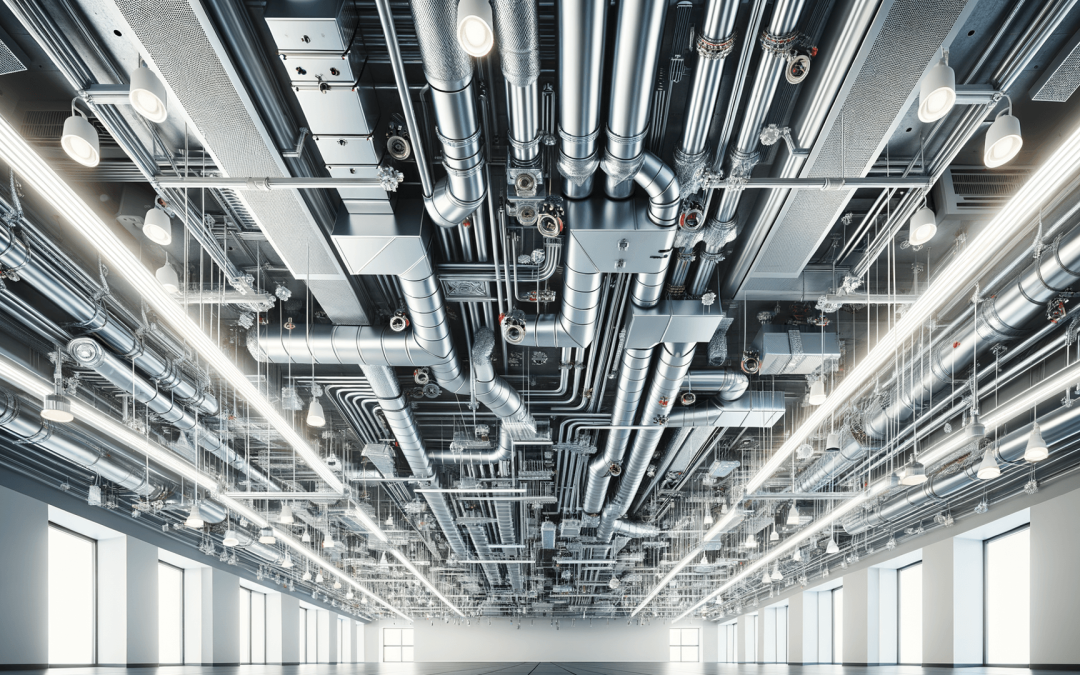
Commercial interiors often change faster than the base building structure: tenants add HVAC units, branding signage, lighting features, and speakers long after the shell is complete. The catch is that ceilings are not blank canvases. Every suspended item creates load paths, vibrations, and lateral forces the building must safely resist. This is exactly where a structural engineer adds value—by verifying capacity, detailing connections, and designing bracing that keeps people safe and projects code-compliant. Before you drill, clamp, or “make it work,” know how to plan, design, and coordinate hanging equipment the right way—and when to hire a structural engineer.
Why Ceiling Loads Get Overlooked
- Assumptions about “extra” capacity: Tenants assume the ceiling or roof can take anything small or lightweight without verification.
- Hidden structure: Fireproofing, ceilings, and ductwork conceal beams, joists, and deck types, making guesswork tempting.
- Small loads that add up: One track light is light; 200 feet of track with pendants, cable trays, and signage isn’t.
- Last-minute adds: AV, branding, and retail elements often land after MEP and structure are set—leaving limited options for safe attachments.
Skipping the structural step can lead to cracked slab edges, overloaded bar joists, popped anchors, damaged ceiling grids, and, worst of all, safety hazards.
Know Your Structure Before You Hang
Identifying the base structure and ceiling system sets the rules of engagement for any suspended load.
- Steel bar joists + metal deck: Common over retail and office cores. Good for vertical loads at panel points; sensitive to unplanned torsion and concentrated loads between panel points.
- Steel beams + metal deck: Provides stronger framing zones; best to connect near beam webs or flanges using approved anchors or clamps.
- Cast-in-place concrete slab: Can take anchors if thickness, reinforcement, and edge distances are verified. Post-tensioned slabs demand special caution and scanning to avoid tendons.
- Precast hollow-core plank: Limited top/bottom concrete cover and voids restrict anchor sizes and capacities—special anchors and detailing required.
- Wood joists/trusses: More common in smaller commercial or retrofit spaces; connections must preserve member capacity and avoid splitting.
- Suspended grid ceilings (T-bar): Not a structural support. Ceiling wires are for the ceiling only; anything heavier than a small trim kit requires independent hangers to structure.
Pro tip: Document the existing structure with as-built drawings, field verification, and scanning. When in doubt, hire a structural engineer to map load paths and validate attachment strategies.
What Are You Hanging? Typical Loads and Tricky Effects
- HVAC units and air handlers: 150–800+ lb each; add 10–25% for vibration isolators hardware and service platforms.
- Ductwork and accessories: 3–8 lb/ft for typical sizes; diffusers, dampers, and insulation add more; long runs require lateral bracing.
- Signage: 50–500+ lb depending on materials and size; large signs attract lateral loads from air movement or door drafts.
- Lighting: Track lighting around 2–4 lb/ft; pendants 10–50 lb each; feature fixtures can exceed 150 lb and may need multi-point support.
- Speakers and clusters: 20–120 lb each; subwoofers and arrays can exceed 100–500 lb; dynamic forces from vibrations matter.
Don’t forget non-vertical forces:
- Vibration from mechanical equipment and audio systems
- Lateral forces from seismic events or strong air currents
- Dynamic amplification for moving components (e.g., fans)
Bracing Strategies That Work
HVAC: Heavy Loads and Constant Vibration
- Load path first: Use trapeze frames (Unistrut or structural steel) with threaded rods directly to structure—not to grid ceilings.
- Isolators and snubbers: Spring or neoprene vibration isolators limit transmission; seismic snubbers restrain movement during an event.
- Lateral bracing: Provide transverse and longitudinal braces for equipment and long duct runs per SMACNA seismic guidelines where applicable.
- Anchor selection: Use code-listed mechanical or adhesive anchors with cracked-concrete and seismic approvals as required by the jurisdiction. Observe edge distances and embed depths.
- Bar joists: Favor panel points for connections. If between panel points, confirm joist capacity for local loads and torsion. Supplemental joist reinforcement may be required.
- Coordination: Maintain clearance from sprinklers and accommodate differential movement between ducts, isolators, and structure.
Signage: Redundancy and Distribution
- Redundant supports: Use dual independent hangers with rated hardware and a continuous secondary safety (cable or chain).
- Spread the load: Distribute to multiple joists or beams using spreader bars or frames; avoid eccentric loads that twist members.
- Lateral and torsional restraint: Provide splay cables or struts to prevent swing. Large signs near entrances may see wind gusts—design for lateral loads.
- Materials matter: Use listed rigging hardware (forged eyebolts, shackles, wire rope clips) with documented capacities; avoid hardware-store eye screws.
- Access for maintenance: Include locknuts, turnbuckles, and inspection points.
Lighting: Code, Heat, and Independent Supports
- Never hang from T-bar: Provide separate hangers to structure for tracks and heavy pendants; use listed grid clamps only for the grid itself as permitted by code.
- Heat and spacing: Maintain clearances from combustible surfaces and sprinklers; verify NEC and manufacturer spacing requirements.
- Long runs: Add periodic lateral bracing to limit sway; consider cable trays or strut systems to offload wiring weight.
- Feature fixtures: For heavy chandeliers or clusters, design a dedicated support frame tied to beams or joists with multiple points and a secondary safety.
Speakers and AV: Dynamic Loads and OEM Hardware
- OEM rigging points only: Use manufacturer-rated eyebolts, frames, or flyware; never drill ad hoc holes in speaker cabinets.
- Redundant safety: Always include a secondary safety cable sized to the full load.
- Arrays and clusters: Use engineered frames that balance loads across multiple hang points; check building drift compatibility.
- Vibration control: Isolate where needed, but include seismic restraint if required by code. Verify that isolators don’t compromise lateral stability.
Seismic, Wind, and Vibration Considerations
- Codes and standards: The IBC and ASCE 7 require nonstructural components to be anchored and braced based on seismic design category and risk.
- Lateral bracing: Provide bracing in two orthogonal directions and for vertical restraint; design slotted or flexible connections where differential movement is expected.
- Building drift: Hanging systems must tolerate story drift without overstressing rods or frames; consider splayed bracing and flexible links.
- Wind and air movement: Large, lightweight items (signs, baffles, acoustic clouds) need lateral restraint to prevent oscillation.
- Don’t mix systems: Avoid rigidly tying to two different structural frames that move differently under load unless engineered for compatibility.
Process, Permitting, and Special Inspection
- Site survey: Verify structure type, member locations, fireproofing thickness, and conflicts with MEP and sprinklers.
- Calculations and drawings: Prepare stamped calculations and shop drawings for supports, anchors, and bracing as required.
- Anchor approvals: Use code-listed anchors with evaluation reports appropriate for the base material and seismic category.
- Special inspection: Adhesive and some mechanical anchors in concrete often require special inspection or on-site proof testing; plan for it.
- Close-out and maintenance: Provide torque specs, inspection intervals, and a log for periodic checks—especially for vibration-heavy systems.
When in doubt—or whenever loads are significant, clustered, or seismically governed—hire a structural engineer early. It’s almost always cheaper to design supports before ceilings are closed than to retrofit them after occupancy.
Red Flags That Require Immediate Attention
- Hangers attached to ceiling grid wires or tees
- Single-point suspensions for heavy or asymmetrical loads
- Missing secondary safeties on signage or speakers
- Anchors near slab edges, cracked concrete, or unknown post-tensioned zones
- Bar joist connections away from panel points without verification
- Long, unbraced runs of duct, track lighting, or cable tray
- Vibration isolators installed without lateral restraint
- No documentation of anchor type, capacity, or inspection
Budget and Timeline Tips
- Design allowance: Include a line item for engineered supports and seismic bracing in tenant-improvement budgets.
- Lead times: Specialty anchors, isolators, and rigging hardware can have lead times—order early.
- Field flexibility: Use adjustable systems (Unistrut, turnbuckles, slotted connections) to accommodate real-world tolerances.
- Coordination meetings: Align structure, MEP, AV, and sprinkler layouts before rough-in to avoid rework.
A Quick Pre-Hang Checklist
- Identify base structure and confirm capacity.
- Choose the right anchors with code approvals for the substrate.
- Provide a continuous load path with redundant supports where appropriate.
- Add lateral bracing for seismic, wind, or air-movement effects.
- Keep independent supports for grid ceilings; maintain code clearances.
- Document torque, inspection, and maintenance procedures.
- If uncertain at any step, hire a structural engineer.
Conclusion
Hanging equipment in commercial spaces seems simple—until you account for real load paths, lateral forces, vibration, and code requirements. The safest, most cost-effective approach is to plan supports as part of design, not as a field workaround. Whether you’re suspending HVAC, branding signage, custom lighting, or speaker arrays, involve a structural engineer to verify capacities, engineer anchors and bracing, and streamline approvals. Doing so protects your project, your budget, and, most importantly, the people beneath it.
Q1: What are ceiling loads in commercial spaces, and why involve a structural engineer? A1: Ceiling loads are the combined forces from suspended HVAC, ductwork, signage, lighting, and speakers. They introduce vertical, lateral, and vibration demands into joists, beams, or slabs. A structural engineer confirms capacity, load paths, and connections so incremental additions don’t cause overloads, failures, or safety risks in occupied areas.
Q2: When should I hire a structural engineer to hang HVAC, signage, lighting, or speakers? A2: Hire a structural engineer when loads are heavy or clustered, attach to bar joists between panel points, approach slab edges, involve post‑tensioned concrete, or fall in seismic regions. Also engage one for feature lights, large signs, anchor design, code submittals, and inspections to avoid costly rework and delays.
Q3: How do I identify the structure above my ceiling and choose safe attachment points? A3: Start with as‑builts, field verification, and scanning. Determine if you have steel bar joists with metal deck, steel beams, cast‑in‑place or post‑tensioned slabs, or precast hollow‑core. Never use ceiling grid wires. Favor joist panel points and beam webs. Verify concrete thickness and reinforcement. A structural engineer validates locations.
Q4: What are best practices for bracing HVAC equipment and ductwork from the ceiling? A4: Use trapeze frames (Unistrut or steel) with threaded rods to structure, not T‑bar. Add vibration isolators and seismic snubbers. Brace ducts longitudinally and transversely per SMACNA. Select anchors with seismic approvals, correct embedment, and edge distances. Coordinate sprinkler clearances and maintain service access for filters, coils, and belts.
Q5: How should signage, lighting, and speakers be safely hung and braced? A5: Provide redundant supports with secondary safety cables for signage and speakers. Distribute loads via spreader bars and add splay cables to control sway. Avoid using grid for lighting; install independent hangers. Heavy feature fixtures often need dedicated frames and multi‑point connections. Use listed OEM rigging hardware and documentation.
Q6: What seismic, wind, and inspection rules apply to hanging equipment and anchors? A6: IBC and ASCE 7 require anchorage and bracing for nonstructural components. Provide vertical restraint and bracing in two directions, accounting for drift and differential movement. Control wind or air‑current sway for large, light elements. Adhesive and cracked‑concrete anchors often need special inspection or proof testing in higher seismic categories.
Q7: What red flags mean my ceiling installation is unsafe and I should hire a structural engineer? A7: Red flags include hangers on grid wires, single‑point supports for heavy or uneven loads, anchors near slab edges or unknown post‑tension zones, and unbraced long runs. Missing secondary safeties or isolators without lateral restraint also signal risk. If seen, stop work and hire a structural engineer immediately.

Nov 17, 2025 | Beyond the Blueprint
Fire-Rated Assemblies & Structural Impact: A Structural Engineer’s Guide to Commercial Buildings
Fire-rated assemblies do more than satisfy the building official—they drive fundamental choices in beams, decks, slabs, and connections. From the first sketches, a structural engineer evaluates how fire separations, fire-resistance ratings, and continuity rules affect the structural system. If you’re planning a new build or a major fit-out, it’s smart to hire a structural engineer early to align code strategy with cost, schedule, and performance.
What Drives Fire-Resistance Decisions?
Several intertwined code provisions determine how “fire” shapes structure:
- Construction type and occupancy: The International Building Code (IBC) sets minimum fire-resistance ratings for the primary structural frame, floor/roof assemblies, and shaft enclosures. More restrictive occupancies and higher-rise buildings typically demand higher ratings (e.g., 2-hour floors and frames for many mid/high-rise commercial projects).
- Fire-rated assemblies: Tested in accordance with ASTM E119/UL 263, these assemblies (walls, floors, roofs) must match a listed design—or be justified by engineering analysis where permitted.
- Continuity and supporting construction: Rated assemblies must be continuous, and the structure supporting them often needs an equal or greater rating. For example, the beam carrying a 2-hour corridor floor-ceiling assembly typically needs equivalent protection.
- Fire separations vs. fire walls: Fire barriers and horizontal assemblies create compartmentation within a single building; fire walls can separate buildings structurally, allowing each side to stand independently after a fire. This distinction changes how frames and connections are detailed.
- Joints and penetrations: Head-of-wall joints, perimeter slab edges, penetrations, and duct openings require tested systems (e.g., ASTM E1966 for joints, ASTM E814/UL 1479 for penetrations, ASTM E2307 for curtain wall perimeter fire barriers).
The result: fire ratings are not just a layer of gypsum or spray; they are a system decision that must be coordinated across architecture, MEP, and structure from day one.
Fire Separations 101: What They Mean for Structure
- Fire walls (structural independence): Often require the wall and foundations to remain stable if the structure on one side collapses. Frames on each side must not rely on the other for stability; collectors and diaphragms may terminate or be detailed with breakaway connections.
- Fire barriers (continuity): Must run from the floor to the floor or roof above, with rated joints and properly protected penetrations. Any beams or girders supporting a rated barrier or the floor that supports it typically need matching protection.
- Smoke barriers and partitions: Less stringent for structure but still require careful joint and penetration detailing.
- Horizontal assemblies: Floor/ceiling ratings (1–3 hours common) control slab thickness, composite action, deck profile, and beam protection method.
A structural engineer translates these code concepts into practical system choices and details that work in the field.
How Fire Ratings Influence Beam and Floor System Choices
1) Structural Steel Frames
- Protected vs. unprotected steel: In most commercial projects (Type I or II construction), primary structural steel requires fire protection. Options include:
- Spray-applied fire-resistive materials (SFRM): Cost-effective, adds dead load, needs substrate prep and humidity control. Thickness increases with longer ratings and higher section factors (W/D).
- Intumescent coatings: Clean finish for exposed steel; higher cost; sensitive to application conditions and damage.
- Board encasement (gypsum or calcium silicate): Predictable thickness, robust in high-traffic areas, but bulkier.
- Concrete encasement: Durable; increases member size and weight; pours and formwork affect schedule.
- Composite floor systems: Steel beams with composite metal deck and concrete topping are a staple. The fire rating depends on deck profile, slab thickness, concrete density, beam spacing, and reinforcement. Many UL designs achieve 2 hours with normal-weight concrete and minimal mesh, but cellular or deep decks may change the rating path.
- Beam selection: Deeper beams reduce quantity but can demand more SFRM (larger surface area). Shallow beams can drive heavier deck gauges or thicker slabs. Early modeling of beam size vs. fireproofing thickness can reveal the lowest total cost.
- Connections and continuity: Protected moment frames require careful fireproofing continuity at flanges and bolts. Braced frames may concentrate protection at gusset regions. Avoid leaving bolts and plates unprotected unless permitted by the listed design.
- Serviceability considerations: Additional fireproofing weight affects deflection and vibration checks; ensure camber and long-term deflection assumptions reflect fireproofing and finishes.
2) Cast-in-Place Concrete
- Inherent fire resistance: Concrete’s mass and thermal properties provide robust fire performance. Achieving 2-hour ratings can be straightforward with slab thickness and cover to reinforcement verified against code tables or recognized design guides.
- Flat plate vs. beam-and-slab: Flat plates are efficient but keep an eye on punching shear capacity at elevated temperatures; reinforcement detailing at columns may need enhancement for resilience.
- Lightweight vs. normal-weight concrete: Lightweight aggregates can perform well in fire tests but may have different structural properties; coordinate fire rating tables with structural design.
3) Precast Concrete and Hollow-Core
- Hollow-core planks: Commonly used for long spans. Fire ratings depend on topping thickness, strand cover, and joint details. Some planks meet 2 hours without topping; others require supplemental cover or mesh.
- Joints and continuity: Ensure grouted keys and topping interfaces match tested designs. Supporting beams or ledgers must be rated if they carry rated planks.
4) Mass Timber (CLT and Glulam)
- Char and encapsulation: Fire ratings may rely on sacrificial char layers or gypsum board encapsulation. IBC Type IV-A/IV-B/IV-C prescribe encapsulation strategies, concealed space limitations, and connection protection.
- Connections: Protect steel hangers, screws, and plates within the char layer or with additional encasement. Exposed steel connectors often require intumescents or cover plates.
- Hybrid systems: Timber floors over steel frames may shift fire protection to the steel. Evaluate whether encapsulating wood or protecting steel yields a better cost and schedule outcome.
Details That Make or Break Compliance
- Head-of-wall joints: Use listed joint systems compatible with expected beam/joist deflections and building drift. A beautiful rated wall fails if the joint cracks open under movement.
- Perimeter slab edges and curtain walls: Provide tested perimeter fire barrier systems with spandrel insulation and safing; coordinate curtain wall anchors to avoid compromising continuity.
- Penetrations and MEP coordination: Require listed firestop systems for each penetrating item (pipes, conduits, cable trays). Group penetrations where possible to simplify rated assemblies and inspections.
- Supporting construction: If a 2-hour floor spans to a transfer girder, that girder needs equivalent protection. Watch for misalignments where rated walls stack over nonrated beams.
- Stairs and shafts: Enclosures need continuous ratings. Don’t route beams through shafts without an approved rated assembly and penetrations strategy.
- Deflection compatibility: Gypsum encasements and joint systems have deflection limits; verify beam camber, live load deflection, and thermal movement to avoid cracking and failures.
- Field-friendly specs: SFRM adhesion and thickness verification, intumescent dry film thickness checks, and board fastener spacing must be clear and practical. Provide inspection hold points.
Real-World Scenarios and Strategies
- Mid-rise office, Type I-B, 2-hour floors:
- Option A: Composite steel with 2.5–3.5 in concrete over deck, SFRM on beams/columns. Economical but messy sequencing; enclose sensitive areas before spraying.
- Option B: Flat plate concrete slab with column capitals. Cleaner finishes, inherent rating, possibly longer cycle times and heavier structure.
- Option C: Mass timber with encapsulation for 2-hour rating. Warm aesthetic where exposed wood is allowed; careful planning for connectors and MEP routing.
- Retail with tenant turnover:
- Reduce future fit-out friction by standardizing penetration firestop details and providing spare shaft capacity.
- Protect transfer girders supporting rated corridors to avoid rework when tenants add openings.
- Renovation of legacy buildings:
- Verify existing assembly ratings with probes and documentation. If the old assembly doesn’t match a current listing, develop an engineering judgement or overlay solutions (e.g., add board encasement or increase slab cover).
- Strengthen where needed but watch that new steel receives proper fire protection without creating conflicts with historic finishes.
Cost, Weight, and Schedule: Trade-Offs to Expect
- SFRM: Lower material cost, added weight, careful environmental controls, and potential overspray cleanup.
- Intumescent coatings: Highest finish quality for exposed steel; higher cost, more sensitive schedule.
- Board encasement: Predictable, rapid inspection; increased bulk can clash with ceiling plenum space.
- Concrete solutions: Often simplest for rating; heavier structure can affect foundations and seismic forces.
- Timber: Potentially faster erection and reduced weight; detailed coordination for rating continuity and connections is essential.
A structural engineer will run comparative studies that include not only member quantities but also fireproofing thickness, inspection complexity, erection sequencing, and long-term maintenance.
When to Engage a Structural Engineer—and What to Ask
Engage early, ideally at concept design, to lock in the right rating strategy with the right system. Ask:
- What are the minimum ratings for our construction type, height, and occupancy?
- Which floor/beam systems meet those ratings most economically?
- How will fire walls or long fire barriers affect frame layout and diaphragm continuity?
- What’s our plan for joints, penetrations, and the perimeter slab edge?
- Can we reduce ratings through alternate approaches (e.g., sprinklers, compartmentation, or performance-based design) where permitted?
- How will choices affect total dead load, drift, vibration, and acoustics?
If you’re navigating these decisions now, hire a structural engineer to align code compliance with structural efficiency and architectural intent.
Key Takeaways
- Fire ratings are a system decision, not a finish. They influence beam sizes, slab thickness, and connection types.
- Supporting structure often needs the same rating as the assembly it carries.
- Joints, penetrations, and perimeter conditions are as critical as the wall or slab itself.
- Steel, concrete, and mass timber can all meet 1–3 hour ratings; cost, schedule, and aesthetics drive the optimal choice.
- Early coordination with a structural engineer reduces change orders and accelerates approvals.
Conclusion
Fire-rated assemblies are inseparable from structural strategy in commercial buildings. By integrating code requirements with practical system selection—steel with SFRM or intumescent, concrete with inherent resistance, or mass timber with char and encapsulation—you can achieve compliance without sacrificing cost or design vision. The best path forward is an early, data-driven comparison led by a structural engineer who can translate code into constructible, economical details.
Q1: What are fire-rated assemblies in commercial buildings, and why do they matter structurally? A1: A fire-rated assembly is a tested wall, floor, or roof system with a specified fire-resistance duration (e.g., 1–3 hours) per ASTM E119/UL 263. Ratings affect supporting construction, so beams, slabs, and connections must match or exceed requirements. A structural engineer aligns these choices with code, cost, schedule, and aesthetics.
Q2: How do fire separations influence beam and floor system choices? A2: Fire separations drive system selection by dictating the rating of the floor/ceiling and the beams that support it. Composite steel may need SFRM or intumescent coatings; concrete slabs rely on thickness and cover; mass timber uses char or gypsum encapsulation. Deck profiles, beam depth, and spacing change to satisfy listed designs.
Q3: What are the main fireproofing options for structural steel, and what are the trade-offs? A3: Common options include SFRM (cost‑effective but adds weight and requires environmental controls), intumescent coatings (clean aesthetics, higher cost), board encasement (predictable, bulkier), and concrete encasement (durable, heavy). Trade‑offs span cost, finish quality, schedule, and inspection complexity. A structural engineer balances member sizing with protection thickness to minimize total cost.
Q4: How do fire walls, fire barriers, and horizontal assemblies affect structural design? A4: Fire walls require structural independence, so each side must stand if the other collapses; diaphragms and collectors may terminate or use breakaway connections. Fire barriers demand continuity, with supporting beams carrying equal or greater ratings. Horizontal assemblies control floor/ceiling ratings, influencing slab thickness, deck selection, beam sizing, and tested joints.
Q5: What details most often cause fire-rating failures, and how can a structural engineer prevent them? A5: Avoid failures at head‑of‑wall joints, perimeter slab edges, and penetrations by using listed systems compatible with expected deflection and drift. Protect supporting members to the same rating as the assemblies they carry, and coordinate stair and shaft continuity. A structural engineer standardizes details, sequences inspections, and aligns MEP penetrations early.
Q6: When should I hire a structural engineer for fire-rated design, and what should I ask? A6: Hire a structural engineer at concept design to lock ratings into system choices. Ask about minimum code ratings by type and height, optimal floor/beam systems, impacts of fire walls on diaphragm continuity, joint and perimeter strategies, and whether sprinklers or performance-based design can reduce ratings while maintaining safety and budget.
Q7: What are the cost, weight, and schedule trade-offs among fire-rated systems? A7: SFRM is inexpensive but adds dead load and requires controlled conditions; intumescents cost more yet deliver a clean exposed look; board encasement is predictable but bulky; concrete offers inherent resistance with heavier frames; mass timber speeds erection but needs encapsulation. Comparative studies quantify totals, not just member weight or protection thickness.

Nov 10, 2025 | Beyond the Blueprint
Coordination Is Key: How a Structural Engineer Aligns Design With Architects and MEP
In complex building projects, coordination is the difference between a smooth build and a budget-busting mess. From the first sketch to the final submittal, a structural engineer plays a pivotal role in aligning architectural intent with mechanical, electrical, and plumbing (MEP) systems to prevent clashes and change orders. When these disciplines coordinate early and often, teams reduce rework, shorten schedules, and deliver a building that performs as designed.
Why Coordination Matters
Architecture sets the spatial vision, structure carries the loads, and MEP systems enable comfort and performance. When these elements are developed in isolation, conflicts inevitably arise—ducts through beams, risers in columns, conduits where shear walls need continuity. The cost isn’t just technical; it’s financial and programmatic:
- Construction delays from field conflicts and RFIs
- Costly redesigns and re-fabrication
- Compromised aesthetics when late fixes require soffits or dropped ceilings
- Reduced performance from compromised duct, pipe, or cable routes
- Safety and code risks if penetrations or fireproofing are handled ad hoc
A coordinated approach ensures the structure anticipates MEP routing and the architecture allows for realistic systems distribution—before anything is built.
The Integrated Early Design Workflow
A proven approach to early integration follows a simple path: align, iterate, validate.
- Align
- Establish project goals: performance, budget, carbon, schedule, and flexibility.
- Fix shared references: levels, grids, datum points, and a common coordinate system.
- Agree on “no-go” zones: core walls, brace bays, primary frames, and egress paths.
- Set vertical distribution strategy: floor-to-floor heights, plenum zones, corridor mains, and risers.
- Iterate
- Co-develop a structural grid matched to architectural planning modules and MEP distribution.
- Size preliminary members with system zones in mind (depths, web openings, truss pick points).
- Locate shafts and equipment rooms early to shorten runs and prevent late penetrations.
- Model key penetrations, sleeves, and blockouts early, even at schematic level.
- Validate
- Run clash detection at defined milestones (SD, DD, CD) using federated BIM models.
- Review loads, vibration, and deflection criteria against MEP and occupant needs.
- Confirm constructability: sequence, crane picks, embeds, and prefabrication tolerances.
Critical Coordination Checkpoints
- Schematic Design (SD)
- Lock the structural grid relative to major walls and planning modules.
- Agree on preliminary member depths versus required plenum heights.
- Fix shaft locations for major risers and stairs; define core layout and structural wall zones.
- Establish MEP distribution concept (corridor mains vs. interstitial zones).
- Design Development (DD)
- Model beam penetrations and sleeves; define allowable web opening zones.
- Align equipment loads, rooftop units, hangers, and vibration isolation requirements.
- Coordinate façade support and interface details with MEP louvers and intakes.
- Resolve floor offsets for wet areas, data floors, and equipment pads.
- Construction Documents (CD)
- Finalize embeds, connection details, firestopping requirements, and tolerance envelopes.
- Confirm hanger loads and attachment details to structure, not unsupported finishes.
- Freeze penetrations in critical elements (shear walls, brace frames, transfer girders).
- Validate shop drawings with BIM-based clash checks before approval.
Tools and Practices That Prevent Clashes
- Federated BIM models (e.g., Revit + Navisworks, Solibri) built on a shared coordinate system
- Discipline-specific model responsibility matrices and LOD definitions
- Standardized naming conventions for penetrations, sleeves, and blockouts
- Scheduled clash reviews with action logs and accountability deadlines
- Color-coded systems zoning plans (primary, secondary, tertiary) overlaid on structural plans
- Early “critical path” details package for long-lead items (steel, anchors, embeds)
Designing Structure for MEP Pathways
A structural engineer can provide efficient load paths while enabling clear MEP distribution:
- Optimize Member Depths: Choose beam and joist depths to fit plenum zones and duct mains without excessive floor-to-floor heights.
- Plan Web Openings: Define engineered opening locations in steel or glulam beams to route ducts and conduits, avoiding ad hoc field cuts.
- Use Trusses Strategically: Trusses can accommodate large openings for MEP while reducing total steel weight, if coordinated early.
- Depress Slabs Where Needed: For showers, mechanical rooms, and data floors, plan slab depressions and thickened areas early.
- Reserve Corridor Mains: Allocate corridor zones for large ducts and pipes, then size beams accordingly to maintain clearance.
- Coordinate Equipment Pads: Align rooftop unit placements with primary framing to avoid retrofitting dunnage or overloading secondary members.
- Plan for Future Flexibility: Design spare sleeves and framing for potential future risers or system upgrades.
System Choices and Their MEP Implications
- Structural Steel
- Pros: Lighter members, easier to penetrate, rapid erection, long spans.
- Considerations: Fireproofing details around penetrations and hangers; vibration control for sensitive equipment.
- Cast-in-Place Concrete
- Pros: Excellent for vibration control, thermal mass, and fire resistance.
- Considerations: Penetrations must be planned early; sleeves and blockouts are difficult to add later.
- Mass Timber
- Pros: Low embodied carbon, biophilic aesthetics, fast assembly with prefabrication.
- Considerations: Penetration limitations, char-depth fire design, and integrated MEP routing with panels and beams.
Choosing the right system requires balancing architectural goals, MEP distribution, structural performance, and sustainability targets—best done through early, multi-disciplinary evaluation.
Performance-Driven Coordination
Coordination is about more than fitting ducts through beams; it’s about achieving performance outcomes:
- Thermal and Energy: Structural thermal breaks at balconies and canopies; façade support coordination to minimize thermal bridges.
- Acoustics: Slab thickness, resilient connections, and penetrations detailing to limit flanking.
- Vibration: Labs, hospitals, and offices with fitness equipment require tuned floor systems; collaboration with MEP to isolate equipment and support damping.
- Fire and Life Safety: Penetration firestopping, rated assemblies, damper locations, and smoke control strategies tied to structural and architectural constraints.
- Embodied Carbon: Structural schemes that reduce material can also lower floor-to-floor heights when coordinated with MEP, cutting enclosure area and operational loads.
A Practical Checklist to Prevent Change Orders
- Grids and Levels: Shared and locked by end of SD.
- Plenums and Floor-to-Floor Heights: Verified against largest ducts and beams.
- Shafts and Risers: Fixed locations and sizes; coordinated with structural walls and cores.
- Penetrations: Modeled and scheduled for beams, slabs, and walls with approved zones.
- Hangers and Supports: Loads, spacing, and attachment details confirmed with structure.
- Equipment Loads: Rooftop and floor-mounted equipment supported by primary framing.
- Tolerances: Allowances for construction tolerances integrated into coordination.
- Fire and Acoustic Requirements: Details documented at all penetrations and interfaces.
- Clash Detection: Regular, milestone-based reviews with action items closed out.
- Change Control: Any late adjustments assessed for cross-discipline impacts pre-issue.
When to Hire a Structural Engineer—and What to Ask
The best time to hire a structural engineer is before schematic design truly begins. Early involvement shapes grids, heights, and system choices that are difficult to change later. When you hire a structural engineer, consider the following:
- Selection Criteria
- Demonstrated MEP coordination experience on similar project types
- BIM capability and proven clash detection workflow
- Understanding of performance targets (vibration, acoustics, energy, carbon)
- Constructability expertise and preconstruction collaboration with contractors
- Scope to Include
- Early participation in goal-setting workshops
- Iterative structural/MEP zoning studies during SD and DD
- Penetration and sleeve strategy deliverables
- Federated model leadership and coordination meeting facilitation
- Vibration analysis where relevant (labs, healthcare, sensitive equipment)
- Detailed hanger and equipment support guidelines
- Questions to Ask
- How do you structure coordination meetings and decision logs?
- What BIM standards and LOD do you use at each phase?
- How do you control changes to penetrations in critical elements?
- Can you show examples where early coordination reduced change orders?
A Brief Case Example
On a mid-rise office and lab building, the team engaged the structural engineer during pre-design to align a 30-foot planning module with a corridor-based MEP distribution. The structural system used steel beams with standardized web opening zones and targeted trusses over mechanical rooms. Shafts were fixed at SD, and vibration criteria were set for lab spaces.
By DD, the federated model showed near-zero critical clashes. The design avoided deep soffits, kept the ceiling plane continuous, and reduced overall floor-to-floor height by 6 inches through coordinated beam depths and duct routes. The contractor reported a 40% reduction in RFIs during steel erection and MEP rough-in compared to similar projects, and the owner avoided major change orders linked to late penetrations.
The Bottom Line
Early, integrated design led by a structural engineer saves time, money, and frustration. With shared goals, robust BIM workflows, and disciplined checkpoints, architects and MEP engineers can execute their best work without tripping over the structure—or each other. If you want to prevent clashes and change orders, hire a structural engineer early and empower them to coordinate the framework that makes great buildings possible.
Q1: What is design coordination between a structural engineer, architects, and MEP, and why does it matter? A1: Design coordination aligns architectural intent, structural load paths, and MEP systems so they coexist without conflicts. A structural engineer anticipates ducts, risers, and equipment while protecting critical elements like shear walls and brace bays. The result is fewer RFIs, faster schedules, controlled costs, and code-compliant, high-performing spaces.
Q2: How does early, integrated design prevent clashes and change orders? A2: Early, integrated design starts by aligning goals, grids, levels, and system zones, then iterating structure and MEP layouts together, and validating with milestone clash detection. This approach surfaces conflicts when they’re cheap to fix, preventing change orders, preserving aesthetics, and enabling realistic plenum heights, shaft sizes, and equipment locations.
Q3: What are the key coordination checkpoints across SD, DD, and CD? A3: At SD, lock the structural grid, floor-to-floor heights, plenum strategy, and shaft locations. At DD, model penetrations and sleeves, align equipment loads, façade interfaces, and vibration needs. At CD, finalize embeds, firestopping, tolerances, and freeze penetrations in critical elements. A structural engineer drives these milestones with accountable action logs.
Q4: Which tools and practices best reduce coordination risk? A4: Use a federated BIM model with shared coordinates, LOD standards, and a responsibility matrix. Schedule recurring clash reviews in Navisworks or Solibri with named owners and due dates. Standardize naming for penetrations and sleeves, publish critical-path details early, and track decisions in a transparent, version-controlled log.
Q5: How can structure be designed to enable clean MEP routing? A5: Select member depths to fit plenum zones, define engineered web openings, and place trusses strategically over mains. Plan slab depressions for wet areas and equipment, reserve corridor zones for large ducts, align rooftop units with primary framing, and add spare sleeves for future upgrades—guided by the structural engineer.
Q6: When should I hire a structural engineer, and what should I ask? A6: Engage them before schematic design so grids, heights, and systems reflect coordination needs. When you hire a structural engineer, confirm BIM capability, clash workflow, and experience on similar projects. Ask about penetration control, vibration analysis, meeting cadence, decision logs, and examples where early coordination cut change orders.
Q7: What performance outcomes rely on strong architect-structural-MEP coordination? A7: Thermal efficiency through minimized structural thermal bridges; acoustics via slab thickness, resilient details, and controlled penetrations; vibration criteria for labs and healthcare; and robust fire and life safety with rated assemblies, dampers, and smoke control. Good coordination also reduces embodied carbon and maintains aesthetics without soffits or dropped ceilings.