
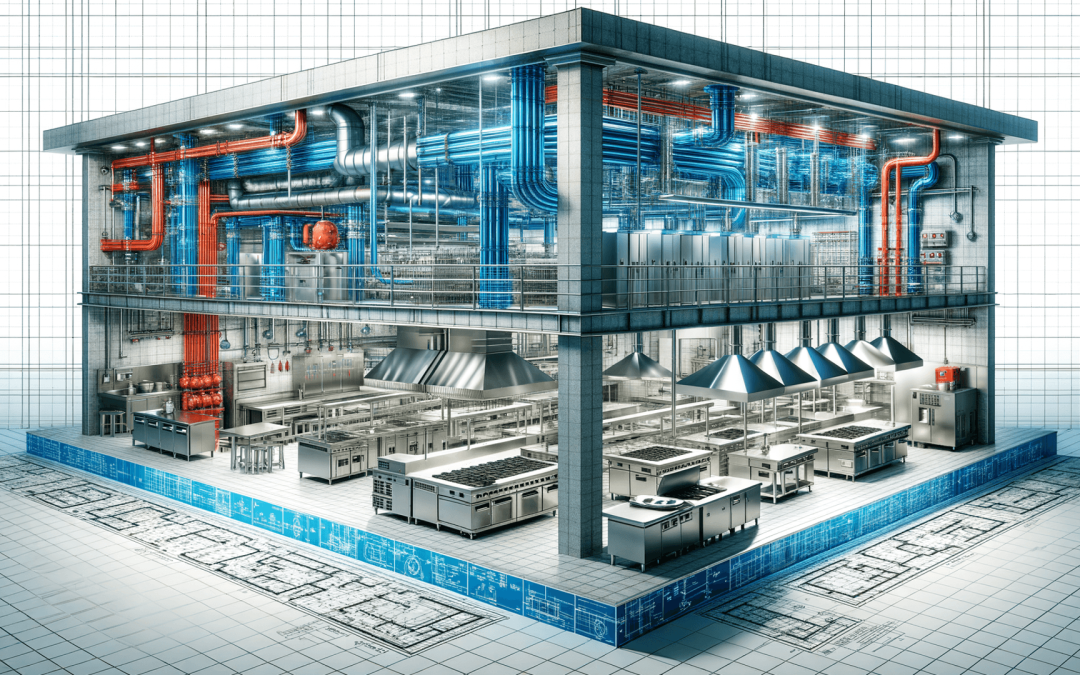
Beams, Fryers, and Fire Codes: Why Every Restaurant Needs a Structural Engineer
Opening a restaurant is equal parts vision and rigor. Fryers, hoods, ductwork, grease traps, refrigeration, and high-traffic dining spaces all impose unusual demands on a building’s frame. A structural engineer turns that complexity into a safe, code-compliant, and buildable design—one that works with fire protection, HVAC, plumbing, and electrical systems rather than against them. If you’re planning a new build or a tenant improvement in an existing space, here’s how structural planning around hoods, grease traps, kitchen vibration, and MEP integration saves money, time, and headaches—and why you should hire a structural engineer early.
The Restaurant Load Case: More Than Just Tables and Chairs
Restaurants are not office fit-outs with tile floors. The structure must accommodate:
- Higher live loads in storage areas, coolers, and freezers
- Heavy, vibration-prone kitchen equipment
- Concentrated loads from rooftop fans, make-up air units, and Grease Exhaust fans
- Large penetrations for grease ducts, plumbing stacks, and exhaust shafts
- Frequent washdown and wet areas (which affect durability and deflection criteria)
A change of occupancy (for example, office to restaurant) often triggers stricter code compliance. That can mean verifying existing framing against current building codes and standards such as the International Building Code (IBC) and ASCE 7 for loads, as well as ensuring that fire-resistance-rated assemblies remain intact after new penetrations.
Hoods, Ducts, and Fire Codes: Structurally Right-Sizing the Hot Zone
Type I grease hoods are the heart of a hot kitchen—and a structural puzzle if you don’t plan early. NFPA 96 governs grease duct construction, clearance, and fire protection, but it’s the structure that must hold everything safely and without vibration.
Key structural considerations:
- Hood hanging points: Grease hoods can weigh hundreds of pounds before fire suppression piping, lights, and accessories. Plan structural attachment points (joists, beams, or supplemental strut frames) to avoid overloading ceiling finishes or light-gauge framing.
- Duct routing and openings: A grease duct wants the straightest, steepest path to the roof. Each turn adds weight, friction, and cleaning complexity. The structural engineer sizes and frames floor and roof openings, preserves required fire-resistance ratings with fireproofed shaft construction or listed fire wrap, and reinforces interrupted joists and beams around openings.
- Fire-resistance continuity: Any penetration through rated assemblies demands detailing that maintains the rating. That can include framed shaft walls, fire-rated doors for access panels, and UL-listed firestopping systems.
- Rooftop curbs and fans: Grease exhaust fans, make-up air units, and pollution control units add major loads to roofs. The structural engineer designs curb reinforcing, load distribution rails, and vibration isolation, ensuring the deck and framing can take the weight and wind uplift without leaks or ponding.
- Coordination with sprinkler and fuel gas: Overhead conflicts are common. Early coordination limits field rework by making sure duct clearances, pipe pitches, and structural supports coexist.
Result: a quieter, cleaner, safer exhaust system that meets NFPA 96 and building code requirements—and avoids expensive framing retrofits after duct paths are locked in.
Grease Traps and Interceptors: Slabs, Buoyancy, and Corrosion
Grease management is both a plumbing and structural issue. Whether your jurisdiction prefers indoor gravity grease interceptors, hydromechanical traps, or outdoor concrete interceptors, the structure must support the installation and long-term performance.
What to plan:
- Under-slab interceptors: Excavations may undermine existing foundations if not planned. The structural engineer checks soil capacity, designs slab thickening or edge beams, and details reinforcement around large cutouts. Where groundwater is high, buoyancy can lift a buried interceptor; anchorage or ballast may be required.
- Suspended or in-floor traps: Ceiling-mounted units in basements or parking levels impose concentrated loads on beams and slabs. Custom frames or hanger systems may be needed, with anchors designed for concrete or steel per manufacturer data and code requirements.
- Traffic-rated lids and floor loads: If an interceptor sits in a drive lane or delivery area, lids must carry vehicle loads. The structural design ensures surrounding framing, vault walls, and slabs are compatible with those loads.
- Corrosion and leakage: Grease is aggressive. Detailing for corrosion-resistant supports, protective coatings, and proper waterproofing at penetrations prevents deterioration of concrete and embedded steel.
- Trench drains and slopes: Kitchens need reliable drainage. Slight slab slopes to trench drains must be coordinated with thresholds and equipment leveling. The structural engineer details slab pours and joint locations to minimize cracking and trip hazards.
Thoughtful planning around grease management protects the structure, reduces maintenance, and keeps odors and leakage out of public spaces.
Kitchen Vibration: Keeping the Rattle Down
Commercial kitchens are loud by nature, but structural vibration is optional. Mixers, grinders, compressors, and rooftop units can excite floor systems, turning a busy kitchen into a rattling, fatiguing environment.
How to control vibration:
- Equipment data first: The structural engineer needs operating speeds (RPM), equipment mass, and mounting details to evaluate resonance risk.
- Stiffness where it matters: Increasing floor stiffness under critical equipment—via joist doubling, short-span framing, or supplemental beams—raises natural frequency above excitation.
- Isolation mounts: Properly selected isolators and inertia pads for mixers, compressors, and fans reduce transmitted vibration. Structural support frames must be detailed to accept isolators and prevent short-circuiting through rigid connections.
- Dynamic analysis for long spans: Long-span floors common in retail shells can be lively. If the kitchen sits over occupied space, consider a dynamic evaluation and tailored stiffening.
Result: a kitchen that feels solid, extends equipment life, and minimizes disturbance to neighbors and diners.
MEP Integration: Making Systems and Structure Work Together
Mechanical, electrical, and plumbing systems are dense in restaurants. The project wins or loses in coordination.
Best practices:
- Early hanger load accounting: Thousands of pounds of ductwork, piping, cable tray, and kitchen hoods hang from the structure. The structural engineer confirms allowable hanger loads by bay and directs where to concentrate or distribute loads to avoid over-stressing deck or joists.
- Penetration planning: Identify all major shafts, chases, and floor openings during design. Pre-frame around openings, maintain fire ratings, and avoid Swiss-cheesing beams with field-cored holes.
- Seismic and wind restraint: In many regions, nonstructural components must be braced per ASCE 7. Coordinate seismic restraints for ducts, pipes, cable trays, and equipment with the structural engineer to ensure anchor design and bracing geometry match the base structure.
- Rooftop unit integration: RTUs need curbs, wind uplift checks, and roof diaphragm coordination. Concentrating multiple units on a single bay may require local reinforcement or load-spreading rails.
- Utility penetrations and sleeves: Gas, water, and electrical penetrations should align with framing. Pre-placed sleeves prevent field coring through rebar or post-tension tendons.
- BIM and clash detection: A quick 3D coordination pass can prevent last-minute duct reroutes that force structural modifications.
When structure and MEP are designed as a whole, the field install is faster, cleaner, and safer.
Retrofits and Tenant Improvements: Navigating the Unknowns
Many restaurants inhabit existing shells or historic buildings. Hidden conditions are reality—plan for them.
- Investigate early: Combine record drawings, selective probes, and non-destructive scanning (GPR for slabs, ferroscan for rebar, borescopes in shafts).
- Load verification: Confirm member sizes, decking type, and connection details. Many older roofs weren’t designed for today’s mechanical loads or large grease ducts.
- Strengthening options: Where needed, add beams, sister joists, steel channels, or carbon fiber reinforcement. Design curb frames that redistribute loads without overloading fragile members.
- Fireproofing and rating repairs: Cutting, welding, or adding supports can damage fireproofing. The structural engineer details repairs to restore ratings and corrosion protection.
- Phased construction: Maintain egress and fire separations during the build. Temporary shoring may be needed when cutting openings for ducts and stairs.
These steps reduce change orders and keep schedules intact.
Codes, Permits, and Inspections: Getting to Yes
Restaurant projects are heavily inspected for life safety. A structural engineer helps you clear the permitting and inspection path.
- Stamped drawings and calculations: Many jurisdictions require sealed structural documents for openings, rooftop units, and support frames.
- UL assemblies and firestopping: Specify listed systems for rated penetrations and verify compatibility with ducts, pipes, and cables.
- Special inspections: Anchors, welds, sprayed fire-resistive materials, and structural concrete may trigger special inspection. Plan the testing and hold points in advance.
- Closeout documentation: Provide as-builts for penetrations, supports, and any changes made during construction.
Proactive compliance avoids costly stop-work orders and rework.
When to Hire a Structural Engineer
Engage a structural engineer as soon as these milestones appear:
- Site or shell selection: Verify roof and floor capacities before signing a lease.
- Concept design: Lay out hoods, duct paths, shafts, and equipment zones early.
- Equipment selection: Confirm weights and operating characteristics for heavy or vibrating gear.
- Grease interceptor planning: Decide indoor vs. outdoor, slab thickening, or suspended supports.
- RTU and fan selection: Size curbs, check wind/seismic loads, and plan roof penetrations.
- Permit set: Provide sealed structural drawings for openings, supports, and reinforcements.
- Construction: Address unforeseen conditions quickly with engineered details.
If you’re unsure where to start, hire a structural engineer to perform a feasibility review before you commit to an existing space or finalize your equipment list.
Quick Checklist for Owners and Architects
- Do we know the roof and floor load capacities, including areas for storage and coolers?
- Have we sketched the grease duct route and reserved a straight shaft?
- Are hood hang points coordinated with structure and fire suppression?
- Are RTU and fan locations balanced across roof framing with curbs designed?
- Where will the grease interceptor go, and how are slab modifications handled?
- Have we accounted for hanger loads, seismic bracing, and anchors for MEP?
- Are penetrations and fire-rated assemblies detailed with listed systems?
- Have we planned vibration isolation for mixers, compressors, and fans?
- Do the permit drawings include stamped structural details for supports and openings?
The Bottom Line
In restaurants, structure is the quiet partner that makes everything else function—air moves safely, floors feel solid, drains fall the right way, and fire ratings stay intact. Early coordination keeps the kitchen efficient and the dining room comfortable. Whether you are building new or transforming a retail shell, hire a structural engineer to align beams, fryers, and fire codes into one integrated, code-compliant design.
Q1: Why does a restaurant need a structural engineer? A1: Restaurants impose heavier, concentrated, and vibrating loads than typical interiors. A structural engineer verifies roof and floor capacities, frames openings for grease ducts and shafts, preserves fire ratings, and designs supports for hoods and rooftop units. Early coordination prevents costly rework, improves safety, and streamlines permitting and inspections.
Q2: How should hoods and grease ducts be planned to meet fire codes? A2: Per NFPA 96, plan Type I hood hang points on structure, not ceilings, and give grease ducts the straightest rise to roof. The structural engineer frames floor and roof openings, reinforces interrupted joists, designs curb supports and vibration isolation, and details listed firestopping to maintain fire-resistance continuity throughout the exhaust path.
Q3: What should owners know about grease traps and slab support? A3: Grease interceptors affect structure. Under-slab units may require slab thickening, edge beams, and buoyancy anchorage; suspended traps impose concentrated loads needing engineered hangers. A structural engineer coordinates trench drains and slab slopes, specifies traffic-rated lids where vehicles cross, and details corrosion protection and waterproofing to prevent leaks that damage concrete and rebar.
Q4: How can a structural engineer reduce kitchen vibration and noise? A4: Kitchen mixers, compressors, and long-span floors can resonate. Hire a structural engineer to review equipment mass and RPM, increase floor stiffness near sensitive zones, and design isolation frames with appropriate mounts and inertia pads. Targeted dynamic analysis helps avoid rattling, protects equipment, and limits disturbance to diners and tenants below.
Q5: How does MEP integration impact restaurant structure? A5: Dense MEP systems add significant hanger and seismic loads. A structural engineer confirms allowable hanger loads by bay, pre-frames major penetrations and shafts, and coordinates seismic bracing and anchors per ASCE 7. For rooftop units, they design curbs, load-spreading rails, and uplift checks, preventing overstressed joists and field reroutes.
Q6: When should I hire a structural engineer for a restaurant build-out or retrofit? A6: Engage early. Hire a structural engineer during site selection to verify roof and floor capacity, at concept to map hood and duct routes, and during equipment and grease interceptor selection. They’ll deliver sealed support details for openings and rooftop units, and respond quickly to unforeseen conditions during construction and permitting.