
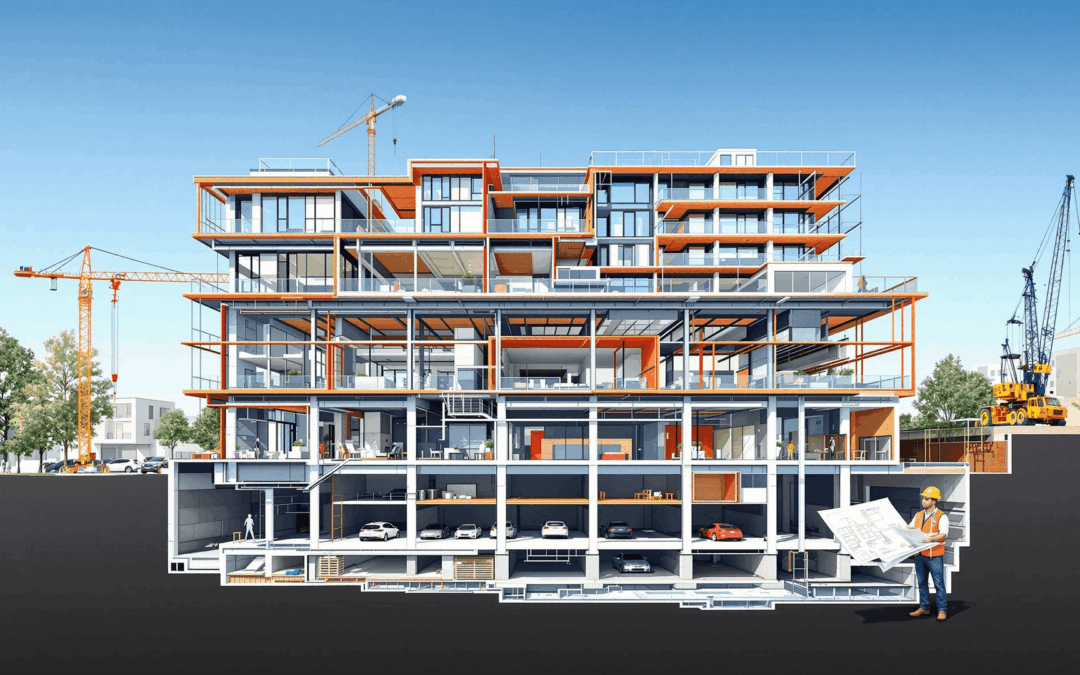
The Crucial Role of Structural Engineering in Mixed-Use Multi-Story Buildings With Underground Parking
Mixed-use developments—those combining residential, commercial, and sometimes even civic spaces—are a growing trend in urban environments worldwide. These high-density, multi-story buildings often incorporate underground parking to maximize land use and enhance convenience for occupants. Yet, behind the smooth functionality and striking city skylines of these projects lies an often unseen, but absolutely essential, discipline: structural engineering. If you plan to embark on such an ambitious construction project, understanding why you should hire a structural engineer—and what value they bring—can spell the difference between visionary architecture and costly, even dangerous, mistakes.
Why Mixed-Use Developments Demand Specialized Structural Engineering
1. Diverse Load Requirements
Unlike single-purpose buildings, mixed-use developments pose complex structural challenges because they house spaces with dramatically different uses. Residential areas require a specific type of load accommodation, typically focused on uniform distributed loads. Commercial spaces, such as retail or office zones, often involve much heavier and more variable loads due to higher occupant densities, movable partitions, equipment, or even gym facilities.
Structural engineers meticulously analyze these variances to ensure that the framework can safely support and distribute all types of expected (and unexpected) loads, both vertically and laterally. This ensures structural integrity, occupant safety, and long-term durability.
2. Coordination of Multiple Building Codes and Standards
Every occupancy type—residential, commercial, parking—brings its own set of building codes, fire safety requirements, and accessibility regulations. Structural engineers are adept at navigating this maze of standards and ensuring that the integrated design complies with every applicable rule:
- Seismic and wind loading codes, especially if the building’s height increases vulnerability.
- Fire separation and resistance between occupancy types and the parking area.
- Adequate egress and life-safety provisions for all users.
- Compatibility with local zoning and municipal requirements.
3. Underground Parking: Complexity Below the Surface
Building a multi-level underground parking structure beneath a mixed-use building amplifies the need for advanced structural engineering. These subgrade structures must withstand substantial earth pressures, potential water ingress, and sometimes challenging soil conditions. Structural engineers must design retaining walls, foundations, and waterproofing systems that perform flawlessly year after year.
Key design considerations include:
- Shoring and excavation support, ensuring safety and minimizing neighbor impact.
- Waterproofing against groundwater infiltration, protecting both parking and the building above.
- Ventilation and fire suppression within the confined underground environment.
- Accommodation for mechanical systems, utilities, and vehicle movement, ensuring layout efficiency.
Key Structural Systems for Mixed-Use Buildings With Underground Parking
Post-Tensioned Concrete Slabs
Post-tensioning allows for longer spans and fewer columns, which is crucial in underground parking where maximum clear space for vehicles is desired. It also enhances the durability of slabs, reducing cracking and improving serviceability.
Composite Steel-Concrete Construction
Above-grade, composite construction (steel beams with concrete slabs) offers flexibility, speed of erection, and high strength-to-weight ratio—important for mixed-use floors that may need open, adaptable spaces.
Shear Walls and Lateral Load Systems
Shear walls, braced frames, or moment-resisting frames are critical in countering wind and seismic loads, preserving the building envelope and core against displacement. These systems are integral in safeguarding both the commercial and residential parts of the structure.
Deep Foundations and Pile Systems
When constructing underground levels, especially in urban environments with difficult soil or close proximity to other structures, foundation design becomes paramount. Structural engineers conduct in-depth geotechnical analysis to design deep piles or mat foundations that support the heavy loads above, mitigate settlement, and protect adjacent buildings.
Why You Should Hire a Structural Engineer Early in Your Project
The earlier you bring a structural engineer into your project team, the more benefits you unlock. Here’s why early engagement is critical:
- Value Engineering: Early input allows optimization of structural systems, reducing material costs while maintaining safety and performance.
- Risk Mitigation: Potential conflicts, construction challenges, and code issues can be flagged and resolved sooner, ensuring smoother project workflow and minimizing costly redesigns.
- Integration with Architecture: Coordinating the structural grid with the architect’s vision—especially in mixed-use spaces—yields better layouts, more natural light, and greater occupant satisfaction.
- Coordination with MEP (Mechanical, Electrical, Plumbing): Early structural layouts allow seamless integration of HVAC, plumbing, and electrical runs, particularly essential when routing services through parking levels and between occupancy types.
What to Look for When You Hire a Structural Engineer
Choosing the right professional for your project requires careful consideration. Ideally, your structural engineer should bring:
- Experience with Mixed-Use and Underground Construction: Demonstrated track record in successful, similar-size projects.
- Local Code Knowledge: Familiarity with your municipal regulations and approval processes.
- Collaborative Mindset: Proven ability to work closely with architects, MEP consultants, and contractors.
- Innovative Solutions: Willingness to leverage the latest materials, techniques, and software to enhance your building’s performance.
The Process: How a Structural Engineer Adds Value at Every Stage
1. Feasibility and Concept Design
At the earliest stage, the structural engineer reviews preliminary site conditions, soil reports, and client goals. They propose preliminary framing options, foundation systems, and underground excavation approaches that shape the rest of the design process.
2. Detailed Design and Coordination
Once the project vision is set, structural engineers develop detailed plans and calculations, collaborating with other design consultants to refine floor layouts, column spacings, core locations, and parking ramp geometry.
This phase includes the design of:
- Beams, columns, and slabs for all levels
- Foundation and retaining structures
- Lateral load-resisting systems
- Integration details for mechanical penetrations
3. Construction Documentation
Precise drawings, schedules, and specifications are produced for bidding, permitting, and construction. These documents must withstand rigorous scrutiny from code officials, insurance providers, and contractors alike.
4. Site Support and Construction Phase Services
During construction, structural engineers review submittals, carry out site inspections, and respond to field changes. Their ongoing involvement ensures correct interpretation of documents, resolution of unforeseen issues, and upholding of design intent.
Innovations in Structural Engineering for Urban Mixed-Use Buildings
Structural engineering is a rapidly evolving field, and today’s engineers leverage a wealth of cutting-edge tools and approaches to rise to the challenge of ever-taller, more complex mixed-use buildings with extensive underground parking.
Notable trends include:
- Building Information Modeling (BIM): Enables holistic 3D coordination among all disciplines, reducing clashes and construction errors.
- Sustainable Design: Use of recycled materials, high-efficiency structural forms, and designs that maximize daylight and minimize energy use.
- Seismic Base Isolation & Vibration Control: Especially relevant in high-rise settings or where sensitive equipment or residential privacy is a priority.
- Modular Construction: Prefabricated structural components can accelerate timelines and improve quality control, with special relevance in dense urban settings.
Case Study: An Illustrative Example
Consider a hypothetical 15-story development featuring five underground parking levels, retail on the ground and second floors, commercial offices above, and residential apartments atop. Here, the structural engineer must:
- Analyze soil conditions to determine the safest and most cost-effective foundation system (e.g., deep caissons versus raft slab).
- Design basement walls capable of withstanding both lateral soil pressures and hydrostatic uplift from a high water table.
- Coordinate column placement so parking areas remain open and efficient, while office and residential floors above are flexible and visually appealing.
- Integrate vertical circulation (elevators and stairs) as both functional elements and as part of the building’s lateral resistance system.
- Address transition floors, where load patterns change from open parking to densely partitioned office or living space.
Through each step, the structural engineer transforms architectural ambition into safe, buildable, and efficient reality.
Conclusion: The Structural Engineer as Your Project’s Trusted Advisor
From feasibility study to final inspection, a structural engineer brings expertise, judgment, and leadership that are vital to the success of any mixed-use multi-story building with underground parking. Their nuanced understanding of material behavior, code requirements, and construction techniques ensures not only that your development stands strong, but that it offers lasting value and appeal to its many users.
So, before ground is ever broken on your next building, remember this essential truth: to optimize safety, functionality, and investment, hire a structural engineer who can guide your project every step of the way.
Q1: What is the role of a structural engineer in mixed-use multi-story buildings with underground parking? A1: A structural engineer ensures the safety, stability, and durability of mixed-use multi-story buildings, designing systems to support varying loads, integrate multiple uses, and create secure underground parking structures.
Q2: Why should I hire a structural engineer for a mixed-use building project? A2: You should hire a structural engineer to handle compliance with diverse building codes, manage complex load requirements for residential, commercial, and parking areas, and ensure overall project safety and value.
Q3: What are the core structural challenges for mixed-use buildings with underground parking? A3: Core challenges include supporting different load types, coordinating distinct building codes, designing underground parking to resist soil and water pressures, and integrating foundation systems for tall structures.
Q4: How does a structural engineer contribute during construction of underground parking? A4: A structural engineer designs and supervises construction of foundations, retaining walls, and waterproofing, ensuring the underground parking remains safe, dry, and structurally sound for vehicles and occupants.
Q5: What should I look for when hiring a structural engineer for a mixed-use project? A5: Look for experience with similar projects, local code knowledge, strong collaboration skills, and innovative design approaches to deliver efficient, safe, and adaptable mixed-use buildings with underground parking.
Q6: What are modern trends in structural engineering for mixed-use developments? A6: Modern trends include using BIM technology, sustainable materials, seismic protection systems, and modular construction to improve the safety, efficiency, and functionality of multi-story mixed-use buildings.